Bmore Inspired: 5 Spots to Get Inspired in Baltimore

Inspiration can be found everywhere in Baltimore, whether out in the open or lurking around the corner, but it can be easy to miss if you’re not looking. Here are a few of our favorite places and events in Baltimore that are sure to get the creative juices flowing, for visiting and local designers alike.

American Visionary Art Museum

AS72-CITY-ARTS2-B
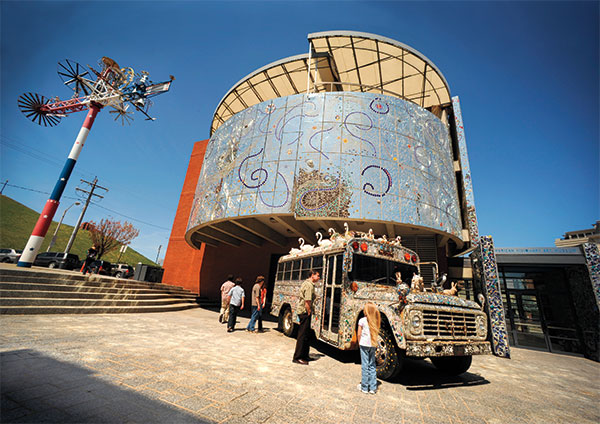
The American Visionary Art Museum’s (AVAM) main building glimmers in the afternoon sun

The AVAM is dedicated to displaying and preserving outsider art. Both its temporary and permanent exhibits make it a must-visit place for art that you might not see anywhere else.

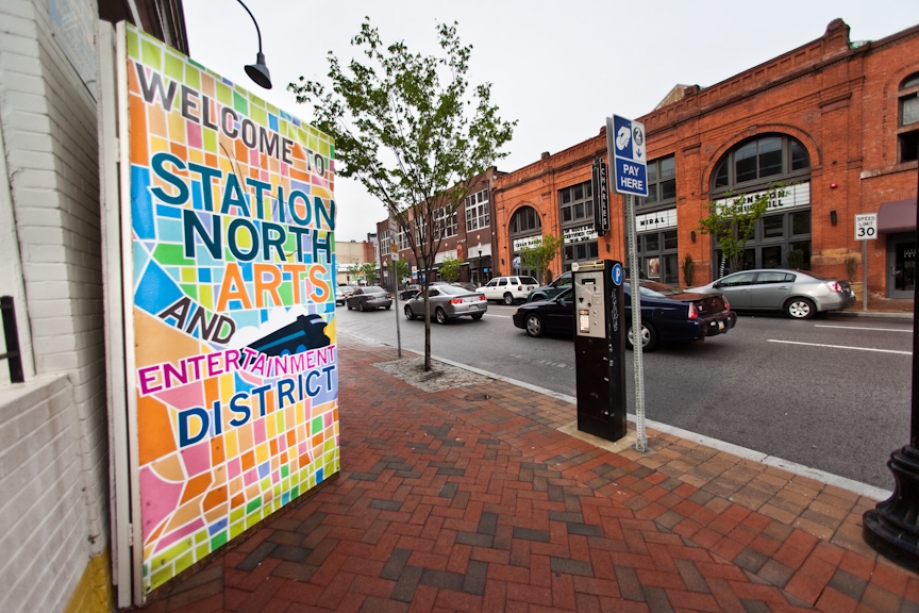
Station North Arts District

0032_919_613_s_c1_c_c_y
In the heart of city, Station North is the first state-designated Arts and Entertainment district in Baltimore.

With its myriad projects, installations, galleries, and cafes, everyone should be able to find some inspiration in Station North.

Bromo Tower Arts District

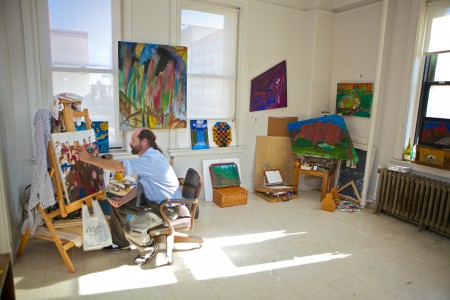
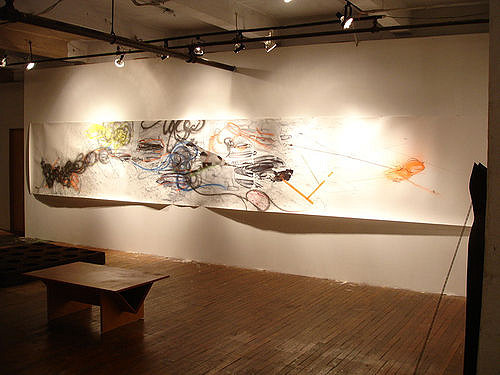
Artist at work in studio space

Home to the historic Emerson Bromo Seltzer Tower, this district is one of Baltimore’s newest art-centric neighborhoods. The numerous galleries and performance spaces make it easy to spend an entire day just in this small but thriving area.

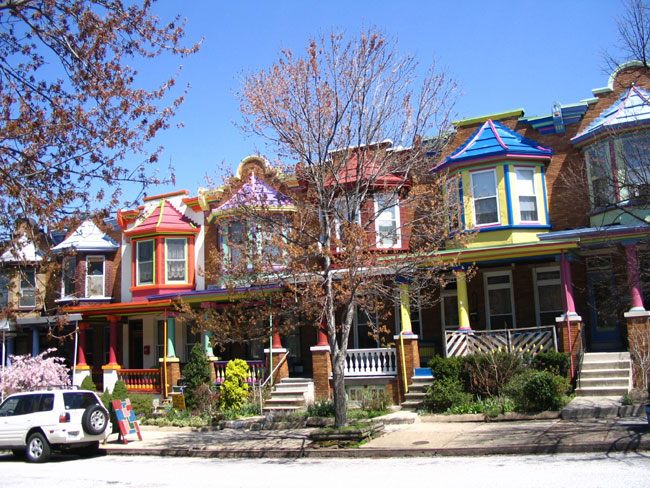
Painted Ladies of Charles Village

Credit: Wikipedia
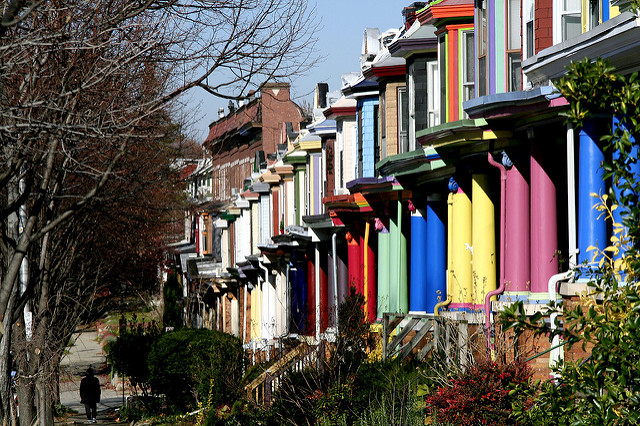
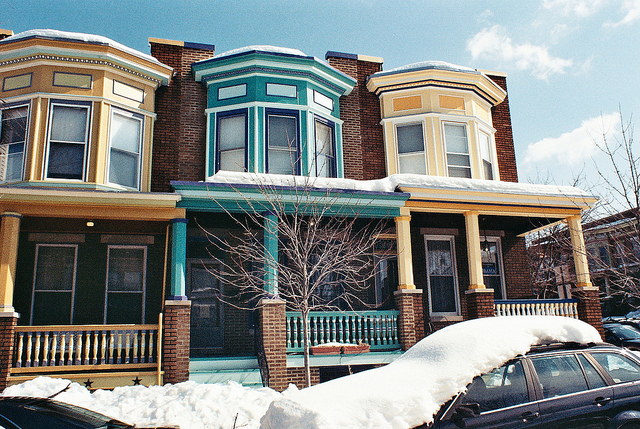
Some of the vividly painted row houses of Charles Village

Even the houses in Baltimore show the city’s dedication to the arts. This collection of colorful row homes is a perfect example of how the city’s residents exemplify the name Charm City.

Baltimore Events

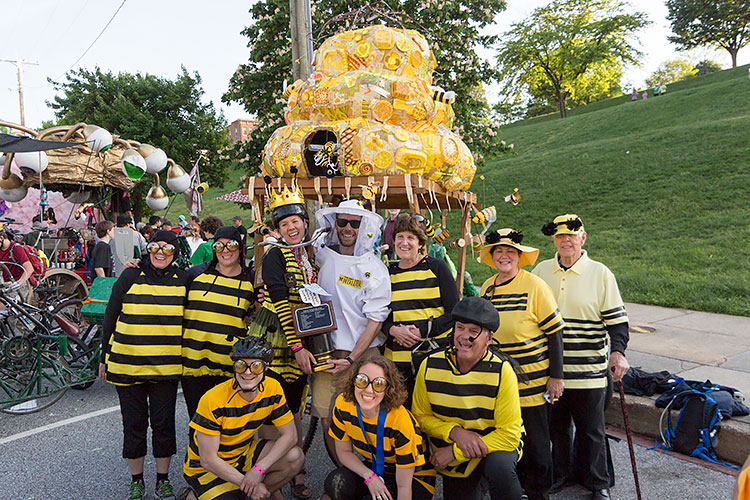
Tom6602BeesTrophy
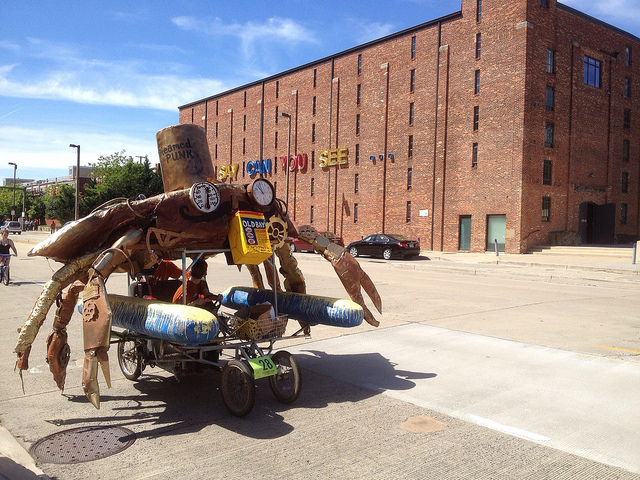
In 2016, the 18th Annual Kinetic Sculpture Race took place with The Bees’ Knees of Washington, DC taking home the trophy

Baltimore’s locations aren’t the only places to find inspiration. The city is host to tons of art-centric events that have become important traditions. We’ve highlighted a few that are sure to interest both visiting and local designers.


Image Credits: Ashley Phillips, American Style, Station North, Baltimore Arts, Wikipedia, and Baltimore Kinetic Sculpture Race

Mitch is a volunteer copywriter for AIGA Baltimore. In the real world, he’s usually indulging in gaming of some kind, controller or dice in hand. Find him on Twitter at @mc_mittens.

Shannon Crabill is an HTML Email Developer at T. Rowe Price. Outside of the Internet you can find her riding her motorcycle and binge-watching home improvement shows on HGTV. Tweet her at @shannon_crabill.

A recent transplant from Texas by way of NYC, Andrea Chen is happy to call Baltimore her home. She’s a graphic designer at T. Rowe Price, owns her own company the codex club, and loves to knit, cook, and garden. Tweet her @andreachen3d.

Meet the Speaker: Nikki Villagomez

Nikki Villagomez
Nikki Villagomez

Nikki Villagomez, a South Carolina Native, is a nationally recognized speaker on typography. After earning her BFA in Graphic Design from Louisiana State University, and a stint in New York City, she moved back to her home state to become a full time freelancer. In addition to founding the AIGA South Carolina chapter, Nikki has been an educator teaching Graphic Design and Typography at the University of South Carolina and the University of Akron. After working for four years in Ohio for Dixon Hughes Goodman LLP, she relocated to the company headquarters in Charlotte, NC to serve as the Creative Studio Manager. In her free time, she writes about about how culture affects typography.


Where do you draw inspiration from?
Inspiration has never been something I seek out; it is more about being acutely aware of my environment. I have found that it is really important for me to have a balance. If I’m able to achieve that balance on a regular basis, being inspired is there.

This became very apparent when I became an in-house designer. It took about two months for me to start realizing I needed an outlet. Being strapped to two typefaces and 13 Pantone colors day in and day out made me realize I needed a way to balance the structure of my job.

I started my blog which let me delve into the beautiful world of typography. Every morning, I get up early to research how culture affects typography and post my findings. This regularly gives me the balance I need at work. In addition to my blog, I have found that attending conferences like HOW, AIGA, TypeCon, and Creative Mornings has been incredibly valuable for inspiration and connecting with other graphic designers who have helped me along the way.


What advice would you give to your 20-something self?

Work hard and go after what you want. It sounds so simple but it is easy to go off course by the actions of others and getting caught up in change. Continue to set goals, both long term and short term, and stay focused on achieving those.


When did you first realize you wanted a career in design?
I had never heard of Graphic Design growing up. When I met with my Academic Advisor my first week in college, she asked me what I wanted to study. I told her that I was thinking about Art Therapy. She said LSU has a great program for that and showed me the curriculum. There was all this Science and Math that I had to take and I immediately said ‘No’. She then told me about this other program called Graphic Design and the curriculum included classes like Painting, Ceramics and Photography instead of Science and Math. That was it. I literally declared my major the first week I was at LSU and 5 years later received my BFA in Graphic Design.


Favorite Philosophy:

You are not entitled to the fruit of your labor, you’re only entitled to the work itself.


What’s the harshest criticism you’ve ever received?
My senior year in high school, right when I found out I had received a full scholarship to play tennis in college, I was told by one of my teachers that I would only be known by my social security number and I’d never be able to balance sports and my education. That comment hit me hard but was determined to prove that I could do both—and I did! It was a great experience in that it taught me to not seek out approval or permission from others.

Designers for Good: A Conversation with Liz Danzico, Creative Director for NPR

Welcome to AIGA Baltimore’s first installment of our Designers for Good interview series, featuring conversations with designers who work in the field of social innovation.

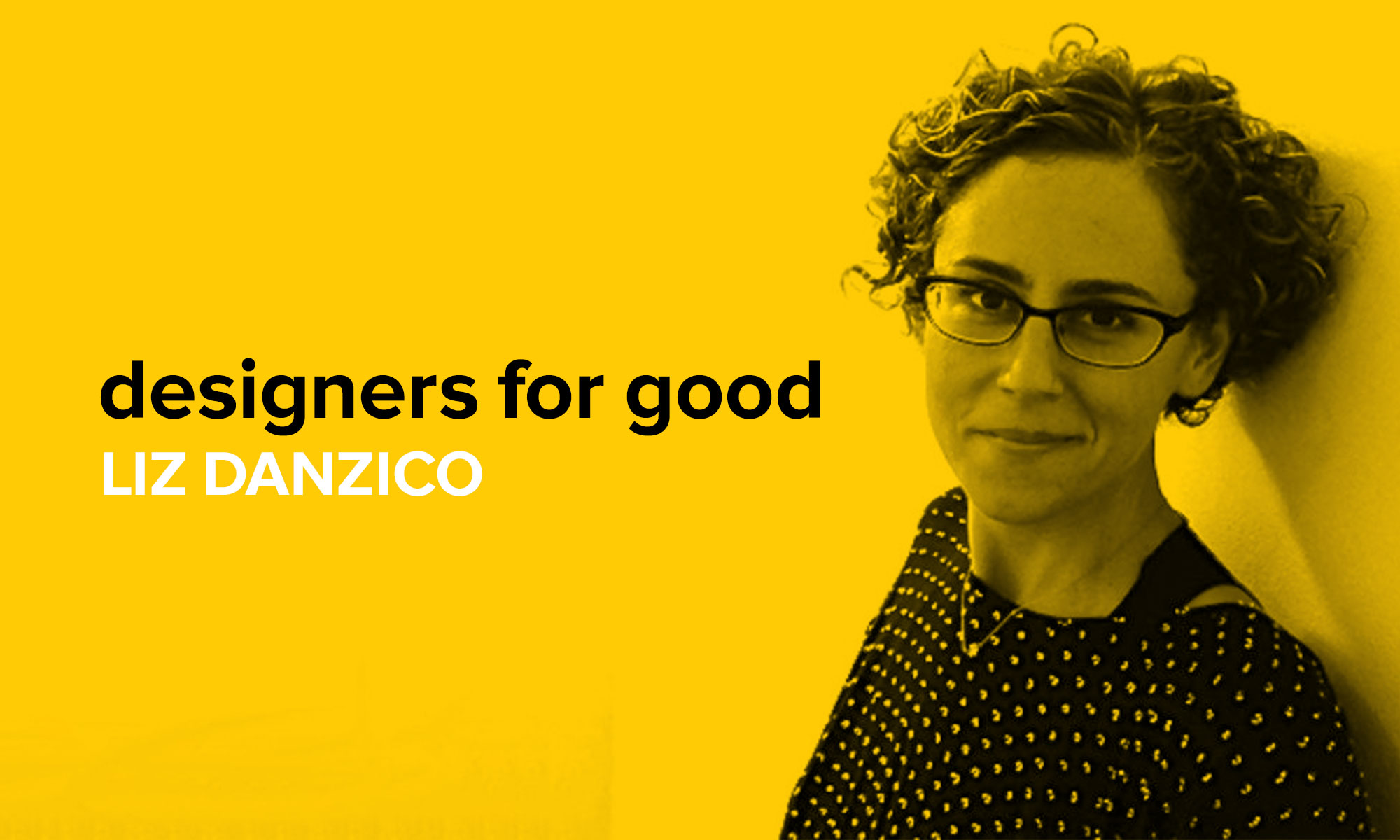
Our first interview is with Liz Danzico – part designer, part educator, and full-time dog owner. She is also creative director for NPR, overseeing and guiding both the visual and user experience across NPR-branded digital platforms and content. Liz is chair and co-founder of the MFA in Interaction Design program at the School of Visual Arts. She has written for design-minded publications, including Eye Magazine, Fortune Magazine, Interactions Magazine, and writes part time at bobulate.com.


What is your background?

I started out thinking I’d be a writer, but absolutely fell for work in the digital space when those positions first started emerging. Today, I’m creative director for NPR, whose mission is to work in partnership with member stations to create a more informed public. I’m the founding chairperson of the MFA Interaction Design program at the School of Visual Arts, one of the world’s top design schools. On the side, I advise startups, nonprofits, and global companies. Because my background is in writing, I continue that work by writing talks and writing for design-minded publications, and on my own site, bobulate.com. My very first job after college was as an English teacher in Japan, an experience I still think helped me be human-centered in my design practice.


You are founding chairperson of the MFA in Interaction Design Program at SVA in addition to advising various startups, nonprofits and global companies. How have your varied interests and experiences informed your role as the first creative director at NPR.

I used to joke that when people asked what I did, I responded in one long run-on sentence with too many commas. I joked because, quite honestly, I was a bit self-conscious about my many side projects across teams and fields. Someone eventually pointed out that perhaps this wasn’t a deficit, but a feature. Perhaps keeping multiple projects in one’s head and lateral thinking was my talent. So I started taking roles that took advantage of that, which required me to do that. This is all to say that being responsible for design across platforms, products, and divisions draws upon that very skill.


You may not define yourself as a social designer, but your roles as creative director at NPR, a non-profit whose mission is to create a more informed public, an educator, and consultant to mission-based organizations are contributing to the improvement of society, students and non-profits. How do you think design can work to address social problems or further social causes, and do you see any or all of your roles in this light?

Design has the power to make people’s lives better. If we ask how can we give the people we design for a sense of hope, empowerment, strength, and make their lives a bit better than they were before, then we are using design to address social problems no matter what they scale. This is the kind of work I’ve tried to chase down in my career. Work that helps to improve people’s lives, helps them be more informed, more empowered in their careers, get the basic human services they need, helps improve cities, financials, our government services. Design and its uniquely human-centered approach has the potential to affect and improve everyday life.  


Where do you see the field of interactive design moving in the future? (And if you are comfortable answering, how could this apply to the field of social design?)

It used to be that interactive referred to only that sliver of business that wanted a simple website. Over the course of years, it’s now hard to find a thing or a place that isn’t touched by some kind of interactive design. Looking ahead, we’ll start to see more and more complex problem spaces being affected by interactive design.


What advice would you give a designer interested entering the interactive design field?

Read the new “LEAP Dialogues: Career Pathways in Design for Social Innovation,” which in full disclosure, I was a co-editor on. In it, 84 practitioners and educators weigh in on the role of social impact design in a changing market and world through interviews conversations, essays, and case studies. Next, read Khoi Vinh’s book, “How They Got There,” which talks about the paths of 14 digital designers. This is important as, for a field that’s still relatively young, the field is still inventing itself. It’s useful to see how some of the most important designers got their start. After reading both, consider where you want to do interactive work. Then, and most importantly, look for great people you can learn from. No matter what field you want to enter, it will be the people who surround you who make your career. Find people who inspire you, and head in their direction.


What are your favorite projects and why?

The MFA Interaction Design Program at SVA. Starting this graduate program been one of the more rewarding parts of my career to build a graduate program, which is truly building a community of people, then watching them change the world.

NPR One. Working on this storytelling platform has been one of the more challenging and broadly influential projects in my career, and I’ve learned more deeply what it means to do product design.

Bobulate. This is my personal site and a place where I get to be entirely myself through writing.


What is a surprise you have encountered over the course of your career?

People who are top of their field are generally the ones who are most willing to help and/or the first to respond to your request, no matter who you are.


What are 1-3 challenges you have encountered over the course of your career?

I’ve always had a problem saying no. But over the course of years, I’ve learned to be grateful that I have so many opportunities to say no to! So it’s a challenge, but a welcome one. Perhaps relatedly, I have worked to maintain balance in my life. Balance between work and play; between travel and home; between impactful work and work that pays the bills. But the truth is: there is no “between.” Once I realized that it’s all part of my life, rather than thinking about it as some intricate balancing game, it all started coming together. But it’s a lifetime of learning.



DesignForGood

About Design for Good

Design for Good is a platform to build and sustain the implementation of design thinking for social change. This platform creates opportunities for designers to build their practice, their network, and their visibility. Design for Good recognizes the wide range of designers’ work and leadership in social change which benefits the world, our country and our communities.

Design for Good supports and sustains designers who play a catalytic role in communities through projects that create positive social impact. By connecting and empowering designers through online networking tools, inspirational stories, chapter events, training, national advocacy and promotion, Design for Good serves as a powerful resource for designers who wish to work in this area and a beacon for designers leading the charge.

BMORE Inspired by The Painted Ladies of Charles Village

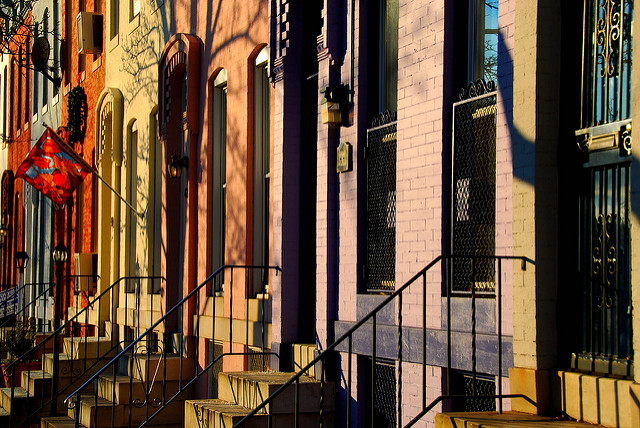
When you hear the term “painted ladies”, do you think of Baltimore architecture? Inspired by the brightly colored homes of San Francisco, the Victorian style row homes of Baltimore’s own Charles Village neighborhood certainly live up to the name.

In the late 90s, the neighborhood of Charles Village had a contest, challenging residents to paint and decorate the fronts of their rowhomes in order to revitalize and show pride in their neighborhood. With cash prizes for best door, porch and front facade, residents took the challenge and ran with it. With an array of colors and styles ranging from vibrant pinks, greens, and yellows, stripes and solids, even almost 20 years later these rowhomes show how bold and spunky the city of Baltimore can be. Although the last contest took place in 2003, some of the houses have been repainted in the past few years, and there are efforts to bring back the competition. For a taste of some true Baltimore charm, the painted ladies of Charles Village are well worth driving—or walking—by to see.

Credit: <a href="https://www.flickr.com/photos/question_everything/">Let Ideas Compete</a>
Credit: Let Ideas Compete
Credit: <a href="https://commons.wikimedia.org/wiki/File:Guilford.jpg">Wikipedia</a>
Credit: Wikipedia
Credit: <a href="https://www.flickr.com/photos/sidereal/">Jack Lyons</a>
Credit: Jack Lyons
Credit: <a href="https://www.flickr.com/photos/ms_sarahbgibson/">cinderellasg</a>
Credit: cinderellasg

This post is part 5 of our “Bmore Inspired in Baltimore” series. See part 1, part 2, part 3 and part 4 here.


Image Credit: Zack Weinberg

Shannon Crabill is an HTML Email Developer at T. Rowe Price. Outside of the Internet you can find her riding her motorcycle and binge-watching home improvement shows on HGTV. Tweet her at @shannon_crabill.

BMORE Inspired at Bromo-Seltzer Tower & Arts District

Many of Baltimore’s neighborhoods make great places for designers to visit. The Bromo Tower Arts District is a relatively new addition to Baltimore. Established in 2012, Bromo Tower Arts District occupies a space just north of the Emerson Bromo-Seltzer Tower for which it was named. The district was established as a way for the area to become a fully realized downtown arts neighborhood. The area contains a plethora of venues to entice the artistically minded visitor, from numerous galleries to performance spaces and theaters.

Credit: <a href="https://www.flickr.com/photos/ebmorse/">Brandon Morse</a>
Credit: Brandon Morse

The Bromo Tower Arts District is home to almost too many organizations and venues to name, but there’s something for just about everyone there. Notable galleries include Gallery Four, which encourages artists to create large-scale works and installations; Arte Factory, which features many pieces made from discarded and recycled objects and materials; and XOL, which is dedicated to providing a place for young Middle Eastern artists to create and display their work. The district contains several performance spaces, including the Annex Theater, Everyman Theatre, and even the historic Hippodrome Theatre. If you’re looking for historical inspiration, the Maryland Historical Society can be found here. Even the shops in the Bromo Tower Arts District lean towards the artistic, such as Neighborhood Fiber Co. yarn shop, AT Jones & Sons Costume Shop, and Pipes Dreamz Clothing.

The district’s namesake, the Bromo Seltzer Arts Tower, is itself an iconic Baltimore landmark. The tower was constructed in 1911 and is listed on the National Register of Historic Places. Built by Captain Isaac Emerson, inventor of Bromo Seltzer, it was modeled after the Palazzo Vecchio in Florence, Italy. The tower’s most distinguishing feature, and most recognizable sight in the district, is the still-functioning tower clock, which shows the words BROMO SELTZER instead of numbers. In 2007, the Baltimore Office of Promotion & The Arts began renovations on the tower, turning the 15-story building into 33 artists’ studios. The tower regularly holds open houses of the studios for visitors.

Whether you’re looking for art galleries or theaters, shops or historic landmarks, the Bromo Arts Tower District has something for everyone!


This post is part 4 of our “Bmore Inspired in Baltimore” series. See part 1, part 2 and part 3 here.


Image Credit: BKL

Mitch is a volunteer copywriter for AIGA Baltimore. In the real world, he’s usually indulging in
gaming of some kind, controller or dice in hand. Find him on Twitter at @mc_mittens.

BMORE Inspired at Station North Arts District

If you’re looking for an art-centric destination that is more than a one-stop shop then consider spending your day in the Station North Arts District. Located in the heart of the city, Station North has something for everyone—even the non-designer in your life.

Founded in 2002, Station North is the home of the first State designated Arts & Entertainment District in Baltimore. One of 22 in the State of Maryland, the five block radius that is Station North is home to dozens of projects, installations, local galleries and cafes. While it’s hard to pick just one, here are a few of the highlights.

Open Walls
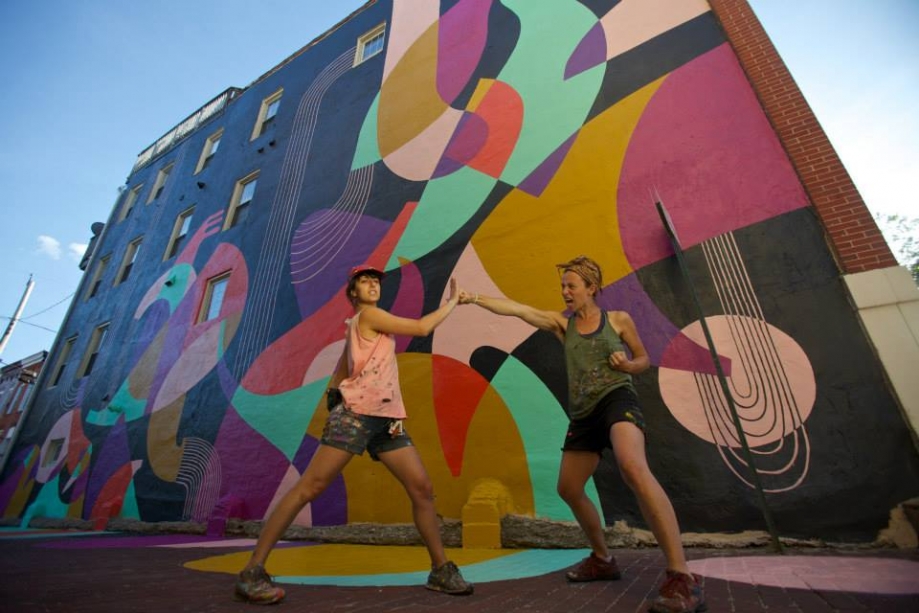
For the street art fan, the neighborhood is scattered with large, vibrant wall murals as part of the Open Walls project. Kicking off in 2012, Station North joined forces with local artist Gaia to produce the project, which features nearly two dozen murals and art installations.

Tapping the talents of local and global artists of all backgrounds and nationalities, the project succeeded at and surpassed its goal of invigorating the city and bringing art into a community that would otherwise have just another exposed brick wall. Over two months, Open Walls earned several “Best Of” awards from the Baltimore City Paper as well as features in the Washington Post and New York Times.

Credit: <a href="http://stationnorth.org/" target="_blank">stationnorth.org</a>
Credit: stationnorth.org

More than three years after its inception, the murals can still be found and admired by the public. Spanning several blocks surrounding North Avenue, Open Walls makes for a great self-guided tour. A catalog of the project is also available from the Maryland Institute College of Art (MICA) bookstore.

The Charles
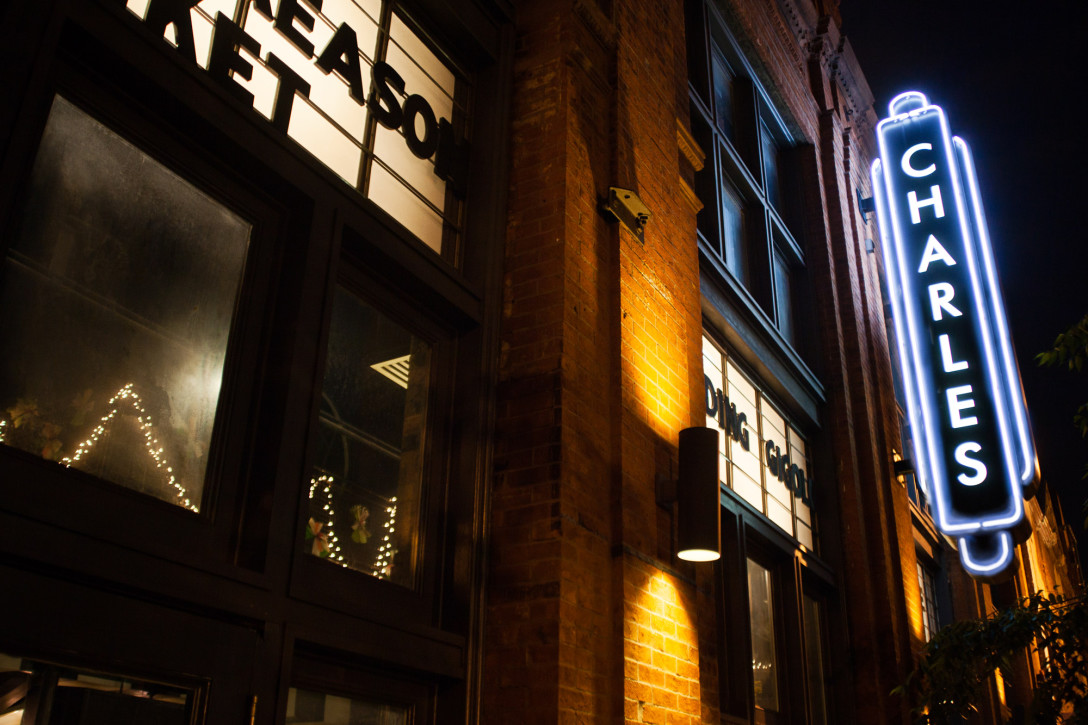
For the movie fan, consider seeing a show at The Charles Theater. The 1150-seat historic, multi-screen theater shows new releases as well as classics, as part of its revival series. The building itself was designed in 1892 by architect Jackson C. Gott and went through many purposes in its life, including a streetcar barn, library and ballroom. Even through its 100+ year lifespan, the integrity of the main auditorium remains mostly untouched since it was originally dubbed the Times Theatre in 1939. The Charles is also home to family friendly anime and movie nights.

Credit: <a href="http://thecharles.com/">The Charles</a>
Credit: The Charles

Red Emma’s
The Station North Arts District is also home to several local eateries too. If you are in the mood for house roasted coffee and an all vegetarian menu, consider stopping by Red Emma’s.

Credit: <a href="https://www.flickr.com/photos/nicknormal/">Nick Normal</a>
Credit: Nick Normal

On the corner of Maryland and North Avenues, Red Emma is not just a coffee shop. Owned by its employees, Red Emma’s houses a bookshop, complete with radical, small press books, as well as regular schedule of community fueled talks, workshops and author events. Promoting a “no-hate, everyone is welcome” environment as one of their core values, Red Emma’s makes for a relaxing stop within the Arts District.

This post is part 3 of our “Bmore Inspired in Baltimore” series. See part 1 and part 2 here.


Image Credit: stationnorth.org

Shannon Crabill is an HTML Email Developer at T. Rowe Price. Outside of the Internet you can find her riding her motorcycle and binge-watching home improvement shows on HGTV. Tweet her at @shannon_crabill.

Two AIGA Innovate Awards Granted to AIGA Baltimore

Every great success story starts at the first chapter, and we are thrilled to be starting two books at once.

AIGA Baltimore is proud to announce that we have received not one but two AIGA Innovate grants for special projects that are poised to have a lasting impact on the design community in Baltimore and at large.

Within the next year board members and a committee of volunteers will work to produce an EntreprenU Design Business Toolkit, a collection of tools and content aimed at helping designers and AIGA chapters become more business savvy, and a Design Legislation Wiki, an online resource for established and in-progress legislation related to design and design education across the United States.

Read more about these two projects and about AIGA Innovate below.


AIGA Innovate

AIGA Innovate is a grant program developed to encourage and empower chapters to boldly face the future. The program funds game-changing projects at AIGA chapters across the country, which improve the AIGA member experience, impact the wider community, are scalable to other chapters, and are sustainable after the initial grant period.

AIGA Innovate is a four-year fund with up to $250,000 to be awarded each year. AIGA members, in collaboration with their chapter board leaders, can apply for AIGA Innovate funds by submitting a formal application detailing their project. To ensure that projects meet the high standards set for all AIGA Innovate projects, there is an eight-person selection committee that reviews the projects through a rigorous two-round review process before awarding the finalists.

The first group of projects was funded in 2015. In 2016, three projects were funded; AIGA Baltimore received two grants: the EntreprenU Design Business Toolkit and the Design Legislation Wiki, and AIGA Arizona received a grant for their project, Empowering the Underserved DesignKit.

Read more about AIGA Innovate on AIGA.org.


AIGA Baltimore’s Innovate projects


EntreprenU Design Business Toolkit

This toolkit will consist of articles, templates, tutorial videos, and other content to help designers start their own business. Content will relate to business plan development, tax filing, how to talk about the value of design to non-designers, and variety of administrative considerations.

The toolkit will also cover on soft-skills and research-assisted data, giving design entrepreneurs a primer in making a pitch, business writing, effectively presenting work, and managing clients.


Design Legislation Wiki

The value of design and design thinking is more important than ever for businesses and communities. However, there is a disconnect between local design policy and legislation and the communities they are meant to serve.

This online resource will be a searchable, visual database of established and in-process legislation for design at the professional level, and in education, especially K-12. Searchable by zip code or state, users will be able to see not only what is going on in their community, but what other communities across the country have implemented.

Additionally, the website will include a toolkit with examples of good design legislation and STEAM education policy that communities can use as templates for their own proposals. It will also include forms that can be customized to contact local representatives about the importance of, and interest in, specific design legislation.


Project Progress and Next Steps

AIGA Baltimore board members are currently nailing down project details, milestones, and timelines so that these projects are set up for success and can be fully developed within the next year.

Our next steps will be to to develop RFPs for the design and development of each project and assemble a committee of volunteers to drive execution.

A talented project manager, web developer, and content expert is needed for each project—these volunteers will be critical for the success of the initiatives, and for our board to be able to continue producing and improving our ongoing events and design programming.

Know anyone who wants to make an impact and might be a good fit for one of these roles? Sit tight! We’ll have more project details, committee position descriptions, and a link for you to apply your talent (or nominate someone else’s) to these special projects. In the meantime, you can contact us at socialdesign@baltimore.aiga.org if you have questions or comments.

We look forward to bringing these initiatives to the Baltimore community, and beyond.

SEEKING Talented Designers and Creatives in Baltimore

YOU: a creative Baltimore artist, architect, designer (of graphics, fashion, interiors, typography,  web, or other), doodler, illustrator, hand letterer, and/or maker of things who photographs and shares your work on social media outlets.

US: a collective of professional designers interested in sharing your work across our social streams in order to highlight and amplify the creativity of Baltimore and inspire fellow community creatives.

If the Baltimore creative community is expansive (and we know it is), then it follows that creative work produced in Baltimore is doubly so. AIGA Baltimore wants to share your work far and wide so we can, together as a community, put Baltimore on the map as a hub where creativity thrives.

YOU can help in this effort by sharing your doodles, sketches, illustrations, work in progress, personal projects, and any other creative work with us.

1. Tag @aigabaltimore in your post, in your image, or even in a comment when sharing images of your creative work on social media.
2. Send your images to socialmedia@baltimore.aiga.org. At a minimum, include a brief description of the work, your name, and any social handles you have. You can also include a brief profile info, such as:
– your employment status, your employer and/or if you’re looking for a job(!)
– your job title and/or what creative area(s) you focus on at work or on the side
– where you went to school and/or your graduation date

Once we receive the tag or images we’ll repost your work on our Instagram and/or Twitter, tagging you as the creator and amplifying your name as a creative voice in our community.

Questions? Comments? Suggestions? Email us at socialmedia@baltimore.aiga.org!


Want to get more involved with AIGA and give even more back to the creative community?

Become a Guest Blogger
In addition to amplifying Baltimore’s creativity on social media, we want to publish YOUR blog posts on your design work, personal design career experiences, case studies, thought articles, and more. Send your pitch to us at communications@baltimore.aiga.org.

Volunteer with or join our board
AIGA Baltimore seeks talented professionals for a variety of positions (e.g., copywriting, project management, photography, design, video/animation, marketing, programming, web development, etc.) and involvement levels (i.e., one-time/ad-hoc volunteers, volunteer committee members, and board members). For more information, visit our volunteer page and get in touch with us at info@baltimore.aiga.org.

Sponsor or host an event
AIGA Baltimore produces over 20 events every year, from happy hours to workshops to our large annual events like Ink & Pixels student design conference and Design Week. Becoming an AIGA Baltimore sponsor or host means that you’ll give back to the creative community while also gaining visibility among the members of the local design community. Interested in learning more? Drop us a line at info@baltimore.aiga.org.

Speak at an event
Have some industry knowledge you want to share with AIGA Baltimore members and the design community at large? Drop it on us! To learn how you can be part of AIGA Baltimore’s programming, send us a note at info@baltimore.aiga.org.

BMORE Inspired at the AVAM

If you’re looking for somewhere to go in Baltimore to satisfy your desire for the unconventional, look no further than the American Visionary Art Museum (AVAM). The AVAM, located at 800 Key Highway in Federal Hill, is the place to go to see art that you might not see anywhere else.

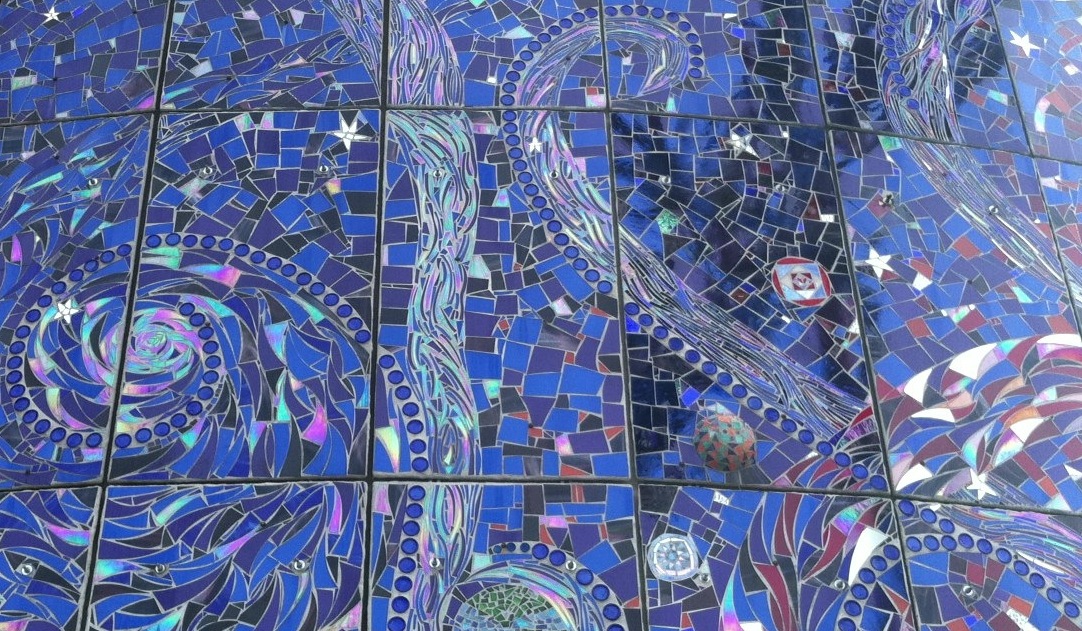
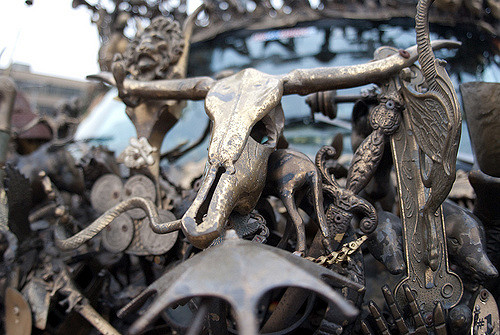
The museum was established in 1995 as a place to display and preserve outsider art and has been designated by Congress as the national museum for self ­taught art. Even a cursory glance will tell you that this is no ordinary museum, as visitors are greeted with a stunning mirror mosaic on the exterior walls. The AVAM’s other permanent installations include the Giant Whirligig, a massive, wind ­powered, outdoor sculpture; the World’s First Family of Robots, a collection of robots made from salvaged parts of old electronics; and Baltimore Painted Screens and Row home Theater, a historical tradition and folk art born right here in Baltimore.

3687600761_f0c8f30994_z
Image Credit: Erica

Each year, the museum holds one main exhibition embodying a particular theme, ranging anywhere from We Are Not Alone Angels and Other Aliens to The Marriage of Art, Science, and Philosophy to The Art of Storytelling: Lies, Enchantment, Humor, and Truth. The AVAM describes its current exhibit, The BigHope Show, as:

“An original and unabashedly idealistic art exhibition that champions the radiant and transformative power of hope. Over twenty ­five visionary artists, among them many “super survivors” of enormous personal traumas, exhibit soulful creations reflecting their personal transcendence, and, often, a heightened or newfound creativity and sense of humor.”

The Big Hope Show runs until September 4, 2016. In addition to their regular exhibits, the AVAM is regularly involved in community efforts, often sponsoring local artistic events, such art car events and the annual East Coast Championship Kinetic Sculpture Race.

8712934144_cd204ee27e_z
Image Credit: callison-burch

The AVAM’s dedication to unconventional art makes it a quintessential Baltimore landmark. Anyone with an artistic side would do themselves a disservice to not visit this one of a kind museum.

This post is part 2 of our “Bmore Inspired in Baltimore” series. See part 1 here.


Image Credit: Andrew Hazlett

Mitch is a volunteer copywriter for AIGA Baltimore. In the real world, he’s usually indulging in
gaming of some kind, controller or dice in hand. Find him on Twitter at @mc_mittens.

BMORE Inspired by Local Arts Events

Designers and creatives of all kinds visiting Baltimore will find that the city has a long tradition of supporting
the arts and so regularly hold events in that vein. The warmer months in particular allow visitors to take in
these events and festivals while wandering our beautiful city. Three such events are the Maryland Film
Festival, Artscape, and the Kinetic Sculpture Race. (But, we’d be remiss if we didn’t also mention the
newcomer festival in Baltimore, Light City.)

Artscape
Artscape is an annual festival that takes place in the areas surrounding Baltimore’s centrally located Penn
Station. It is the country’s largest free arts festival, hosting hundreds of artists of just about every variety.
Visual arts exhibitions can be found throughout the festival, at specific locations or even in the streets,
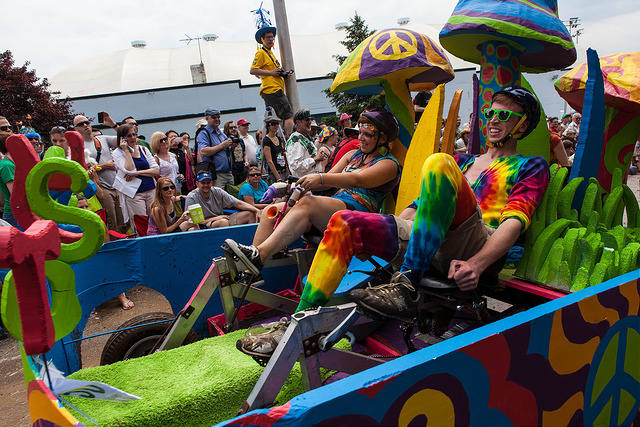
featuring fine art, fashion, crafts, sculpture, art cars, photography, and more.

4243323436_1f21d11aff_z
Credit: Chris Dilts

Artscape also features plenty of
performance art, including theater, opera, dance, film, live music concerts, and even performances from the
Baltimore Symphony Orchestra. The festival is one of the highlights of the summer for Baltimore residents
and visitors alike. Artscape 2016 will be held from July 15­–17, and you check their website for details on
specific events.

MD Film Festival
Going into it’s 19th year, the Maryland Film Festival has continually fostered local
and international film and video work of all lengths and genres. There are screenings over five days every
year in the first week of May at the Baltimore Museum of Art, the Maryland Institute College of Art (MICA),
and the soon­to­be­restored Parkway Theater. Baltimore’s most legendary filmmaker John Waters picks a
favorite film every year to introduce, too, and he’s as hilarious, uncouth, and as witty as you’d imagine.

Kinetic Sculpture Race
Although already past for this year, the Kinetic Sculpture Race is one of Baltimore’s most distinctive events.
Hosted by the American Visionary Art Museum, the race challenges entrants to custom build amphibious
human­powered vehicles to race through the city. The races takes eight hours and covers 14 miles, leading
racers through several Baltimore neighborhoods, parks, and even into the Inner Harbor itself.

Credit: Ben Mason
Credit: Ben Mason

The first ever Kinetic Sculpture Race took place in 1969 in Ferndale, California, though the races now take place is several places across the country. The first Baltimore race took place in 1999, when AVAM founder Rebecca Hoffberger heard about the California race on television. Since then, the AVAM has not only sponsored the event, but also participated, racing Fifi the giant pink poodle every year since 2001. Fifi has become the race’s mascot and is on permanent display at the museum. Vehicles are built to resemble
anything from a giant crocodile to a Rube Goldberg mousetrap. Words don’t really do justice to the creativity
that racers have in building their vehicles. You can find pictures of vehicles from each year’s race on their
website.

Though these are three of the most distinguished large­scale Baltimore events, they are only a very small
sample of what our city has to offer visiting designers. AIGA Baltimore’s own Annual Design Week, held the
3rd week of October each year, is sure to entice visiting and local designers alike. And you can always
check out the city’s events calendar to find something to suit your tastes. Baltimore is a city that has something
for everyone!

This post is part 1 of our “Bmore Inspired in Baltimore” series.


Image Credit: kineticbaltimore.com

Mitch is a volunteer copywriter for AIGA Baltimore. In the real world, he’s usually indulging in
gaming of some kind, controller or dice in hand. Find him on Twitter at @mc_mittens.

A recent transplant from Texas by way of NYC, Andrea Chen is happy to call Baltimore her home. She’s a
graphic designer at T. Rowe Price, owns her own company the codex club, and loves to knit, cook, and
garden. Tweet her @andreachen3d.