BLEND Recap: Tim Bojanowski at Zen West Road Side Cantina

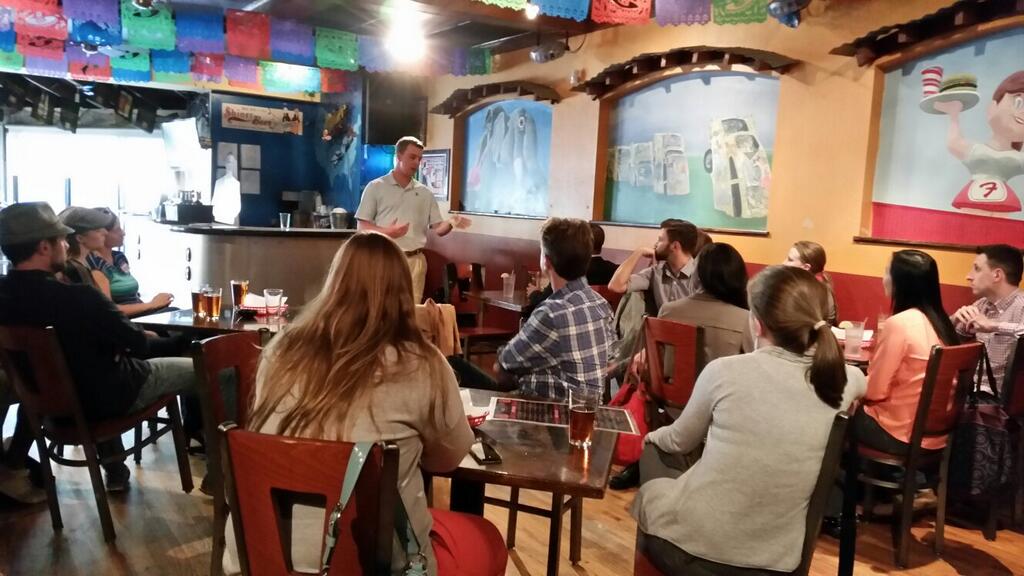
Last Tuesday, Tim Bojanowski spoke at AIGA Baltimore’s monthly Blend. Tim is the leading adviser and principal of Zest Social Media Solutions and to him and his team, brands concentrating only on increasing their number of followers are sweating the small stuff.

blendsm

He told us that online consumers are looking for information and that social media is as crucial to their search as Google. Brands that take of advantage of providing free information through their social media channels capitalize on an opportunity to build what he calls a “tribe.”

“A tribe of loyal followers is more likely to comment on, share, and read posts,” said Tim, “Each follower within the tribe subsequently possesses a higher potential to convert.”

To brands interested in building tribes over a massive following, Tim advises them to use storytelling. He said, “The best narratives follow a series of causality surrounding the brand’s niche in the market. They say, ‘I am good at these things, here’s how I do them and here’s why.’ Taking 20 minutes to create a post that tells a story about something your brand created will go farther to increase your social equity. More than relying on the grumpy cat.”

Joshua Uzzell is a Baltimore-based graphic artist who provides illustrative branding, web design and development services. Follow him @joshuzzell.

Board Spotlight: Kara Turner

Kara Turner, AIGA Baltimore’s Communications Director and all-around Renaissance woman, grew up on Maryland’s Eastern Shore. She was a varsity lacrosse player in high school (“the only girl on the team”) and, between games, she acted in plays. After a few years of freelance work in Manhattan and Daytona Beach, she returned to Maryland to focus on a professional career in communications and media.

Since we’re shining the Spotlight on Kara this month, we wanted to find out what makes her tick. She says she’s has always thrived when thrown into challenging situations and prefers to work on multiple projects at a time.

“I love the process that goes into creating,” she tells us, “It could be an event I’ve organized for work or a character I’m playing on stage but I just like creating things. I like to see the results of something I’ve done that’s had a lot of hard work put into it. But I also strive to get a reaction from people.”

She’s looking forward to our upcoming events and the opportunities to network with other designers.

“Design is powerful,” she says, “Great design has the ability to add order to our lives. It can express humor. It can make people think. It can make people safer and can teach others. The design of a space, or the lack of, affects the way people feel and the way people act.”

Kara lives in Annapolis but knows her way around Charm City, seeing shows at CenterStage, having drinks in Fell’s Point, and performing in the local theatres. Since we at AIGA Baltimore are always thinking of new symbols to replace the crab, we asked her if she had any ideas. She suggests a purple and orange foam #1 finger then changes her mind.

“Baltimore has so many fantastic outdoor events,” she says, “Artscape, Sowebo, the Greek Folk and Ukraine festivals. So, I’d say a good symbol for the city would be a festival tent.” She also tells us that everyone should experience being out on a rooftop deck in Pigtown on the Fourth of July.

“There’s the view of the fireworks, of course, but you can also see all the distant ones from other towns all around you. Then, you see hundreds of car headlights creep around the highways and hear the mass of people leaving the Harbor.”

The Joy of Sketch

My design career started with a burning envy of artists.

I was in sixth grade when I read in a magazine (possibly Highlights), that there were kids who had started drawing pretty much as soon as they could hold a crayon. Seeing album art, movie posters, and the covers of paperbacks in the supermarket made me think about how long they must have practiced their craft to be able to create these fantastic works of art without a struggle. At 12 years old, I was, in my perspective, too late to the game. Hell, I couldn’t even trace Iron Maiden cover-art, much less draw it freehand.

eddie shirt
In my defense, I was trying to trace on my t-shirt.

A chance malfunction with my family’s television set combined with the discovery of hundreds of discarded yellow flyers with blank space on the back resulted in a summer of illustration so prolific that I doubt I’ve ever equaled it. I started copying models from my mom’s Vogues as well as each panel from Cracked Magazine featuring the fictional entertainment reporter Nanny Dickering.

nanny pinup

I used to read Cracked for the interviews. Seriously.

Since the magazine was monthly, I would copy the same issue’s Nanny again and again, often until dawn, and pretty much throw them away right afterwards because they looked like sketches. I had to see that slick, finished look of the magazine illustrations in my own work to believe I had this mythical talent buried deep somewhere. I figured I’d be able to express myself better if I just had the tools. I wanted to show the world what was important to me.

Sor b

Keep in mind it was 1989 and I was 12, so this was considered “important”.

Finally, I asked for a legitimate sketchbook after months drawing because some of my work started to look almost fridge-worthy and that yellow paper wasn’t very professional-looking. Unfortunately, that sketchbook actually began a sort of neurosis that I still struggle to break today.

See, those printouts were going in the trash anyway but that sketchbook, with its clean, white paper, was something that needed to be bought. I couldn’t just put anything on there; it had to be finished and worthy to show. Eventually, my sketchbook went almost entirely unused as I continued to work with those disposable flyers. The cartoons became figures and the concepts of perspective and dimension, while primitive, seemed to develop on their own.

nagel print

I quickly advanced to copying Nagel prints at the mall.

Unfortunately, my environment just wasn’t conducive to a career in art. I went to Catholic school most of my life and there wasn’t much encouragement for what I was doing. Plus, nothing I did ever looked good enough for me because, as I somewhat correctly reasoned, I didn’t have access to things like an airbrush or a Linotype machine. They were just too far out of my reach without any support and I wasn’t aware of any other options. So, I pretty much abandoned drawing altogether until about ten years ago when I saw a video of an artist working with traditional-looking brushes and type in Photoshop. All the tools I needed to create professional work were in one package.

dale cooper

Which meant even better robotic pin-up monster women.

A career in art appeared to be a realistic goal once again. I abandoned my sketchbook while obsessing with the software, using the illustration skills I’d developed throughout adolescence as an anchor. It was easy to think of sketching as wasting valuable time because, after all, aren’t I just drawing the same thing, again and again, when I could go right into the software, knock out a design, then start a new, more exciting project I’d been thinking about?

For me, the bane of Photoshop was that while I was creating designs that looked clean, they weren’t as composed as the stuff in my old sketchbooks. With those solid colors and perfect type, I was fooled into a false sense of accomplishment; the exact opposite of what had happened back in school. Some of my earliest digital works show promise but there’s little of the original intent within the finished project.

I was denying the design its sketch-roots. I was denying it a soul.

starship troopers badge

Because nothing needs a soul like my badge honoring Klendathu veterans.

Sketching is also my way of being happily productive on my time off. It’s not everyone’s idea of a good time, I know, and I’ve been accused of being too involved with my work. Sketching isn’t work, though. It’s therapeutic and fun, a secret I keep to myself until I get that random assignment that can benefit from a sketch I might have made years ago. Although, when it comes to beginning an assignment, I often find myself going to the computer first to “save time”.
wikipage

And because my sketchpad doesn’t have Wikipedia on it.

So, I’ve recently deemed a room in my house “The Analog Room”. No Photoshop or Wacoms. No computers at all. There’s only a record player for music because iPhones are forbidden. I’ve even got an old-school desk, much like the one I had at Holy Angels, back in 6th grade. It’s proven to be exactly the sort of seating and surface I need to produce my best work. The increase in quality is noticeable enough to keep me motivated.
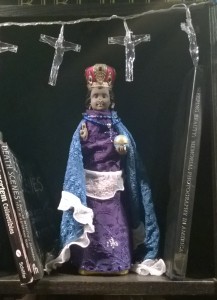
enfant of prague

Also increased: Catholic artifacts.

Interested in developing a sketch habit? Check out Mike Rohde’s great, quick read, The Sketchnote Handbook. Here’s a preview:
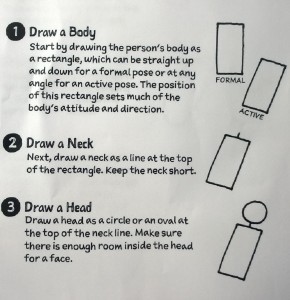
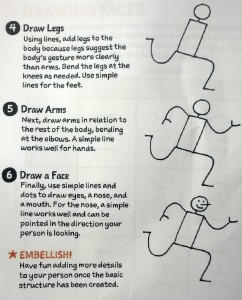
sketchnote1

sketchnote2

sketchnote3

Greg Jericho is the Digital Publications Chair for AIGA Baltimore.  He also admits that, despite all the posters and t-shirts he had as a teenager, he never actually listened to Iron Maiden.

How to Prepare A Design Portfolio for Ink & Pixels Portfolio Review

Ink & Pixels Student Design Conference is almost here! Are you ready, students? As you prepare your portfolio for the portfolio review, keep these tips in mind so you can be set for success. Have any other tips to share? Add them in the comments!

Coming to Ink & Pixels but don’t have a portfolio? It’s OK! Just bring some of your recent work to share and our reviewers will give you feedback on how to improve and present it. 

  • Make a good impression by wearing professional attire, smiling, and arriving on time; better yet, arrive early.
  • Introduce yourself and shake hands. Tell the reviewer your name and something interesting about yourself: what type of industry you want to enter, why you chose the field of design, etc.
  • Include 7–10 pieces of your best work in your portfolio presentation. For a lasting impression, your first and last pieces should be your strongest.
  • Showing interactive work? Come prepared with a fully charged laptop or other portable device and make your projects available offline, in case an Internet connection isn’t available.
  • Be ready to discuss your work and answer questions. Explain how you developed the idea, what research was conducted, who the target audience was, and any challenges that you may have faced when creating it.
  • Don’t rush through your portfolio presentation. Speak at a normal pace and give the reviewer time to comment on each piece.
  • Be open to constructive criticism. The reviewer is there to help you. You can filter through the comments later and decide which changes to make. Bring a pen and paper to take notes.
  • Be prepared to give your resume and business card to the reviewer. Also, including a leave-behind with a few examples of your best work will make your presentation even more memorable.
  • Ask the reviewer questions about their job. Take the opportunity to learn about what they do and how they got there.
  • Ask for the reviewer’s business card and follow up with an email or note to thank them for their time and feedback.

Don’t miss out on your opportunity to meet three (or more!) professional Baltimore designers and get feedback on your work and your portfolio. Register now to grab your spot today and you will be entered to win a one-year subscription to Skillshare, a limited-edition poster, or a chance to have lunch with an Ink & Pixels speaker, too!

Board Spotlight: Michelle Fazenbaker

From a young age, growing up in the small town of Grantsville, MD, Michelle had a strong desire to have a career in the arts. She overcame opposition (a career counselor advised her that she had no aptitude for the arts and would be better suited as a secretary), followed her dream, and studied Mass Communications at Towson University. She went on to earn a Masters in Publication Design from The University of Baltimore.

Since graduating she has enjoyed a long career in marketing and advertising with companies including Erickson Communities, Constellation Energy and, now Millennium Marketing Solutions, where Michelle has served as an Art Director for over five years.

AIGA Baltimore’s Board gives Michelle great opportunities to meet new people and support AIGA’s mission to advocate for the use of good design. When Michelle is not working,  she enjoys painting, playing pool on her APA billiards team and, spending time with friends and family. If you’re looking to make quick friends with Michelle, consider serving her a scoop of Ben & Jerry’s Everything But the Kitchen Sink ice cream (her favorite flavor), or a glass of Captain & Diet (it’s never made her sick, so she swears by it).

And, as for her favorite font, it’s American Typewriter, a highly under-appreciated font that offers variety and many styles. For Michelle, when used with a purpose, it can bring great impact to a design.

Lights! Camera! Action! An Evening with Dan Gerlach of Storyfarm

How do you decide if you need video production services? Dan Gerlach, partner at Storyfarm, gave an informal talk at our February Blend and shared with us the value that video brings to promotions and how to employ a professional video production agency.

“When compared to text, still pictures, or audio on its own,” Dan said, “video is the most effective in fully engaging an audience because the average person is more likely to recall a message or take action after watching a video.” He went on to list the applications of video for business: presentation openers, product demos, orientations, FAQs, event highlights, and case studies.

“There’s a lot of room to get creative,” he said.

Dan advised attendees to consider what value a video may have for the intended audience before anything is created. “Avoid catering to internal stakeholders, focusing on sales, and exclusively highlighting your brand. Take the time to generate ideas for content that are both informational, entertaining, and ultimately attention-grabbing.”

Once you have a video concept, you should explore production options, keeping in mind that a video only needs to be two to three minutes long. Light-hearted gimmicks that are used for a temporary promotion might benefit from a simple DIY production, such as Vine, while a formal address explaining the cornerstones of a company needs a more professional approach.

“When evaluating an agency for video production,” Dan explained, “first look at their portfolio. The best video production agencies have YouTube pages filled with case studies, allowing you to gauge their quality and output. Next, look at your budget and their pricing. A two- or three-minute video will cost roughly $12-15k for 10 hours of professional production.”

Dan also suggested looking at what potential an agency has for a long lasting partnership, since working with the same company on multiple projects, such as a promotional series, may offer additional perks as well as discounts.

For an in-house or freelance designer, he had this advice: make sure you have a seat at the table while your company is working with a production agency. If you’re acting as the creative director, you will need to ensure that the visual identity and style is being held to the company’s brand standards.

For more information about Dan and Storyfarm, head over to their website and check out some of their production videos on Vimeo.

Joshua Uzzell is a well-rounded graphic designer who previously helped plan AIGA Baltimore’s monthly Blend and Converse events. Check out his work at www.joshuauzzell.com.

Board Spotlight: Vanessa Vichayakul

Although Vanessa Vichayakul grew up in Montgomery County, she lived in Thailand for six years. She speaks Thai and French, and her two favorite cities in the world (so far), are Paris and Istanbul. Vanessa loves to travel and see how other people live their lives. And, when she has time, she enjoys reading, writing, cooking, and yoga.

Vanessa is tuned into the local design community and says the opportunities to meet people are great. Even though she’s currently employed full-time as a Public Relations Coordinator with TEKsystems, she’s met a bunch of people she’s been able to learn from. Her networking skills are put to great use through her position as Visibility Director on the board.

Outside of her 9-to-5, Vanessa also freelances as a marketing and brand strategist, with some copywriting and graphic design projects thrown in there, too. She picked up graphic design while getting her M.A. in Design Management and fostered a love for organizing a conceptual message into a visual format. “Design is problem solving,” she says, “So you work within constraints and for a purpose.”

When asked about her thoughts about the AIGA Baltimore board, she says, “They’re such a fabulous group of people, and, even though some of us are new, we really work together as a great team.”

We asked her to name her favorite “must see” spot in Baltimore. “Though it’s in plenty of guidebooks, I’ve grown fond of Fort McHenry. It’s so peaceful.” And her drink of choice?

“Before 5pm, it’s a whole milk cappuccino,” she says, “But after 5pm, it’s a good Malbec.”

Converse: An Evening with R2integrated

What exactly does a design firm want to see in your resume and portfolio? AIGA Baltimore (and a few very lucky students and professionals) went to the source to find out. R2integrated, the award-winning digital marketing agency that recently joined Baltimore’s skyline, welcomed us to their Pratt Street headquarters for some insight into their hiring process and individual portfolio reviews.

After an exciting studio tour and an introduction to the r2i team, we broke into small groups to discuss job application tactics. There were so many great tips! The advice we heard reflects what r2i seeks from their prospective employees, but it’s also useful for any potential design job. Here’s some highlights:

  • Be memorable…in a good way. Find ways to make a strong impression with your resume, your portfolio, and your interactions throughout the interview process.
  • A sense of humor and the absence of a cocky attitude are key personality traits.
  • Your resume should be concise and easy to skim, because the person reading it usually just wants to get to the good stuff — your design samples. Visual hierarchy is key!
  • When presenting your work online, don’t use a crappy-looking portfolio website, even if it’s got a professional-sounding domain name. The reviewer is looking at your work, not your URL, and if web coding isn’t your strength, use Behance or Squarespace for a better presentation.
  • In an interview, don’t show more than 10 projects. Do make sure to lock down your design story before presenting. Explain your goal for each project, but keep it brief and interesting.
  • You’re not the only person being interviewed — research the company beforehand, and ask questions!
  • r2i appreciates a good print project, but they are web-based first and foremost, so include examples of web design (especially responsive design!)

Check out r2i’s full list of tips here!

Thanks again to the team at r2integrated for a fabulous and inspiring evening!

Psst…are you a design student or recent grad who’s interested in more job search tips and portfolio feedback? Join us for the third annual Ink & Pixels Student Design Conference, on April 12 at Stevenson University. Learn to present yourself and get constructive feedback from the pros. More information is coming soon — join our mailing list and follow us on Facebook and Twitter to get the deets!


Meredith Burke is a web & print designer, knitter, and craft beer enthusiast. She lives in Baltimore with her husband and a black cat named Brock Samson. Currently, Meredith’s working on beefing up her front-end dev skills. Check out mdith.com to see her work.

Greg Jericho spends an awful lot of time designing for clients that do not exist. Check out his work at gregoryjericho.prosite.com.

Photo credit: Kate Lawless. When she isn’t scheduling social media and writing blog posts for AIGA Baltimore, you can find Kate Lawless designing communications, digital signs, documentation, and interactive software elearning for University of Maryland Faculty Physicians, Inc., in Baltimore. You can reach Kate on Twitter @katereeez or at socialmedia@baltimore.aiga.org.

Behind the Scenes: February’s Open Board Meeting

What is AIGA, and what do we do?

Last month, the AIGA Baltimore board welcomed designers and design advocates to check out our monthly meeting at Heavy Seas Alehouse. AIGA members were invited to grab a beer and be a part of the conversation as we talked about the past month and what we’ve got in store for the future. Spoiler: a lot.

We met up at the Alehouse where our Membership Director, Marisa Martin, introduced AIGA Baltimore and its board members. Shortly after, the meeting was called to order and everyone in attendance was given the opportunity to make suggestions, all of which were discussed with the group and noted by board members for possible action.

Since we had some people who couldn’t make it to the meeting we’re posting a recap of our February meeting here. Take a look and share your feedback on what you might want to see from us.

Marisa started off the evening with a short history of AIGA’s past, present, and future.

If you’d also like to know a little history, our national website is a great place to learn about AIGA and what we do.

How old is AIGA?

  • 100!
  • This year, we’re reflecting on our history and planning our legacy

We’re developing a strategic plan:

  • A national committee is is currently reviewing all current practices and policies, ensuring that we’ll be a strong, respected institution for another 100 years
  • Based on their findings, they’ll develop a five-year strategic plan for implementing the envisioned change

Major recurring themes and recommendations:

  • Members and chapters are the nexus of the AIGA experience
  • Membership engagement is key to viability and loyalty
  • Members expect greater means of connecting with each other
  • We are our members, not an omniscient institution

AIGA Baltimore is celebrating a milestone…!

  • We just turned 25!
  • We had a big celebration during Design Week but, as with AIGA national, this calls for our own period of reflection
  • AIGA Baltimore is taking national’s membership focus and translating it to our chapter and our community

We’re focusing on creating and increasing:

  • Personal connections and engagement
  • Value for our events
  • Inclusiveness and transparency

Next, we shared some insight into AIGA Baltimore’s operations.

Meetings:

  • The entire board gathers every first Monday of the month for about 2 hours
  • We meet in smaller groups as needed
  • Basecamp is the chapter’s current project management tool of choice. Our legacy information is saved in PBWorks and is shared with all chapters
  • Once every 6 months, we have a board retreat, an extended day-long meeting

Leadership Retreat:

  • National conference just for board members
  • Number of attendees depends on the size of your chapter (we send 4 board members)
  • Connect with National and board members from the other 66 chapters

Who are all these people?!

We introduced ourselves, guests and all, which helped provide more context to our conversation. You can find a list of our current board members here. For a personal look at each one of us, keep your eye on our blog for Board Member Spotlights.

Then the board meeting began.

We ran through some important action items for upcoming events and communications. The usual meeting agenda was condensed for our guests’ sake, as the amount of information covered can get overwhelming sometimes, even for us. Board membership is hard work, but we volunteer because we love what we do!

Our State of the Chapter address followed.

Jennifer Marin, Co-President

  • Co-Presidents are in close communications with AIGA National and other presidents across the country (lots of phone calls!)
  • Last year’s chapter goals:
    • Strengthen the chapter by growing size of membership and the board
    • Increase visibility by creating meaningful relationships with area organizations
    • Provide consistent and valuable programming
  • 2014 chapter goals:
    • Ensure the stability of the board through succession planning
    • Diversify outreach by programming relevant events to a wider variety of disciplines

Courtney Glancy, Programming Director

  • 2011: joined during big transition on the board/membership, audit and re-evaluated programming
  • 2012: ran 10 special events (non-recurring events)
  • 2013: ran 15 special events with many attendees
  • We’ve come a long way. In 2013 the membership structure changed; we adapted and figured out how to make events worth it in a way that’s profitable and cost effective
  • All our profits go back into programming and operating expenses
    • Operating expenses: storage unit, web hosting, insurance, board retreats, etc.
  • Premium Blend: look out for these special Blend events
    • Blend used to be a happy hour for designers, but we evolved them into a mini-lecture series: they’re informational, relevant, and, at the same time, very social
  • Ink & Pixels: a student conference that debuted in 2012. We had a loss that year, but made up for it in 2013.
  • Design Week: Also debuted in 2012. In 2013, we increased engagement and attendance. Watch out for DW2014! It’ll be awesome.
  • 2014 goals:
    • continue to evaluating programming for relevance, profit, and value
    • increasing the number of valuable special events
    • listen to members more to hear about what our audience wants to see, so we know what ‘value’ means in programming

Kara Turner, Communications Director

  • What aren’t you seeing that you’d like to see? Let us know: communications@baltimore.aiga.org.
  • Social Media: Won CBS Local Affiliate award for Best Local Art Enthusiasts to Follow on Twitter

Greg Jericho, Digital Publications Chair

Michelle Fazenbaker, Special Events Director

  • Part of the focus for 2014 is to celebrate AIGA’s centennial
    • The goal of this year is to create awareness on a national level and on a chapter level
  • Design a Chair project is one example
    • National got a company to donate chairs and Baltimore had the opportunity to design a chair with children’s artwork from Art with a Heart.
    • Our chair is in NYC right now at the AIGA gallery.
    • We’ll get it back and donate it back to Art with a Heart after the design chair show

Marisa Martin, Membership Director

  • Considering the new(-ish) membership structure and the refined focus on membership, it’s an important, yet challenging, time to be a Membership Director
  • We increased membership by 32% in 2013!
  • We will hold two membership drives in 2014, so be on the lookout!
  • Opening the doors of communication with members and the community
    • Not just growing but maintaining a strong, thriving membership base and design community in Baltimore
  • Defining the value of membership and ways to increase engagement, retention and grow membership
  • Nationwide, we have 1000+ events per year, 100+ per month; global events, too
    • Important that you find them valuable, and we need your input!
  • Members drive the AIGA content, and give us the capital to continue providing what you need
    • 90% of the sustaining memberships (mid-level at $250) goes directly back to the chapter

Sara Blumberg, Volunteer Chair

Finally, we opened the floor for input, questions, and comments from our attendees.

Feedback highlights:

AIGA as a whole is still being considered an organization primarily focused on print-based graphic design, something one of our attendees voiced this evening. As AIGA continues to evolve, our goal is to be more inclusive of all industries related to design; however, we cannot do this alone. By partnering with other organizations like Refresh, R2integrated, ADG Creative, Gilah Press + Design, and Storyfarm (just to name a few!), we can work together to connect our communities. As one of our favorite member attendees stated:

Design is at a certain crossroads; not just print, not just digital. There needs to be a re-education of what design actually is. It’s more than just style and aesthetics. People outside of design don’t really understand that.

Our job at AIGA is to facilitate that conversation, but it’s up to you to spread the word!

And we posed a question for Attendees: If you could come to any AIGA event, what would it be about? Here are some of their suggestions.

  • Code vs design interaction: how do you make the it beautiful and not have a multi-car pile-up in the intersection of design and code?
  • Speed developing: bring in a design and translate it into code
  • Design/development training for clients
  • Portfolio development: possibly submitting a design online, feedback is presented, have an event to show the re-draft
  • Infographics: a workshop series about getting data and creating infographics from it
  • When do you know when to hire your first employee as a design entrepreneur? What kind of employee should you hire? And other challenges from a business perspective

Now what are your ideas? Leave us a comment below or email us at info@baltimore.aiga.org!

Touring through the National Parks Conservation Association’s Brand Journey

When Scott Kirkwood joined the National Parks Conservation Association (NPCA), headquartered in Washington, DC, as the senior editor of National Parks magazine 9 years ago, he knew he had a lot of work to do. The magazine was in desperate need of a redesign, the annual report had been neglected, and the logo hadn’t been revised since dinosaurs roamed the planet. He could sum up the brand in one word: stale.

But he said “We can do better!” Scott buckled down and began making small tweaks to the design department’s production and nearly 10 years later he’s lived to tell the tale of the NPCA’s brand revitalization. His side-kick, Annie Riker (who came on as a designer at NPCA in 2006) joined him on Tuesday, January 28, 2014, to talk to a large audience of brand-hungry design lovers at Groove Commerce’s new digs in Harbor East.

Participants nodded in agreement as Scott and Annie revealed their views on cultivating client and partner relationships and what constitutes engaging content. Check out some of the highlights from our Twitter feed below and some great moments captured above.

Continue reading “Touring through the National Parks Conservation Association’s Brand Journey”