Ben Jenkins Lives Slow and Makes Fast

Ben Jenkins, founder of OneFastBuffalo, toured the East Coast hitting up six cities in six days to talk to six AIGA chapters about how he evolved his design business and his personal life into a more satisfying and fulfilling one. We laughed, we learned a lot about his concept of work-life balance, and we talked about how designers have a natural inclination to be designtrepreneurs.

“Twitchyness is contagious”

Ben Jenkins started his presentation with a disclaimer: “I can be a bit twitchy, and it can be contagious.” And as he continued through his talk, we watched him go into side tangents, witnessing just for ourselves how twitchy he was. We hung onto every word, anyway, as Ben told us a story about how he evolved his design business and his personal life into a more satisfying and fulfilling one.

About Ben

Growing up in the suburbs of Dallas, Ben Jenkins loved two things: art and baseball. He admitted it’s an odd combination; there aren’t many sports fanatics that are also into art and design. Following his dreams, he got a scholarship to play baseball at Mississippi State University, where he studied graphic design and architecture. After graduation, Ben went on to play for the Phillies in the minor leagues, and out on the road he passed the time working on small design projects for whoever asked him. These projects put him on the path to freelancing after Ben realized that his career as a baseball player was not going to land him in the big leagues. He continued his education at the School of the Art Institute of Chicago, where he earned an MFA in Art & Technology.

Everything is Bigger in Texas (Including Partial Male Nudity)

In 1998, OneFastBuffalo (OFB) was born from the idea that conventional wisdom isn’t always useful. Using his competitive nature as a ball player, Ben grew OFB from a two-person operation to a boutique firm. OneFastBuffalo would move from one office space to another as they expanded, and each time Ben would strive to create the dream office that any agency and their employees would love to have, especially one that would impress clients.

Through the growth of OFB, Ben sought validation as a successful graphic designer. He felt strongly that in order to be considered a good designer, he needed a client list full of the big ones. He was collecting his own design trophies, so to speak. Over time, he would spend more energy managing than designing, more time at the office than at his home, and more time making calls for work. Those 10 years of trophy collecting took a toll on Ben. The man who had been good enough to play in the minor leagues had gained substantial weight and it showed (literally) in the photos his wife took of him just wearing gym shorts.

Slimming the Buffalo (and the Man)

In 2008, Ben realized that it was time for another renovation, and not just one of office space. He turned his work and personal life upside down after realizing that he could work better in a different way. In a period of purging, Ben reduced not only his weight and a large portion of needless possessions, but also the size of OFB as the economy took a downturn.

He even subleased his office space (with the furniture), enabling him to do more with less. Plus this allowed him to spend more time with his wife and three sons. Instead of just heading off to work in the morning and getting home late from the office, he wakes up and has coffee with his wife, takes his sons to school, works in his home office (or wherever he feels like working), and spends time with the boys after school, too.

As Ben simplified the external aspects of his business, his branding process changed, as well. Now, instead of giving clients multiple logo concepts, Ben focuses on just one concept until he gets it right. This allows for more concentration and energy to be put into that one idea, as opposed to spreading the creative energy and time across two or three ideas, he says. And, as an added benefit, the client never picks his least favorite concept. And this process works, too! Since Ben began presenting one concept to clients in 2008, he’s only had to go back to the drawing board a few times.

Since 2008, one logo concept is shown to the client. This allows for more concentration and energy to be put into that one idea.
Since 2008, Ben shows only one logo concept to the client. This allows for more concentration and energy to be put into that one idea.

As his business evolved, Ben also stopped worrying about collecting trophies. He now focuses on creative work to help good people make famous brands, and he’s quickly learned that it’s more enjoyable and more fulfilling to work this way.

Where the Buffalo Roam (Have laptop, Will Travel)

While eating some authentic Mexican cuisine with his wife and kids, Ben came up with the idea of a Mobile Creative Lifestyle. Harking back to his days as a baseball player in the minor leagues and being out on the open road, Ben wanted to combine his passion for design and travel. Buying a 1958 Airstream trailer, Ben began to take his family out on “journeys” (not just vacations) and taught himself to “create big work in the smallest of ways,” by working within the confines of wherever he is at the time.

The OneFastBuffalo 1958 airstream mobile office
The OneFastBuffalo 1958 airstream mobile office.


You can now find Ben working on a brand concept in the back of his truck on a lawn chair, parked by a lake, while his wife and three sons enjoy some fly fishing or playing in a nearby playground. This is how “Live Slow, Make Fast” became his new mantra. Ben says that living and doing beautiful things that you enjoy while resting and relaxing will re-energize your work. Working in this way allows him to stay more focused and fill the eight hours (and only eight hours) with a more productive workflow. He uses the 8-8-8 principle to demonstrate this: 8 hours of sleep, 8 hours of play, and 8 hours of work make for a much more healthier work-life balance. There’s time to make and time to live, all in one day.

Ben quickly noticed that this new found freedom of working anywhere at any time made his work better, too. The famous brands that Ben used to chase around now just come to him because they recognize the quality of work he produces and the energy and focus he puts into it.

Designtrepreneur

With his new approach to working, Ben found he had the energy and focus to create brands for himself rather than for a client. He believes that designers are still artists at heart and that their ability to create and produce gives them a natural inclination to start their own personal brands. Armed with a passion for baseball, Ben started Warstic Bat Company, which produces handmade wood bats, baseball gear, and apparel. The company was recently featured in the pages of GQ and was even contacted by Coach to sell a limited run of men’s gear in their stores. Some other brands Ben has created are Treadsmith Board Co. (a snowboard producer), and INDIG (a strategic branding company for Native American owned companies).
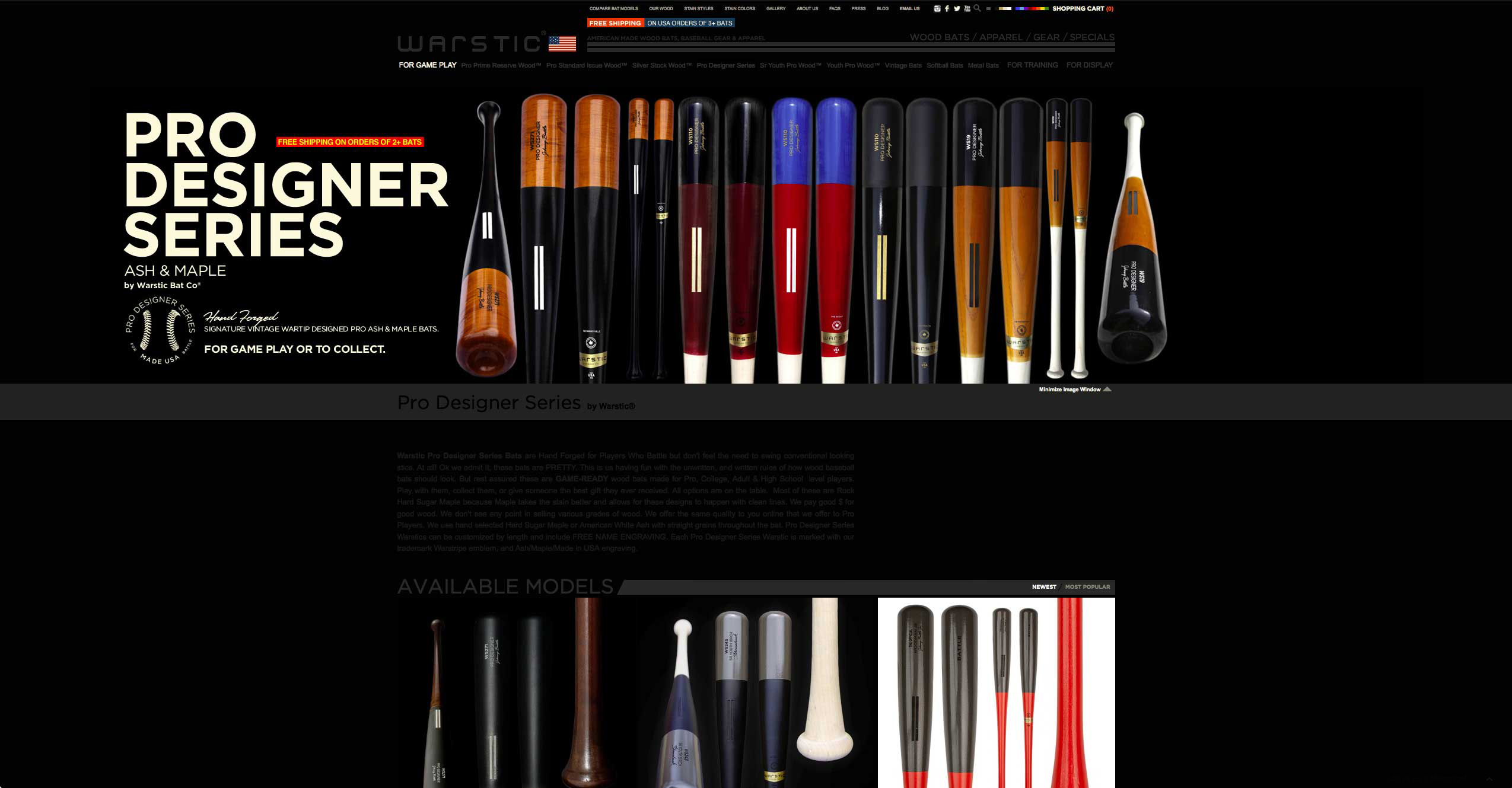
Warstic_Pic
Warstic Bat Company, one of Ben’s many self-created brands.
The Journey Continues

The takeaway from Ben’s presentation is that a well-rounded work-life balance can be beneficial to re-energizing a creative professional’s focus and drive. He says you do not have to allow the pressure and distractions affect you as a whole. Spending time away from the computer and spending quality time doing things that make you happy will help you to be a better creative.

On June 1, 2015, Ben will shut OFB down for the summer and not reopen for business until September 1, 2015. He will travel around the country on a journey with his family, enjoying some quality time together while resting and relaxing. When September comes back around, with the energy he will have stored up, he most certainly will come out swinging his bat of creativity. And we can’t wait to see what he does next.


Chad Miller is a Senior Graphic Designer for MedStar Health who enjoys all things design and all things caffeinated.

From Reviewee to Reviewer: Ink & Pixels From the Other Side of the Table

I began attending Ink & Pixels in my junior year at Towson University. At the time, I was preparing to screen into the design program in order to complete my BFA in Graphic Design. The screening requires a phenomenal portfolio from all candidates to secure a spot, and as I walked into Ink & Pixels I thought I had one. I remember thinking how blown away the reviewers were going to be with my awesome portfolio and design skills. So I sat down across from my first reviewer and introduced myself.

Shockingly, the reviewer was appalled by my lack of professionalism. Despite my best efforts to enhance my appearance that day—I wore a shirt tucked in with a tie to match my personal brand colors—my work and portfolio presentation just didn’t stand up to the test. Looking back, it wasn’t much better put together than a wet rat. But I was stupidly cocky.

After a few questions in, I warmed up to the reviewer and we found our level ground. She complimented my work where it was deserved while detailing every nook and cranny that I needed to change in order to create a quality portfolio. My reviewer took the time to ask me about where I wanted to be professionally after graduating. She asked what designers influenced me and gave me tips to make my goals easier to obtain.

In the weeks to follow, when I was accepted into TU’s BFA program, I decided that my reviewer’s tough love was the best advice I could have gotten. I appreciated the feedback so much that I decided to return to Ink & Pixels the following year, too.

The review sessions from both Ink and Pixels ‘13 and ‘14 allowed me the opportunity to talk with professional designers, some of whom were hiring managers and many of whom I am still in touch with. They told me exactly what I needed to hear and didn’t sugarcoat it. No one held my hand nor did I receive a lollipop at the end. These professionals were there to make a real difference in the way I think and create as a designer, and the advice they gave me extended beyond just presenting my work.

In December 2014, I graduated with my BFA in Graphic Design from Towson University. Before graduation, I put together a fantastic portfolio using everything I had gained from Ink & Pixels. I also used the connections I made with my reviewers to get invited to 10 different interviews. Yes, 10! Those connections got me a full-time job.

So, now it’s my turn to dish out advice: if you’re a student thinking about attending an Ink & Pixels conference in the future, don’t think; DO. It will change your future.

For Ink & Pixels 2015, I knew it was time for me to give back as a portfolio reviewer. I helped several students take a look at their portfolios from a new perspective, guided them on their work and their portfolio presentation, and dished out all the advice and lessons I had learned over the past couple of years.

I reached out to each student I was fortunate to meet, and have even been able to pass on a resumé here and there to hiring managers who may have a fit for the graduating student. It feels fantastic knowing that I am now able to help make a difference in their careers.

A few more words of advice: if you’re a student who has passed through Ink & Pixels and working as a professional, please give back. We can continue to make sure great design is being ushered out on to the world, especially in Baltimore.

Register for Ink & Pixels Portfolio Review!


Liam Clisham, an AIGA member since 2012, owns and operates Five31, completing motion and graphic design for a variety of large and small business, including Exelon/BGE, Keller Williams, and recently Discovery Communications.

How to Give and Receive a Good Design Critique

Why is critique so important?

As designers, we don’t design in a vacuum. A good designer will need to learn to take the feedback from their peers, clients, and bosses to solve a particular design problem. Critiques will also help you broaden your communication skills as a designer, as there is always the opportunity to articulate why you did what you did or to better explain your idea to the reviewer if they don’t see it as clearly as you do.

A good critique can involve both positive and negative feedback, which can be tricky to navigate. Here are some quick tips on how to give–and receive–good design feedback during a critique.

How to give a good critique:

The Love Sandwich
The best way to approach critiquing someone else’s work is to sandwich the feedback with love. If you think of your critique as the sandwich, the bread would be what you “love” about the work and the middle—the fillings—would be what you didn’t like as much.

First, tell your fellow designer what aspects you like about the piece, whatever they may be. Be descriptive. Instead of just saying “I like it” explain why you like it while using specific examples from the design whenever possible.

Next, move onto the constructive criticism. If you think certain aspects of a design aren’t working, try to explain why or offer suggestions on how they can be improved. Asking the designer questions may help them to see problems in the execution of the design that they may not have seen on their own.

You may also want to limit your use of personal pronouns, like “you,” to make sure your critique is about the design work and not about the designer. We all feel personally about our work, but during a critique it’s best to separate the person from the piece. For example, say you have a critique about a line intersection. You may want to say, “The way this line intersects with that line…” instead of “The way you intersected this line with that line…”. This will help reassure the designer that the criticism is about the work and not about them, as designers.

You don’t have to agree or like the decisions of the designer but their work deserves honest feedback. Put yourself in their shoes. If they are brave enough to share their work and ask for feedback, then they deserve to get that, both the good and the bad.

Finally, don’t forget to repeat or elaborate on what you liked about the piece so that the critique ends on a positive note. This way, the designer knows the piece may need some reworking, but also that there are aspects of the design that work as-is, too.

How to receive critique well:

A Grain of Salt
Hopefully, your fellow designer will follow the Love Sandwich guidelines and give you a great, honest critique. During a critique, It’s important that when you hear the good and the bad feedback to take it with stride. Design isn’t math. There are no right and wrong answers; only subjective opinions that may differ from one designer to another.

That being said, remember that a critique is about your work and making it the best it can be; it shouldn’t be about you. If you disagree with specific feedback, explain your decisions thoughtfully but also listen to what’s being said. Remember, those who are giving critiques generally do so because they want to help you grow as a designer, so try not to get defensive or take their criticisms personally.

And, if you don’t agree with specific comments you receive during a critique, it’s okay to ask for other opinions, too. Baltimore is filled with great designers who are willing to help and who love to give a good critique. There are also online resources like Dribbble or Behance that you can log into and share your work with others around the globe. Anyone, even a non-designer friend or coworker whom you trust to give honest and constructive feedback, can be a good resource. And, a good round of feedback is always better than no feedback at all.

Students and recent graduates! Want to have your work critiqued by Baltimore area design professionals? Register for Ink & Pixels, AIGA Baltimore’s Student Design Conference, before it is too late.

What’s the best or worse feedback you have ever gotten during a critique? What advice would you give to someone taking part in a design critique for the first time?

Related Articles:

The 4 essentials of a design critique

The Art of the Design Critique

Design Criticism and the Creative Process


Photo by Jeremy Drey for AIGA Central PA

Kate Lawless often daydreams about how she can make a full-time job out of what she does for AIGA Baltimore. When her head isn’t in the clouds, you can find her designing communications, digital signs, documentation, and online software demonstrations and interactive elearning for the operations department of a large healthcare company in Baltimore. Tweet her at @katereeez

Shannon Crabill is a New Media Specialist at T. Rowe Price. She has a love for social media, tech, all things do-it-yourself, baking, coffee and the occasional cringe-worthy pun. Outside of the Internet, you can find her dancing, riding her motorcycle and binge-watching home improvement shows on HGTV. Tweet her at @shannon_crabill

Tall Tales From a Large Man at UMBC

Using scientific proof and state-of-the-art multimedia techniques, Aaron James Draplin of the Draplin Design Codelivers a sucker punch of a talk that aims to provide bonafide proof of work, the highs and lows of a ferociously independent existence and a couple tall tales from his so-called career in the cutthroat world of contemporary graphic design.

Just a regular guy with a trajectory a little dirtier than yours, his talk is open to all oncomers brave enough to show up. If you are a youngster, you may find yourself inspired to attack your design future in a different way. If you are established, you may just leave feeling grateful you don’t have anything to do with him. Hard to say. Be there!

For more information visit Visual Arts UMBC

Date:
Thursday, April 9th
7:00 pm to 8:30 pm

Address:
University of Maryland, Baltimore County
First floor of the Albin O. Kuhn Library
1000 Hilltop Circle
Baltimore, MD 21250

Price:
Free and open to the public

Parking:
Top Floor of the Walker Avenue Garage. This is adjacent to the Library. For more information see the Parking Map.

  • Visitor parking is available in metered lots with either single space mechanical meters or a pay and display station.
  • Mechanical meters are enforced year round Monday-Friday from 7:30 am until 9:00 pm. Meter fees are $.25 for each 15 minutes, quarters only, maximum time of 5 hours. Parking Services does not guarantee that change will be available on campus. The mechanical meters are located at the Administration Drive Garage.
  • Pay and display visitor parking is $2.00 per hour and payable by MasterCard, Visa or exact currency (no change provided). Pay and display parking is enforced Monday-Friday from 7:00 am until 7:00 pm. Pay and display visitor parking is located at Lot 7, Lot 9, Commons Garage first level and Walker Ave Garage top level.
  • A visitor with a disabled plate/placard may park in a metered space on Administration Dr Garage without cost for a maximum of 5 hours. The Pay and Display visitor pay stations are ADA compliant and visitors with disabled plate/placard will need to pay when parking in these areas.

Skillshare Subscriptions Giveaways (& MORE!) to Student Ink & Pixels Attendees

UPDATE: Anyone registered for the Ink & Pixles Student Design Conference will not only be eligible for one of four one-year Skillshare subscriptions (see below), but also:

Register Now!


We’re giving away four one-year Skillshare subscriptions to Student Ink & Pixels attendees, and registrants will have many opportunities to win a prize:

  • The first 25 registrants are already entered to win one of the four prizes!
  • The next 25 people to register for Ink & Pixels will be entered to win a Skillshare subscription. Tell your friends and fellow design students!
  • Snap a photo of your recent sketches, comps, or completed design work and post it on Facebook, in the Facebook event, on Twitter, or on Instagram* using the hashtag #inknpix15 and you’ll be entered to win a Skillshare subscription. Triple your chances and post up to 3 photos!
  • Everyone who registers for Ink & Pixels will be entered to win a Skillshare subscription.

All four Skillshare prizes will be selected during Ink & Pixels 2015! Only one prize will be given per winner, and you must be registered for Ink & Pixels to win.

*Your privacy settings on Facebook, Twitter, and/or Instagram must allow the AIGA Baltimore accounts to see your photos.

And don’t forget to RSVP to the event on Facebook to get the latest #inknpix15 updates!

Meet the Ink & Pixels 2015 Speakers

This year’s Ink & Pixels speakers come from a wide variety of backgrounds. Some work fingers-deep in code, while others passionately design for good. Their experience displays the range of career possibilities in the design world: advertising agencies such as LMO; in-house design teams for major brands like Under Armour; government agencies such as the FDA; and consulting and freelancing for all sorts of clients. Meet the men and women we’ll hear from at Ink & Pixels 2015!


Students: Don’t forget to register for Ink & Pixels, a design conference just for you!


Missan MadaniMissan Madani
Social Design: Creating a Professional Pathway for Good
Missan earned a bachelor’s degree in Graphic Design from her hometown of Jeddah, Saudi Arabia, continued her design on to receive a master’s degree from Florence Design Academy in Italy, and went on to earn a post-graduate degree in Design Management in Toronto in 2011. Throughout her studies, she’s focused intensely on global, social, and cultural issues pertaining to design. She strives to integrate design thinking methods and strategies into creative projects that focus on the role of design in serving the public health sector and generating public awareness.


Anna SpisakAnna Spisak
Social Design: Creating a Professional Pathway for Good 
Anna Spisak became a designer by accident. Upon graduating from Susquehanna University,where she studied communications and studio art, she lucked her way into working as an experience designer at Andculture. Immediately prior to beginning the Master of Arts Social Design program at MICA, Anna worked as a design strategy consultant for technology startups. As a designer, Anna is invested in exploring the relationships and intersections among a wide variety of focus areas, including civic innovation, community organizing, education reform, fostering entrepreneurship, storytelling, and making Design accessible to the general population.


Jen SullivanJen Sullivan
Social Design: Creating a Professional Pathway for Good 
Jen Sullivan graduated from the the Columbus College of Art and Design in Spring 2014 with a BFA in Advertising and Graphic Design. She is passionate about merging her love of visual communication with her desire to cultivate social change; this passion lead her to the Master of Arts program at MICA. While Jen has a myriad of career interests in the world of social change, she would like to focus her time and talent towards working for causes that support orphans, promote physical and mental health, and protect the environment.


Maged AbdelsalamMaged Abdelsalam
Social Design: Creating a Professional Pathway for Good
Maged earned a Bachelor of Art in Visual Arts from the American University of Cairo and a Certificate in Web design from the University of Washington in Seattle. He is interested in web applications and social media as tools for social problem solving. He has worked as a visual designer, designing brands, coding sites, and directing ad campaigns with young startups and non-profit organizations.


Angelique WegerAngelique Weger@messypixels
30 Tech Concepts in 30 Minutes
Angelique Weger is a senior front-end developer at Detroit Trading and co-organizer of the Baltimore chapter of Girl Develop It. She splits her time between those two cities and her energy between crafting clean, effective code and teaching others to do the same. Strike up a conversation with her about the command line, comic books, Sass and/or sharks.


Dan BlakeDan Blake, @designbyblake
COGS in the Machine
Dan Blake is a veteran front-end developer with over 10 years professional coding experience. Starting his career coding in closet at a small company he quickly advanced to working in a larger closet at a larger company. Over the last 7 years Dan has worked for two of the best web development shops in Baltimore and has built websites for The Maryland Science Center, The Visionary Arts Museum, The Coast Guard, The National Guard and a variety of other unnamed government agencies.


Panayiotis KarabetisPanayiotis Karabetis
COGS in the Machine
Panayiotis Karabetis has ridden the Internet wave since before it was called “the web,” and is a fifteen-year veteran of designing business and information systems. His admiration for digital / online solutions began with boutique web design business in high school and continued with several startups through college. He completed his education at University of Maryland Baltimore County graduating Cum Laude with a Bachelors of Science in Visual Design and Communications. By age 30, Panayiotis built and sold two businesses with dual roles in each as partner and lead User Experience Designer. As Director of User Experience at LMO Advertising, he leads a talented team of information architects and visual designers and coordinates their efforts with various disciplines within the organization.


Michael JovelMichael Jovel, @mjovel
For Web and Country
Michael is a Front-end Developer at Food and Drug Administration. He also organizes Bmoresponsive, a conference dedicated to creating things for the multi-device web. Prior to joining the FDA Michael worked for the Department of Defense.


davecolsonDave Colson
The Local of Global
Dave is a Canadian-born graphic designer whose professional experience includes an apprenticeship, working at a studio, a mid-sized agency, a start-up and now for an international brand (Under Armour). He graduated with a BFA from MICA in 2010. Dave has lived on two continents, in three countries and thinks it’s important to look after your neighbors.


elyseexpositoElyse Exposito
The Local of Global
With a background in media, publishing and design, Elyse has always been fascinated with visual communication. After graduating with a BS from Towson University in 2008 and a BA from UMBC in 2012, she’s now a 2D Designer at Under Armour. Craving new experiences always, Elyse is planning a trip to Thailand and pursuing her yoga license.


theopintoTheo Pinto
The Local of Global
Born and raised in Belo Horizonte Brazil, Theo left home at age 18 to pursue his passion for design and fine arts. He graduated from MICA in 2013 with a BFA in Environmental Design and is currently a 3D Designer at Under Armour and the Co-founder and Design Director of BeTheTo Studios in Baltimore. He’s also a self-proclaimed travel junky.

And The Winners Are…

After drooling over very colorful and inspiring workspaces of the AIGA Baltimore Instagram community, it is finally time to announce the winners of last month’s Instagram challenge. DRUMROLL, please! May we present:


Emilee Beeson:

http://instagram.com/p/zqqWxoO555/


and Tiff Mason:


http://instagram.com/p/ys3d–xC2Q/


Congratulations to Emilee and Tiff! They each won a 1-year subscription to Skillshare!


We’d like to give all our challenge participants a BIG THANKS for sharing your workspaces with us. We loved seeing where you work, your colorful walls, pretty posters, creative desktop backgrounds, and awesome adaptations of our challenge hashtag, #bmoreAIGA100. To see all the entries, head over to Instagram and search the hashtag #bmoreAIGA100, and stay tuned for more challenges and Skillshare giveaways!


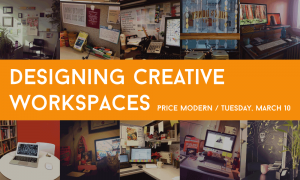
Now that we’re feeling workspace inspired, how about joining us for a mix-and-mingle at Price Modern on Tuesday this week?


20150310_workspaces_1000x600

We’re getting together to dive deep into the topic of designing creative workspaces and we want you to come join us! Light refreshments will be provided, and we may head over to the Ottobar afterwards, too. See you there!

An INside look at Baltimore magazine

Baltimore Magazine was first printed in 1907 by the Baltimore Chamber of Commerce. It is to this day, the oldest city magazine in the U.S. In 1994, Steve Geppi, owner of Rosebud Entertainment acquired the magazine with the goal of reviving the publication by rethinking its content as a channel to celebrate the great things that Charm City has to offer. With over 50,000 magazines in circulation, its in-house creative team collaborates diligently to keep the look and feel of the publication fresh and dynamic. Amanda White-Iseli has been Art Director for the publication for the last 16 years and shares insight on her in-house team.

How far in advance do you start working on your next issue?

Baltimore is a monthly publication designed on a 4- to 5-week production cycle. My team and I work closely with each other and with the editorial team throughout the cycle. Work begins even before the previous issue hits newsstands as art directors and designers meet with editors and writers to discuss the stories for the next issue. As a department, we all rely on each other for collaboration and critique at every step of the process. We’ve developed a strong, harmonious relationship with the editorial staff as well as with our digital and social media divisions, whom we also work closely with.

Special Editions and Marketing Art Director, Staci Lanham designs our quarterly Home section, our annual Baltimore Bride magazine, and all in-house promotional materials. Our Design and Print Division—headed up by Art Director Vicki Dodson and Senior Designer Michael Tranquillo—is creating fresh, new looks for businesses all over the region including print advertisements, stationary, media kits, newsletters, brochures, and more. Jon Timian is our Production Manager and is responsible for the top-notch production of the magazine—color correcting, along with the image, print, and paper quality. Production Artist, Marina Feeser designs ads and manages ad production for the monthly magazine as well as Baltimore Bride. Craig Forbes is our digital designer handling our web design and many of our online videos.

Understanding the broad strokes of the story and the writer’s tone influences the direction of the design and helps with the initial concept stage. Stephanie Shafer, the editorial design assistant, is responsible for part of the front of the book and all of the departments. Sophia Belitsos, the assistant AD, designs the rest of the front of the book, some features, and our Local Flavor section. I design the cover as well as features, provide direction to the assistant AD and design assistant, and manage the art department as a whole.

The three of us meet weekly to review progress, discussing design direction and potential illustrators and photographers that would be a good fit for the stories. Each person is responsible for creating art assignments for the stories they are working on.

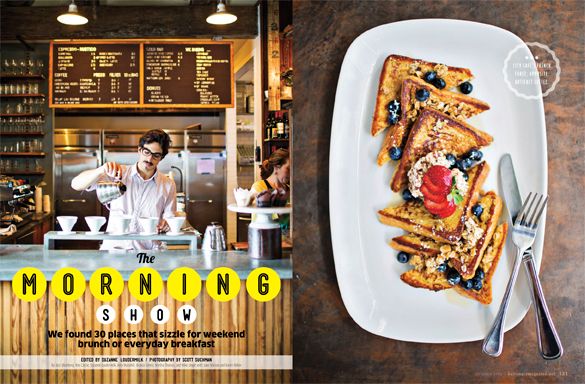
October 2013 issue. Photography by Scott Suchman.
Baltimore’s Best Breakfast Spots. October 2013 issue. Photography by Scott Suchman.
Photography and Illustration have become a huge part of your publication, is all of this done in-house?

David Colwell, our Director of Photography, shoots a large part of the photography for any given issue. Front of the book sections such as “Charmed Life” are typically shot in our studio during the second week of the production cycle. The studio—which is a block away from our Lancaster Street offices in Harbor East—is a large, open space that provides an area where we can paint walls, build sets, and do whatever is necessary to shoot everything from fashion to portraits to product and detailed documentary photography for the monthly magazine as well as our annual Bride publication. (It was even used for a short scene in Season 2 of “House of Cards.”)

We also assign work to photographers in our extensive network of talented freelancers. We try to choose photographers whose style and aesthetic is a good fit for that particular project. We then send a detailed art assignment explaining the story and our design ideas, often including sample images that will help describe the look we are after. We try to give them two weeks to complete each assignment, although time is a luxury we don’t always have.

Baltimore magazine. September 2014. Photography by Mike Morgan. Hand lettering by Martin Schmetzer

We approach illustration projects in much the same way, providing art assignments and examples of illustrations that will help guide the illustrator’s concept and initial sketches. We have worked with renowned painters and illustrators from all over the world as well as those in our own backyard, including MICA graduates and even some professors. We find most of our illustrators either through artist reps or as a result of their own dogged determination to promote themselves via print mailings and email inquiries (yes, a well-written email or catchy postcard still works).

Can you give an example of a recent concept for a cover that you really enjoyed working on? What was the process?
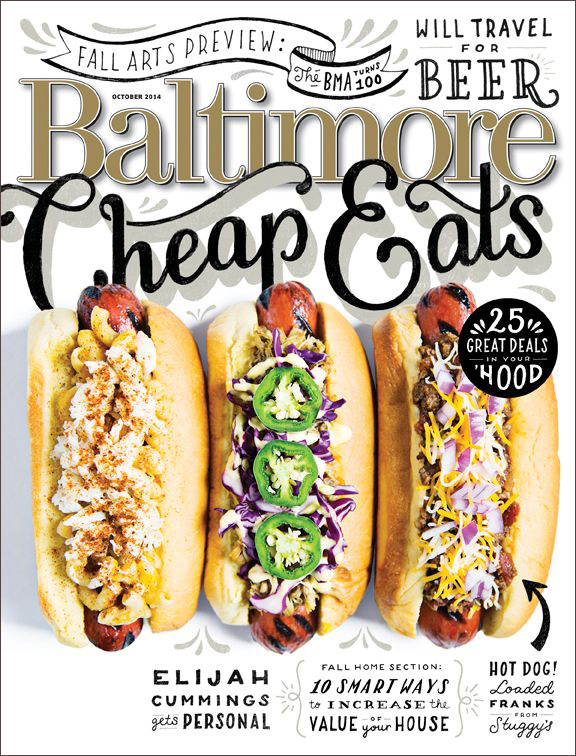
October 2014 issue. Photography by Scott Suchman. Hand lettering by Lauren Hom.

We recently produced our October 2014 Cheap Eats cover which was a lot of work–but really fun to do. The food stylists who I usually work with were unavailable, so I tried my hand at styling the dogs myself. I worked with photographer Scott Suchman who is gifted at shooting food. It was a long process that involved lots of buns, lots of toothpicks, and a soldering iron! I was really happy with the results. I also worked with illustrator Lauren Hom who is amazing! She did the hand lettering for the piece. I provided sketches of what I wanted to include and where—and she worked her magic.

How do you coordinate what goes into your print publication vs. digital?

We meet monthly with digital team to maximize the capabilities of digital media and make the content fresh and dynamic. This can include everything from redesigning charts and incorporating infographics to shooting behind-the-scenes footage from photo shoots as a supplement to the editorial content. We are active on Pinterest and Facebook, posting contests, polls, and generally maintaining an online presence that further nurtures our relationship with existing readers and helps develop new ones. That relationship, and the resulting communication, helps us deliver designs that complement and support the stories and enhance the reader’s experience.

Follow Baltimore Magazine: Facebook | Twitter | Pinterest

Jennifer Marin is co-president of AIGA Baltimore, you can follow her on Twitter: @hungry4design

What’s Up With Your Workspace?

If there’s one thing for certain, it’s that Baltimore designers have some fantastic workspaces. This is only evidenced by the growing number of Instagrammers out there tagging #bmoreAIGA100 on their #workspace photos this month.
So far, we’ve seen that many local creatives have multiple screens:

http://instagram.com/p/zCoI_JN2w0


some expansive workspaces:

http://instagram.com/p/ysn6O3RHii/


and even miniature workspaces with big visuals:

http://instagram.com/p/y0fCtbLLMH/


Speaking of big visuals, we’ve got some inspirational walls:

http://instagram.com/p/yu9mZ6qAtg/


a few ‘remote’ coffee shop spaces:

http://instagram.com/p/y5aydMvgQb/


and some well-appointed cubicles, too:

http://instagram.com/p/zAwgnJOx_i/


And this isn’t even half of the postings on Instagram, so go check out the rest with hashtag #bmoreAIGA100.
While you’re at it, snap a pic of your own #workspace and tag it on Instagram with #bmoreAIGA100. We don’t care if it’s messy and cluttered or clean and dust-free; just do it by February 28th and you’ll be entered to win one of two year-long Skillshare subscriptions!
BONUS ROUND: Want to double your chances? Come up with a creative way to spell out #bmoreAIGA100 in your photo for a second entry.
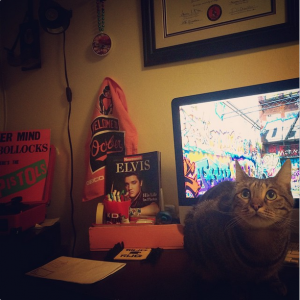
Oh, and here’s one last Instagram with a lovely Bmore feline to leave you feeling cozy on a cold winter’s night:


workspace with O's gear and a kitty
rmadar1: My lil corner workspace, lots of orange, lots of cat. #bmoreAIGA100 #workspace #Baltimore


Meet Megan Brohawn, Baltimore Designer

Megan Brohawn

Megan Brohawn is a powerhouse designer who brings a modern perspective and fresh approach to her projects at Novak Birch. Check out her work and get to know her a little better:

What’s your favorite project in your portfolio right now?
My favorite recent project was designing the Baltimore Triathlon logo. It was a really fun collaboration with Will, the owner of Elite Race Management. The inaugural race takes place in a few weeks, and I can’t wait to see the logo on the final materials – shirts, medals, stickers, banners, and more!

Who’s your favorite designer or design studio?
Jessica Hische; I am really inspired by her hand lettering.

What music do you listen to while you’re working?
Music is an absolute must for me when working! Currently I am listening to a lot of St. Vincent, Jack White, Yeah Yeah Yeahs, and Arcade Fire.

Choose one: Adobe Illustrator, InDesign, or Photoshop?
Indesign.

Why do you love AIGA?
I love AIGA because I enjoy sharing experiences with other designers and taking part in our local design community.