AIGA Women Lead Initiative: Baltimore Community Meeting Recap

Written By: Jennifer Marin Jericho | Photo Credit: Kate Lawless

Women today outnumber men in AIGA’s membership—as in design schools and various disciplines—yet leadership, representation, and parity remain a challenge.

AIGA Women Lead is committed to empowering women in design and advancing the vital discourse on issues facing professional women today without generalizing or segregating women designers. Instead, we aim to address persistent biases and inequities, inclusively and constructively, through programming around three goals:

  • Celebrate the achievements of women in design.
  • Cultivate awareness of gender-related issues, while building knowledge and leadership skills.
  • Connect by facilitating relationships within and beyond the design industry.
AIGA-Women-Lead-Initiative-Baltimore-Discussion
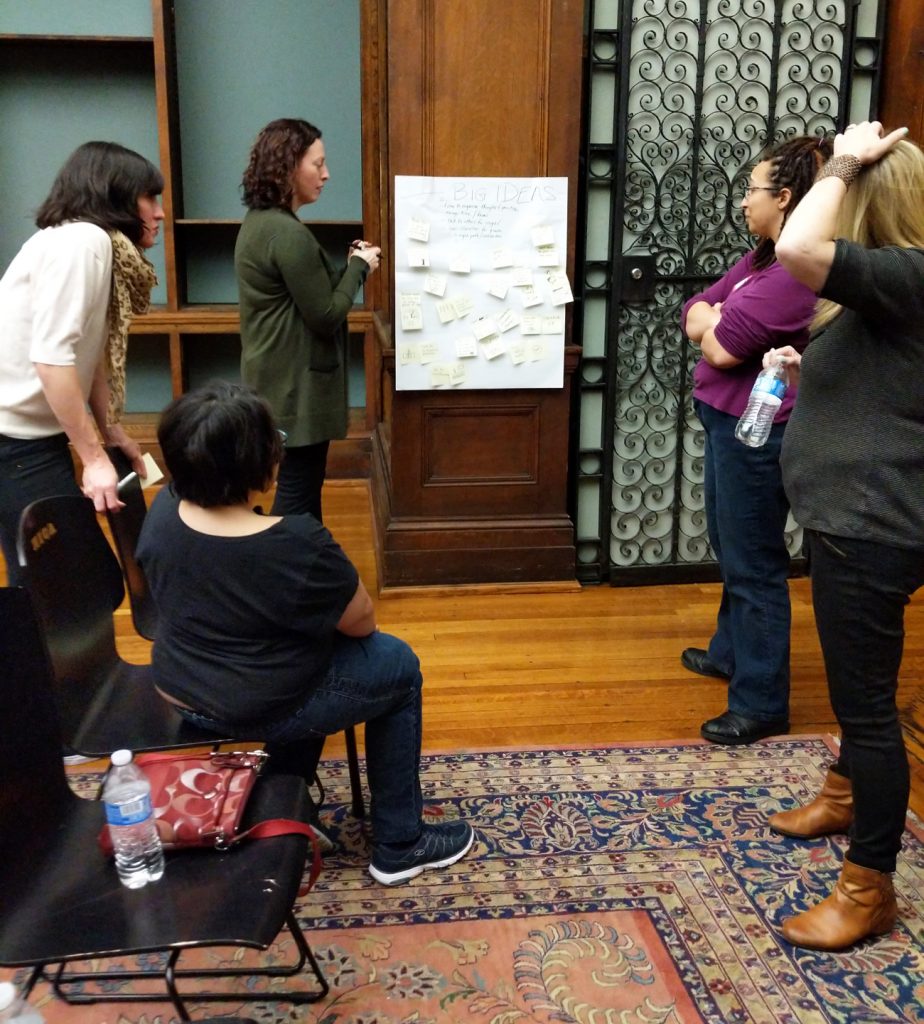
Baltimore creatives gather to develop ideas for launching a women lead program

How AIGA Baltimore Is Working To Empower Women

On March 22, 2018, the AIGA Baltimore Women Lead Initiative Committee hosted a community meeting to connect with local creatives and facilitated a design thinking workshop to develop ideas for launching a women lead program in Baltimore.

While we were interested in leading a local initiative, we wanted to make sure to validate our assumptions about what women in the design community need from AIGA Baltimore. The process may take longer than tossing an event together, but our goal is to build something that speaks directly to the women in our community, is flexible and adaptable, and most importantly, is scalable.
AIGA-Women-Lead-Initiative-Baltimore-Meeting
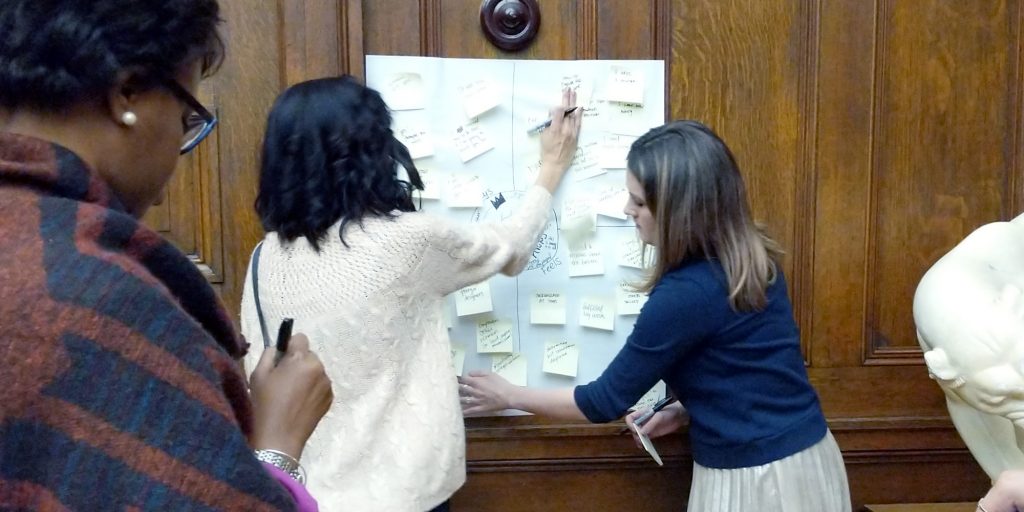
Women from various industries and community programs worked together to answer a tough question.

To accomplish all this, we first had to bring together women in various industries and community programs to ask the question: How might we help women leaders 10-15 years into their career, get the resources they need to step into leadership roles?

Why was this question so specific? Because we have to start somewhere, and often when you tackle large issues such as this one, you run the risk of trying to solve all the problems, and end up solving none of the problems.

Our goal is to empower women to grow professionally and use the tactics and resources we provide to tackle issues that they are passionate about in their own communities. I imagine this initiative as a ripple effect, because we are all responsible and capable of influencing change, and it is crucial that these initiatives are diverse and inclusive.

I imagine this initiative as a ripple effect, because we are all responsible and capable of influencing change
AIGA-Women-Lead-Initiative-Baltimore-Workshop
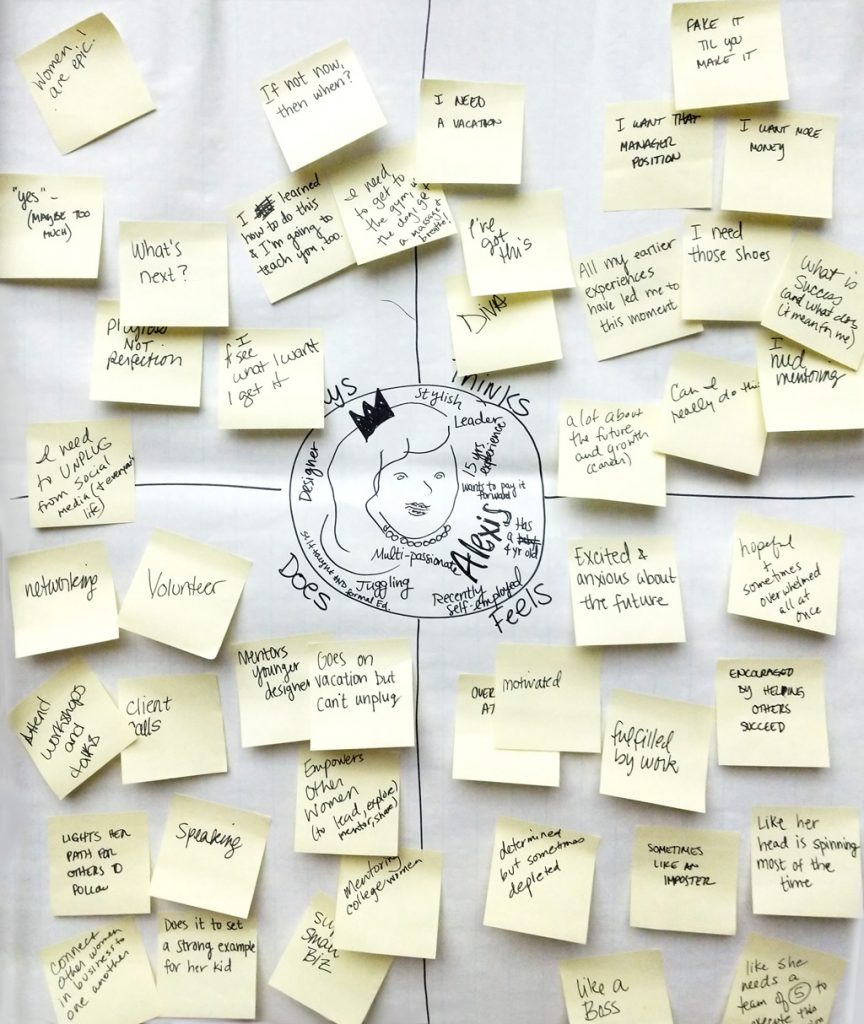
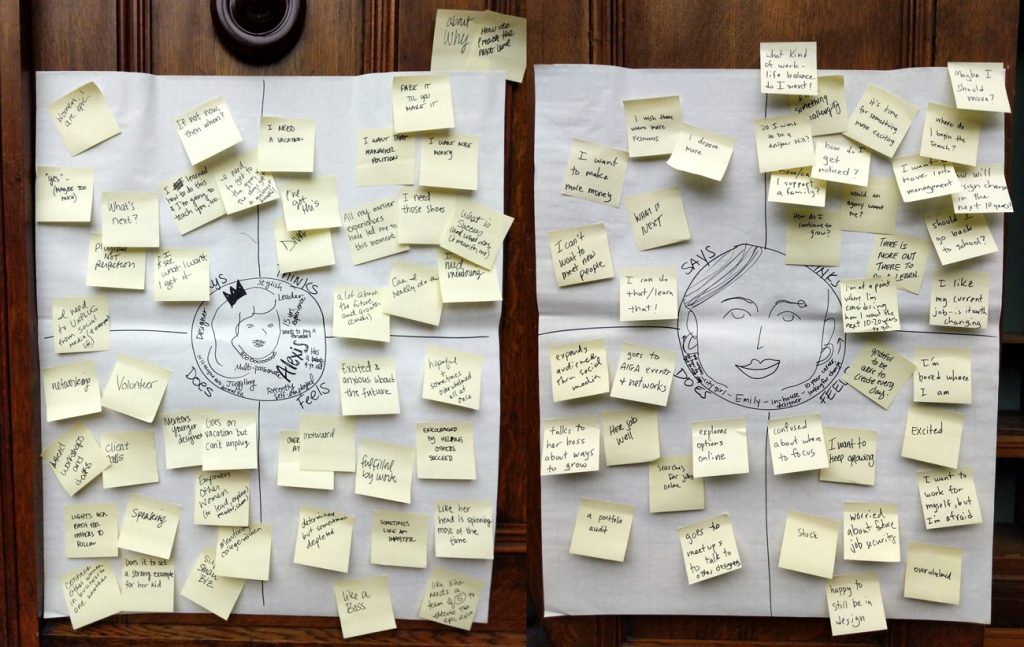
In Design Thinking workshops, an empathy map helps build understanding.

Outcomes of the Design Thinking Workshop

In our two-hour workshop, we led two specific activities. The first was an empathy map, where we broke into groups of 4-5 people and developed personas of various types of women in the industry. The goal of the activity is to put the person at the center and think about what she is feeling, thinking, saying, and doing when it comes to her professional goals. After brainstorming, we then shareback and group common themes. Here are some of the themes that were common among the personas we developed:

  • Anxiety/Uncertainty
  • Growth and ambition
  • Social Interaction/Relationships
  • Self Worth/Reality Check
  • Planning for Future
  • Lifelong Learning/Business Knowledge
  • Life Balance
what do women designers feel, think, and do?
Participants noted that this persona, Alexis, may feel determined but sometimes depleted. She mentors younger designers, but she knows she needs mentors of her own.

The outcomes were not surprising. Most professionals struggle to strike a balance between focusing on career, learning new skills, balancing a personal life, and developing the confidence to do all of the above while maintaining a healthy lifestyle.

How might AIGA’s Women Lead Initiative help to fill the gaps?

To answer this question we did a big ideas exercise to come up with potential solutions to support women in their careers. We had three major themes that came from this workshop: group mentorship, skill development, and self-care.
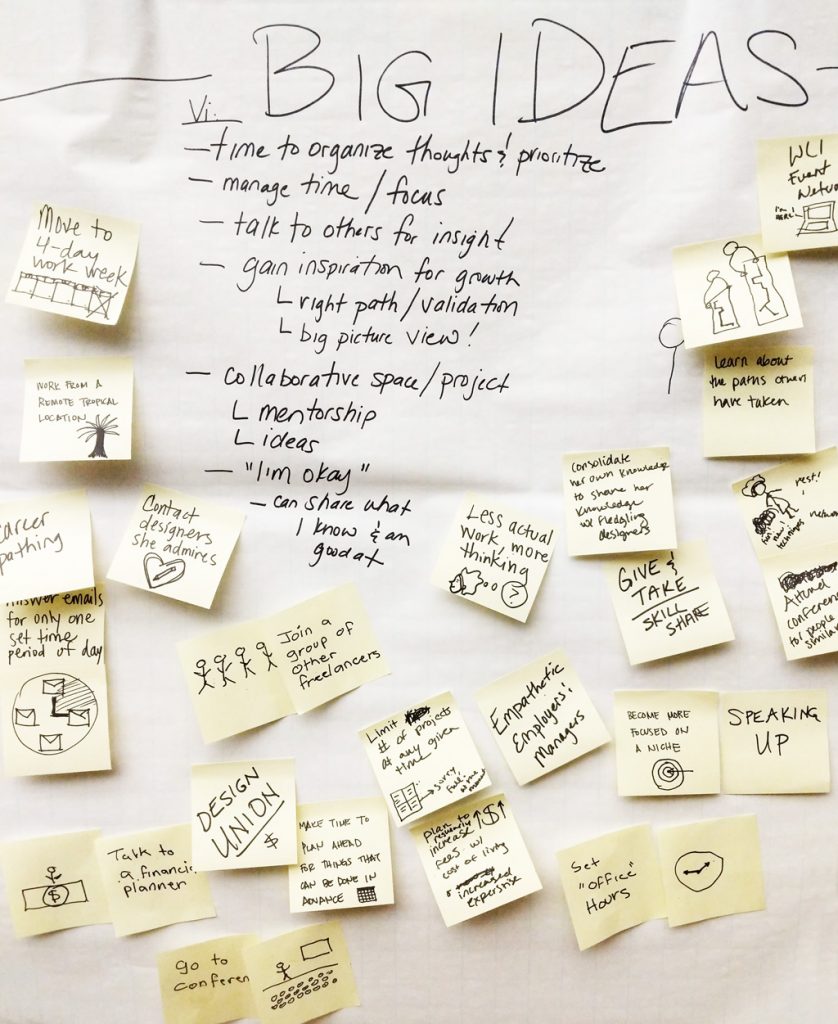
ideas-for-women-lead-program-baltimore-design
The ideas centered around skill development, group mentorship, and self care. All in favor of a 4-day work week, say aye!

Group Mentorship
While coworkers, family, and friends can be a great support system, a professional network is crucial. While the former can provide great emotional support, the latter can provide you the right tools, help you tackle specific challenges and navigate the complexities of building a successful career. I am a huge proponent of building a brain trust, people that challenge you and push you to be better. It has been instrumental in my own career growth.

I just attended the Women Spanning the Globe Leadership Conference hosted by the World Trade Center Institute here in Baltimore. One comment that resonated with me was a speaker who suggested we be more like spiders. Build a web: a network of people that support us and help us catch opportunity. Love this!

Skill Development
We have heard from our members that inspiration is an excellent resource. Inspiration can fuel our creativity, inspire us on that specific project, and push us out of “unstuck”. Yet inspiration can only take you so far; stretching your skills and capabilities will better prepare us to face the challenging problems we face as creatives in a fast-paced world.

This means more than learning new technical skills, we need leadership, business, and management skills to help us grow professionally. This is a common challenge of many designers in our field and it is one we are starting to tackle as a national organization to help designers better communicate the value of design and collaborate with professionals in other disciplines.

Self-Care
This continues to be a common theme in the lives of busy professionals. We know that rest and regeneration are crucial to creativity, but we continue to struggle with the demands of our personal and professional lives. I’d like to see some intentional programming that helps us carve some space for activities that energize us.

I look forward to seeing how this evolves, and I hope you will join us. Stay tuned as we continue to craft a plan for a women lead program that fits the needs of our community members. We will be looking for volunteers in the coming months, so look out and keep checking in!

Jennifer Marin Jericho
AIGA Women Lead Steering Committee
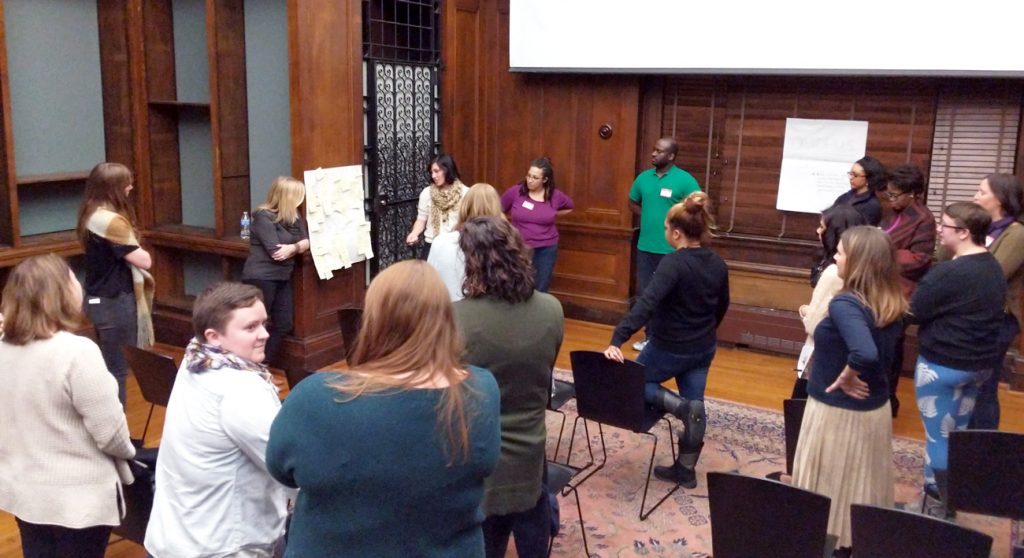
AIGA-Women-Lead-Initiative-Baltimore-Design-Thinking
Thank you to all who joined us for the last community meeting!

Join us at the next Women Lead Initiative Meeting

An Evening of Design Thinking and Radical Collaboration with AIGA Baltimore

Written By: Joseph Carter-Brown and Valerie Anderson | Photo Credit: Frances Miller and Leo Brady

AIGA Baltimore’s Community Meeting started in late 2016 with the intention to provide a platform for members within our creative community to share ideas, concerns, and hopes for the betterment of Baltimore. In meetings past, we’ve heard from representatives from AIGA National on the work the organization is doing as a whole, as well as how the work that goes on in headquarters aligns to the work each chapter is doing locally. Other meetings focused on presentations from a variety of community-based initiatives spearheaded by our board within AIGA Baltimore or other organizations. While we enjoyed opportunities to share the things we love most about the local design community, we found we weren’t spending enough time talking to you about what you wanted.

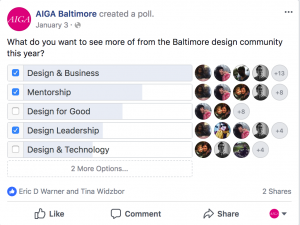
So, at our most recent community meeting on January 16th, graciously hosted by our friends at SlimTech, in an effort to talk less and do more, we made your interests the focus of the meeting. We started with a Facebook poll to gauge where the discussion interests lie. To those of you who participated, thank you for helping to guide the conversation. After choosing the top four topics from the poll, we used design thinking tools to begin to brainstorm ways in which we could impact designers’ pain points in each area of focus.

Facebook Poll Results

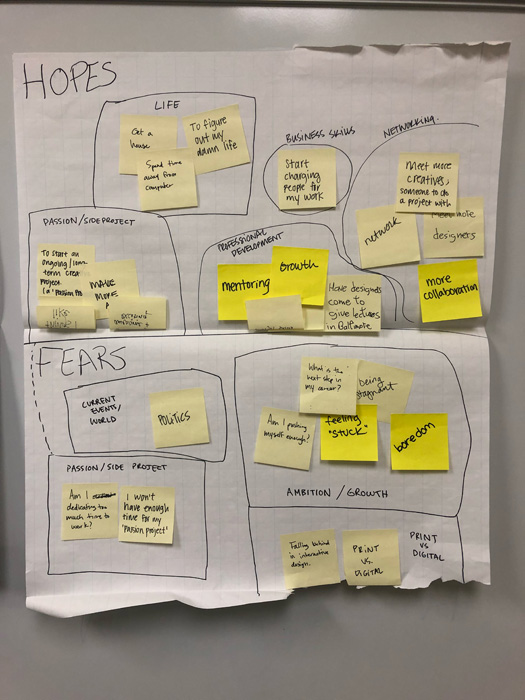
Following a brief kickoff, we asked attendees to jump into action, connecting with their fellow designer and discussing their personal and design-focused hopes and fears for the new year.

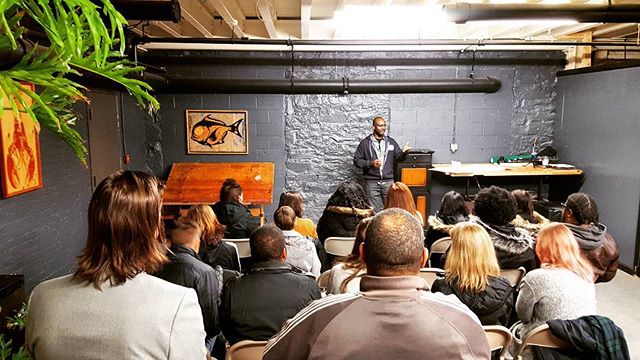
AIGA Baltimore President, Joseph Carter-Brown, addresses and prep attendees for the evening's proceedings
AIGA Baltimore President, Joseph Carter-Brown, addresses and preps attendees for the evening’s proceedings.

In this exercise, we discovered some of the common themes on designers’ minds—from hopes for professional growth and making connections within the community to fears regarding world events and maintaining healthy lifestyles. While these hopes and fears were not the intention of the discussion, this broad range of concerns helps us put a finger on the pulse of of our community. Discussing our hopes and fears is also a great way to find allies in the room; because what starts as individuals writing their personal hopes and fears, turns into a group of collaborators, realizing that they’re not alone in their goals or concerns.

Attendees share their hopes and fears for the new year
Attendees found shared themes among their individual hopes and fears for the new year.

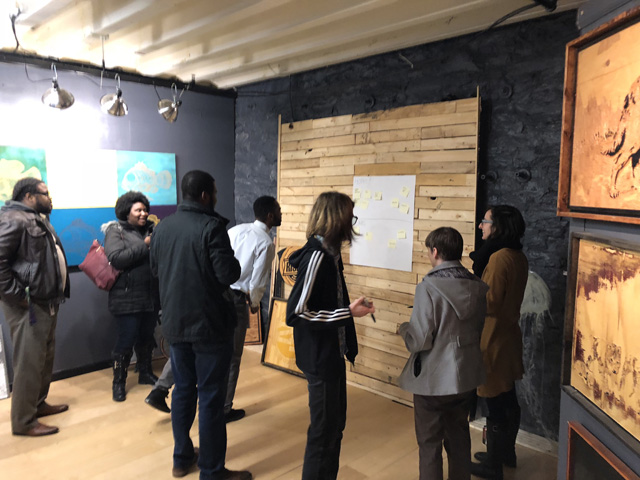
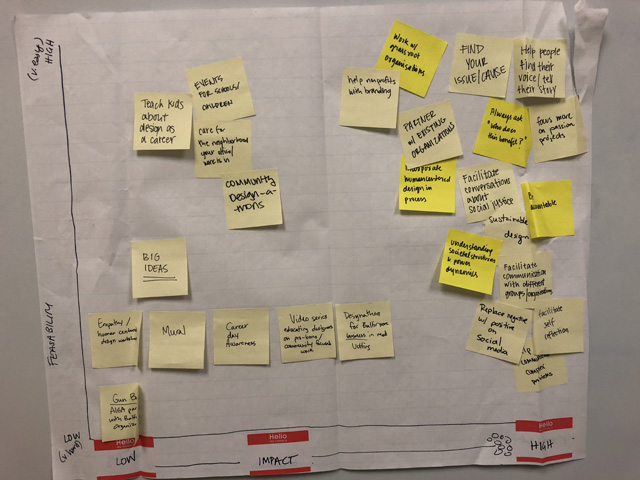
Once the attendees completed the hopes and fears activity, we broke into four distinct groups. Each group focused on a different discussion prompt as dictated by our Facebook poll. This is when we began to get a true collaborative feeling for how designers in our community could benefit from involvement with AIGA. We did this by building a prioritization grid to identify some ideas that would be impactful, while also being mindful of the feasibility of any given idea. After lots of collaboration, silent ideation, and group sharing, we settled on a handful of big ideas in our four key discussion areas, with a goal to create more user-driven outcomes for all of our community members.

Collaborating on Big Ideas
Attendees collaborate on some big, impactful ideas.

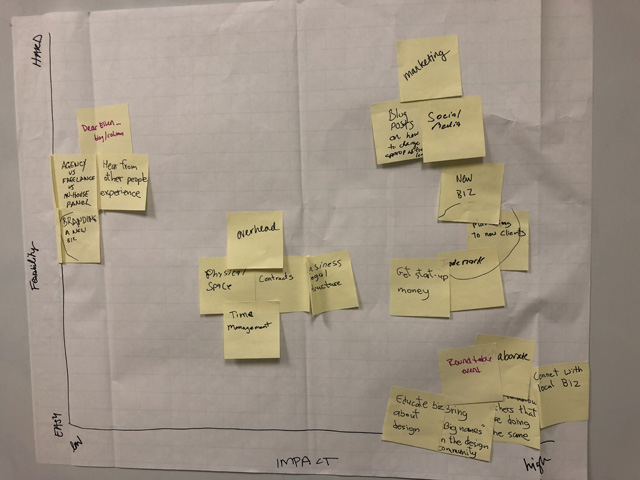
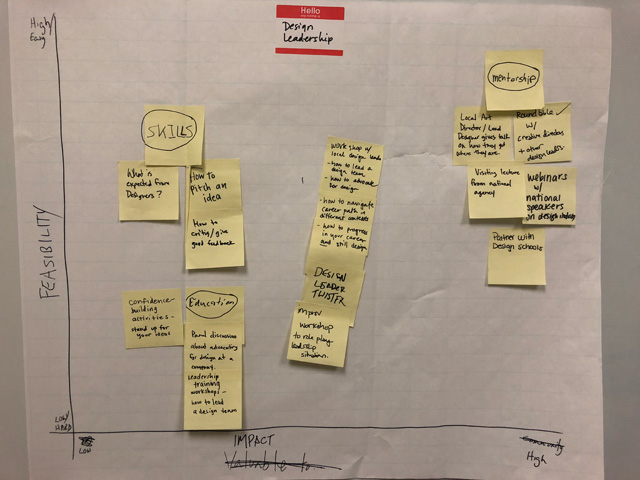
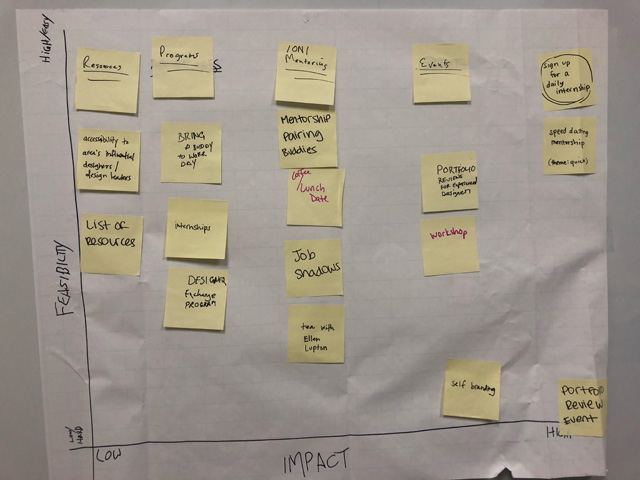
Below is a list of the big ideas, along with pictures of the final prioritization grids:

Design for Good Big Ideas

  • Empathy/Human-Centered Design Workshops
  • Murals for Community Beautification
  • Career Day Awareness
  • Design for Good Video Series:
    Videos educating designers on pro-bono/community-focused work
  • Designathon for Baltimore Businesses in Need (with appropriate vetting)
After brainstorming Design For Good ideas, attendees grouped common themes, and came up with big impactful ideas

Design + Business Big Ideas

  • “Dear Ellen”(name tbd) Blog/Column (like Dear Abby):
    Q&A advice column (topics could include differences between working in-house vs agency vs freelance, branding a new business, other peoples’ design business experiences)
  • Creative Round Table:
    Event for bringing business leaders and creatives together to discuss topics related to running and working in/for a design business (educate businesses on how to work with designers, collaboration opportunities, workshop on getting start-up funding, bring big names to design community, connections with local businesses, comparing notes with similar businesses/getting advice on processes)

    Design & Business Ideas
    Big Ideas for Design & Business Content

Design + Leadership Big Ideas

  • Workshop with Local Design Leaders:
    How to lead a design team, advocating for design, how to navigate career path in different contexts, how to progress in your career and still design
  • Improv Workshop to Role-Play Design Leadership Situations
    Design Leadership Big Ideas
    Design Leadership Big Ideas

Mentorship Big Ideas:

  • Daily Internships/Adopt a Designer
  • Coffee/Lunch Date or “Speed Dating” to Find a Mentor
  • Designer Exchange Program
  • Portfolio Reviews Targeted at Designers with More Than 5 Years Experience
    Mentorship Big Ideas
    Mentorship Big Ideas

Sharing our creative ideas in a community setting is the first step to taking action, but we want to take that a step further. We want to see your ideas come to life, however AIGA Baltimore is a board of only a few people, and all volunteers at that; so we’re asking the community to work with us. While we want to do everything on this list, we simply cannot do it alone. What we can do is support and empower you, our design community! Let’s work together and make it happen. Shall we? If you see an idea that you can’t wait to help bring to life or want to explore more (or if you know someone who may be able to help push the needle forward), we want to hear from you.

Email info@baltimore.aiga.org and let’s talk about how we can all take ownership in our design community.