The Power of an Optimized LinkedIn Profile

When I joined LinkedIn 14 years ago, the platform was known as the place where you transferred your resume and work history into an online version. LinkedIn has evolved far beyond a platform for just placeholding your digital resume, as your profile is the first impression you will make to people in and outside your network.

But a LinkedIn profile isn’t your resume–it is static, searchable, and offers more features to showcase your expertise beyond just the history of your job experience.   I’m going to touch on the impact of an optimized LinkedIn profile for designers, exploring how it can attract job opportunities, foster connections, and enhance your reputation (aka personal brand). Let’s embark on a journey to unravel the secrets of LinkedIn success in the design arena.

Where to Start?

LinkedIn provides a variety of sections for you to input information.  As a recruiter who proactively uses LinkedIn to source and identify potential prospects for job opportunities, I’ll emphasize the areas and content I seek out when scanning a profile to assess the alignment for a role.

Headliner

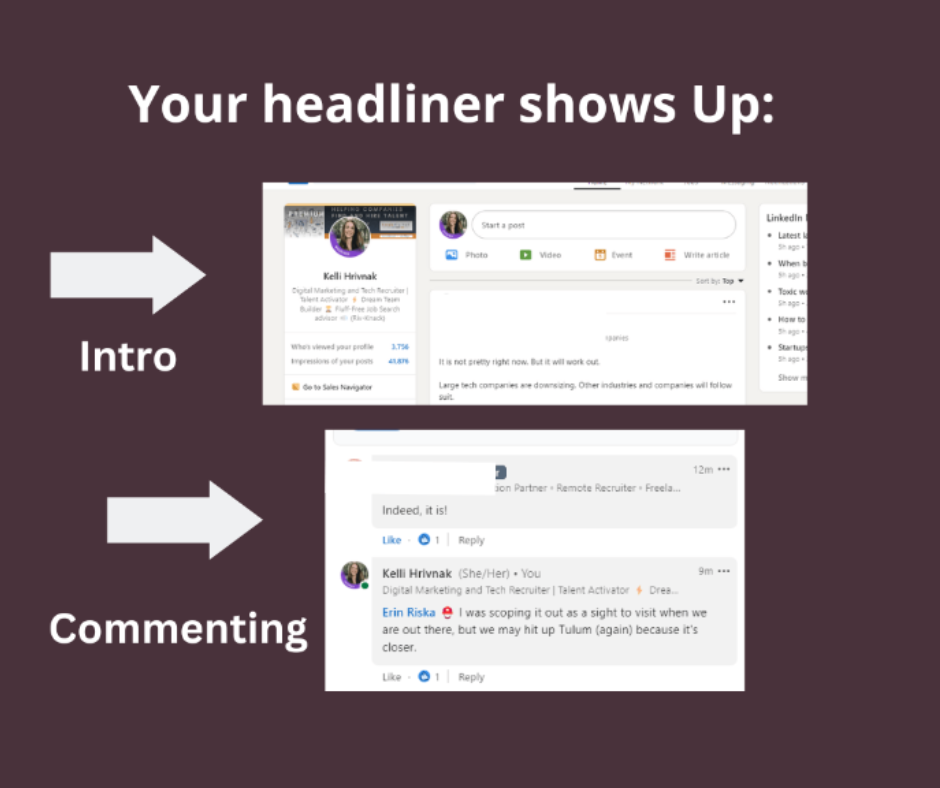
Your headliner is the copy that is located right below your name on the LinkedIn profile and it will be the first thing people see (along with your name).  Not only does it show on your profile page, but also when you comment, send invitations, “Who Viewed your Profile“, and in the intro section of your profile. You have a 220-character limit. A shortened version of your headliner will be visible when commenting (75 characters), sent invitation (80 characters), and in search results (82 characters).

The words in the headliner do affect the search results.  Keeping this in mind, I advise to be clear about your expertise and use keywords that a recruiter may look for when sourcing.  This may include job title, skill sets, certifications, and companies.  A Unique Value Prop (USP) is a popular choice for a headliner, like “turning ideas into visual symphony,” but I urge people that it’s not the best (SEO) option if you are in an active search.  A USP can be ambiguous and a recruiter isn’t using those keywords when searching.

A simple format I suggest is:

Job title + Company + (skill sets, results/achievements, awards) + (fun add about personality or USP).

If your current job title is vague or you are making a career pivot, the headliner is an alternative field to sub in your target job title.  Example:  Your job title is “creative specialist” which doesn’t encompass your expertise in design.  Use “Graphic designer” in your headliner instead.

Photo

Is there a greater chance of receiving outreach when you include a photo on your profile? Discrimination is real, unfortunately, and I’ve talked to people who strategically omit or strengthen their privacy settings by design to hide their headshots on their profiles. Make decisions based on your comfort level.

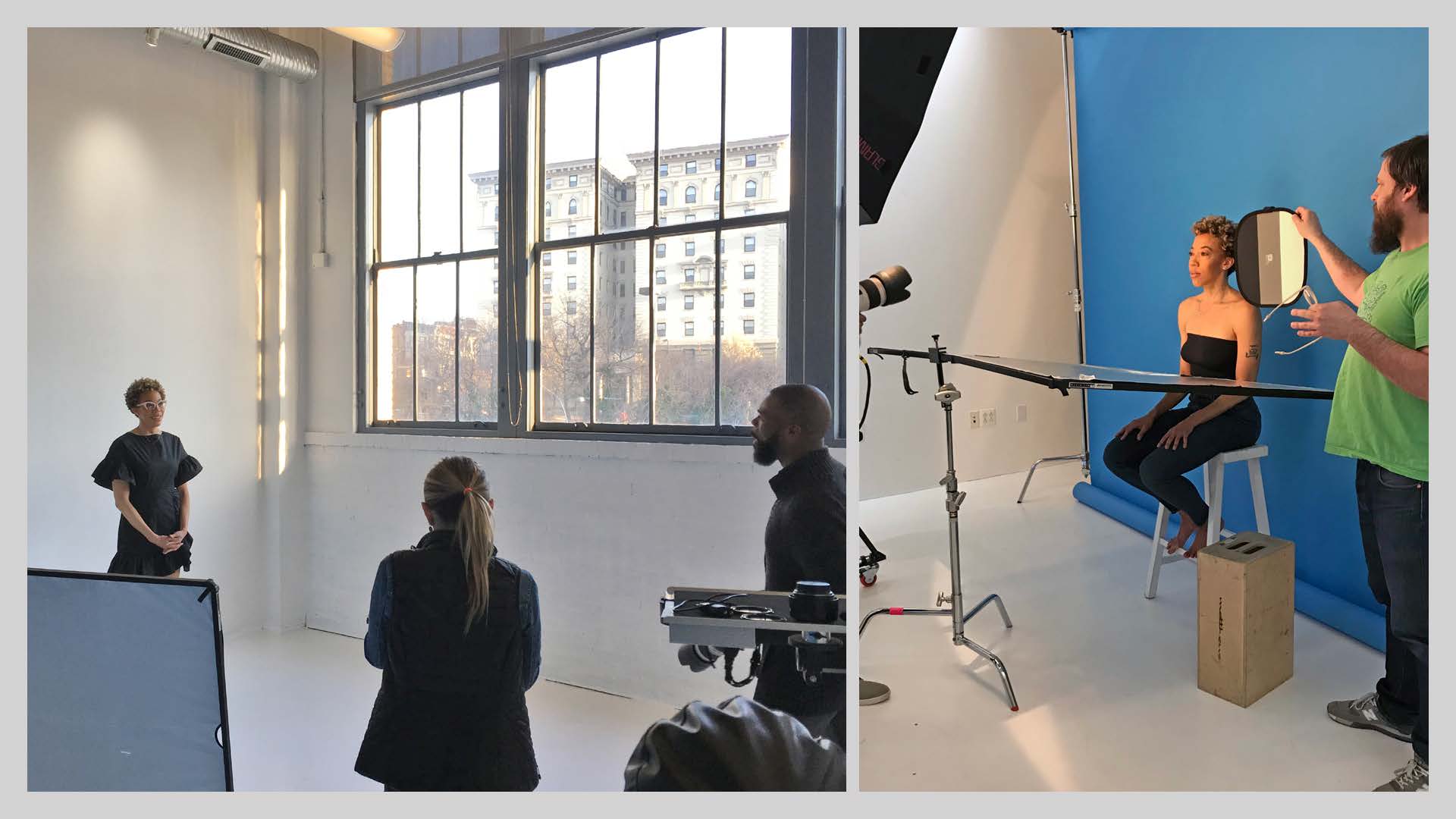
If you opt for a photo, a DIY iphone session can quickly produce a credible headshot Here is an article with some helpful tips!


Location

If a company is looking to hire a local candidate within commuting distance,  they could be using a radius search by location.  Users can search by by Region or Postal Code. The latter option enables a nuanced radius search, allowing users to filter results within 5, 10, 25, 35, 50, 75, and 100 miles.

To enhance your discoverability, consider selecting a broader metro area rather than specifying your exact city. For instance, instead of “Baltimore,” use “Washington DC-Baltimore” to increase your inclusion in wider-radius searches.   If you are in the midst or open to relocation, set the targeted location as your geography so your visibility will be amplified in those geographical searches.

Industry

Companies could be prioritizing their search by industry experience.  While you can include vertical exposure in your About and Experience section, you can choose an industry sector in your account settings.  LinkedIn expanded their industry codes from 24 core functions to sub categories, likely expanding to over 400+ soon.  Pick one most important to you, and again–you can mention others in other areas.

Keywords

Before I cover the About and Experience section, I encourage everyone to conduct keyword research to identify what skills and keywords are associated with your current job and target.  Wordtracker and Google Keyword Planner are excellent tools, but what works on Google won’t be a replica on LinkedIn.   ChatGPT can generate a list of associated words too.


Review the words and think about how you can integrate these words into the content of your profile. For example, instead of listing out a bullet-pointed list of keywords like “Storyboarding,” “campaign development,” and “advertising,”  try weaving them into the story of your experience and about section.


Consider the keywords you prefer not to be associated with on your LinkedIn profile. While retaining your work history is advisable, it’s beneficial to eliminate skills or keywords that hold no relevance to your future career aspirations.  Unfortunately, some recruiters are lazy and will mass message anyone who possesses a keyword they are searching for–regardless of context.  Proactively removing skills or titles misaligned with your target job can potentially curtail unwarranted outreach.


Scope out your competition.  Run a keyword search on job titles (like “Art Director” or “Sr. Graphic Designer) and pay particular attention to the initial pages of search results.  How does the algorithm prioritize profiles related to content?


About Section

This is your canvas to craft a narrative of your career journey and an opportunity to reveal more information beyond the facts of your experience.  Did you make a career pivot or your path has been non-linear?  Has design been your passion since you were a child? How did this path become your “why”?

What’s your opening hook?  Keep the mobile user in mind, as they’ll likely encounter the initial 90 to 150 characters of this section before having to click down. Desktop viewers may extend to around 300 characters.

As you share your story, consider incorporating a call to action (CTA) to encourage recruiters to engage further. This could involve providing a link to your portfolio, sharing your email address, or including a phone number (consider using Google Voice for added privacy). Embrace the first-person perspective to infuse authenticity into your narrative (a third-person narrative may be more suitable for fields like legal or finance.)

Reinforce your expertise.  Don’t forget to enhance your visibility by strategically integrating those relevant keywords and skills into the narrative.  You also have the option to add your top 5 skills that will be promoted in this section.


Experience Section

I’ll argue that this section is the most significant in your profile. While other sections can represent your branding, the experience section unveils the application of your keyword skills and the outcomes achieved. It provides the crucial context to assess your qualification for a role.

In each job experience, include details on project work, tasks, results, industry exposure, management roles, certifications, specific software proficiency, training, and promotions. Adopting a format with bulleted points or well-structured sentences enhances readability.

Utilize LinkedIn’s feature to add skills to each experience entry, showcasing your expertise aligned with each job title and company.  If you used Adobe XD in your current job but only Indesign at your prior, you can distinguish how recent you were exposed to tools here.  In addition to hard skills, consider adding other tasks like project management, motion design, business development, etc


Featured Section:

Designers, do not overlook this section!  This space is your place to add content, from articles, videos, URLS, podcasts, photos, and presentations.  Most importantly, if you have an online portfolio, include the link.  This is the visual “highlight real” of your achievements.

Contact Information

Ensure your email is up to date to efficiently receive timely notifications. If anyone is using Inmails, messages, or general invitations, your notifications will go to this email. If you using your work email domain, keep this in mind (especially if you fear that your employer is monitoring your emails). This article will show you how to adjust the visibility of your email. Consider a pseudo email strictly for LinkedIn outreach and messaging.

Along with the Featured section, you can include your portfolio link here. If you were assigned a generic URL, you can explore custom options.  If there is a custom domain that is available and aligned with your personal branding, snatch it up.

What else should you consider?

A background photo, which is the large image behind your profile picture, is customizable.  I usually recommend Canva as a tool to create a unique banner that highlights your brand or expertise, however I recognize an audience of designers will have the skills and other tools to execute this task at a higher level.  The dimensions are 1584 x 396 pixels and accepts PNG, JPG, and GIF files.

Should you use the Open to Work Banner?  My opinion is mine alone, but I do not hold a bias against anyone who is actively in a job search and chooses the visual cue of the banner.  My objective, as a recruiter, is to identify a candidate who is motivated and qualified to make a job move.  Some others may discriminate against people unemployed, so you need to make the best choice for yourself.  If your job search is confidential, I would encourage you to use the Recruiters Only option.  The Recruiters Only option is limited to users who subscribe to the Premium Recruiter seat, so that isn’t limited to recruiters only but to those who pay for that level of service.

A LinkedIn Allstar Status increases your visibility. While the meter is no longer on display in your profile, reference this link on how to access your level. Hint: Look for the “Suggested for you” prompt.

What qualifies as an Allstar Status?  Complete all of the following sections.

  • Industry/Location
  • 3 positions (including current). If you don’t have 3 job experiences, consider volunteering, freelance, or gap options.
  • Education
  • Skills (3 minimum)
  • Profile Photo
  • 50 Connections

In today’s competitive job market, having a well-optimized LinkedIn profile is more important than ever. This is a passive, one-stop effort that can generate inbound leads and increase your chances of being discovered by recruiters and potential employers.

About the writer

Kelli Hrivnak

LinkedIn | Website

Kelli Hrivnak is a leader with over 15 years of experience in staffing and recruitment services.  Recognizing the limitations of quantity-driven staffing models, Kelli embarked on a mission to create a forward-thinking alternative.  She is founder of Knak Digital, a recruiting agency prioritizing strategy and quality over high-volume recruitment. Throughout her career, Kelli has partnered with various companies, from Fortune 500 corporations to start-ups.  Her extensive background in the technology and marketing industry has provided her with valuable insights and a deep understanding of client needs.

2022 Flux Student Design Competition Winners

Judging for AIGA Baltimore’s annual Flux Student Design Competition has been completed. Flux is a nationwide competition that recognizes outstanding design work produced by students in the categories of Identity, Packaging, Poster, Publication, Social Impact Design, UX/UI, and Video/Motion Graphics. This year, 205 projects were selected by a jury of creative professionals including Jenny Hoffman, Alberto Rigau, and Liese Zahabi. 631 entries were submitted making the 2022 Flux Student Design Competition one of our largest and most competitive yet.

The Flux22 awards reception and 15th-anniversary celebration were held at Price Modern on Friday, February 3rd. Thank you to our sponsors: MindgrubAlpha Graphics, & Price Modern. We honored recipients for the following categories; identity, packaging, poster, publication, social impact design, UX/UI, and video/motion graphics. Thank you to the AIGA Baltimore board and volunteers for putting on a fantastic reception!

[siteorigin_widget class=”SiteOrigin_Widget_Image_Widget”][/siteorigin_widget]
[siteorigin_widget class=”SiteOrigin_Widget_Image_Widget”][/siteorigin_widget]
[siteorigin_widget class=”SiteOrigin_Widget_Image_Widget”][/siteorigin_widget]
[siteorigin_widget class=”SiteOrigin_Widget_Image_Widget”][/siteorigin_widget]
[siteorigin_widget class=”SiteOrigin_Widget_Image_Widget”][/siteorigin_widget]
[siteorigin_widget class=”SiteOrigin_Widget_Image_Widget”][/siteorigin_widget]


2022 Winners


[siteorigin_widget class=”SiteOrigin_Widget_Image_Widget”][/siteorigin_widget]


[siteorigin_widget class=”SiteOrigin_Widget_Image_Widget”][/siteorigin_widget]


[siteorigin_widget class=”SiteOrigin_Widget_Image_Widget”][/siteorigin_widget]


[siteorigin_widget class=”SiteOrigin_Widget_Image_Widget”][/siteorigin_widget]


[siteorigin_widget class=”SiteOrigin_Widget_Image_Widget”][/siteorigin_widget]


[siteorigin_widget class=”SiteOrigin_Widget_Image_Widget”][/siteorigin_widget]


[siteorigin_widget class=”SiteOrigin_Widget_Image_Widget”][/siteorigin_widget]


[siteorigin_widget class=”SiteOrigin_Widget_Image_Widget”][/siteorigin_widget]

Exploring the Future of Figma with Mindgrub

On Thursday, October 27th, 2022, AIGA Baltimore held an in-person panel discussion for “Figma: Fad or Future,” which culminated AIGA’s Baltimore Design Month 2022. The discussion featured Mindgrub’s creative team sharing their transition to Figma, cross-departmental collaboration, thoughts on Adobe’s acquisition of Figma, and their predictions for the future of design software.

The panel included Mingrub’s Emilee Beeson, Art Director; Evan Reisberg, Interactive Design Manager; Steph Loughran, Product Design Manager; Sandra Koranteng, UX Designer; Alex DeRito, Developer; and was moderated by: Benjamin Guarino, UX|HCD Specialist.

Watch the full video, and read on for a recap of key takeaways.

Q: How do you see Figma being transformed by this acquisition?

Some of our panelists noted that although the acquisition is shocking, it would likely make Figma a stronger platform and more future-proof. With Figma being so near and dear to people heart’s, the hope is that the interface will not change drastically; rather, it will be improved upon. They are looking forward to seeing how Adobe integrates with Figma, with Adobe’s being able to support Figma with options such as vector capabilities and a more extensive font library.

Q: How has Figma impacted the way your team collaborates?

Adopting Figma has made it easier for the Mindgrub team to collaborate on complex prototypes in one location. It challenged them to become transparent and organized with their process, structure, and handoff. Additionally, using Figma has encouraged more ideas and resource sharing among team members. They can see how others set up their file, which has helped build their process. Figma has been a huge step forward compared to Sketch and has reduced the number of different software designers used for a project.

Q: How has Figma supported Mindgrub’s work from anywhere/anytime policy?

With Mindgrub’s improved workflow on Figma, they can collaborate efficiently across time zones, reducing back and forth and making it easier for people to jump back into their projects anytime. Having a stable structure also helps Mindgrub build trust with clients because it allows clients to see the progress being made and what the team is working on. Figma is also great for making real-time updates to projects sent to clients.

Q: Do you think Figma will stand the test of time in 10 years or more?

Some of our panelists believe that Figma can get the rug pulled from under them if they don’t keep up with a design to code. Competitor programs like Web Flow, with easy-to-use and evolving technology, can creep up on Figma if they don’t keep up. However, the Figma community is fantastic and has tons of plug-ins, resources, and events that will support Figma’s growth over the years to come. Other thoughts shared are that although design to code is interesting, there needs to be a happy balance with evolving technology where we can automate some of our work without losing the human touch to create something unique and personal.

Q: What are some limits of Figma that you want improvement on?

Evan would like to have scroll trigged animation in prototyping. That’s an element he goes out to another application to create. Emilee shared that creating custom artwork in Figma is challenging. She often has to switch to Photoshop but hopes that Adobe will add the library-sharing feature between Photoshop and Figma so she can work between both applications without having to export.

Audience Q&A

Q: While designing in Figma, are you developing content as well? Which stage do you involve a content strategist in?

Some of our panelists noted that they don’t use the real copy in the flat design. The content strategist or copywriter often collaborates with the client on a platform they are more comfortable with, and they later integrate the content into the design. But it ultimately depends on where the content strategists are comfortable working, whether in Figma simultaneously or separately in a Word document. However, the client might be more focused on the content than the design if actual content is used.

Q: How do you display your designs to clients for mobile and desktop views?

Depending on the project and team, they present a few different size artboards to give clients an understanding of the project view ranging from mobile to small laptop to huge monitor sizes.

Our panelists shared their top advice for teams transitioning to Figma:

Establish a culture of sharing – Emilee shared that it can be easy for creatives to be guarded in a competitive environment, so establishing a culture of sharing is really important. Emilee feels comfortable with her team because they are all working together to learn the program and know it’s okay to make mistakes when learning.

Learn the basics – Steph recommends learning auto layout first because it saves time when adding new content. Steph believes this tip will change your life.

Talk to your local Figma Evangelist – Sandra recommends reaching out to those on your team who are really experienced with Figma for tips. Getting support from Figma evangelists like Evan and Emilee has been helpful. She also recommends learning how to use components.

Embrace the change – As a developer, Alex feels the benefit from collaborating in Figma and shares that fellow Developers shouldn’t be a blocker to transitioning.

Be open to showing your style – Get comfortable with having everyone on your team being able to access the project and see how you work. Evan shares that being able to see each other’s work has allowed the team to learn each other’s design preferences.

Some of our Panelist’s Favorite Figma Plug-ins

  • Spellcheck: Check your spelling as you work on Figma.
  • Unsplash: Insert beautiful images from Unsplash straight into your designs.
  • Color Contrast: Check contrast according to WCAG guidelines and apply changes directly to your artwork.
  • Stark: A combination of integrated tools that help you streamline your accessibility workflow.
  • Google Sheets Sync: Sync data in a spreadsheet to elements in your design.
  • Content Reel: Quickly insert text-based content into your design, such as names, phone numbers, US addresses, emails, URLs, and more.

AIGA Baltimore Becomes Caretaker for AIGA Blue Ridge Legacy: Flux Student Design Competition

Flux, a student design competition that’s attracted over 900 entries in past years, has a new host, AIGA Baltimore.

Flux celebrates the best creative work produced by undergraduate and graduate students from across the country. Entries are selected by a jury of leading design professionals and showcased in a gallery exhibition as well as online. Flux has been an outlet for student designers of all practices, and despite a change in ownership, the foundation of Flux has ensured that its success will not waver.

The competition was established in 2007 by the former AIGA chapter, Blue Ridge. Board Member Katlynn Almansor led Flux in 2021 and felt the impact of the Blue Ridge leadership before her.

“I believe we were very lucky to be able to maintain that event, and that was in large part because of all the work over the years by past presidents and board members… Flux was built on a solid foundation, and it’s stood the test of time and change thus far,” said Almansor.

Kicking off the competition and growing it to a nationwide audience took the dedication and commitment of many AIGA Blue Ridge members. Joe Wagner, served as a long-time advisor and sponsor of Flux. Wagner credits former President Laura Webster and Board Members Cathy Bruce and Jenn Laumann with establishing the competition’s solid foundation.

[siteorigin_widget class=”SiteOrigin_Widget_Image_Widget”][/siteorigin_widget]

Katlynn Almansor

President Emeritus
LinkedIn

[siteorigin_widget class=”SiteOrigin_Widget_Image_Widget”][/siteorigin_widget]

Cathy Bruce

President Emeritus
LinkedIn

[siteorigin_widget class=”SiteOrigin_Widget_Image_Widget”][/siteorigin_widget]

Kevin Bruce

Web Director
LinkedIn

[siteorigin_widget class=”SiteOrigin_Widget_Image_Widget”][/siteorigin_widget]

Troy Dean

President Emeritus
LinkedIn

[siteorigin_widget class=”SiteOrigin_Widget_Image_Widget”][/siteorigin_widget]

James Hersick

President Emeritus
LinkedIn

[siteorigin_widget class=”SiteOrigin_Widget_Image_Widget”][/siteorigin_widget]

Jenn Laumann

Past Treasurer
LinkedIn

[siteorigin_widget class=”SiteOrigin_Widget_Image_Widget”][/siteorigin_widget]

Matt Laumann

Past Vice President
LinkedIn

[siteorigin_widget class=”SiteOrigin_Widget_Image_Widget”][/siteorigin_widget]

Joe Wagner

AIGA Baltimore, President Emeritus, AIGA Central PA, President Emeritus, and AIGA Blue Ridge Volunteer / Flux Sponsor
LinkedIn

[siteorigin_widget class=”SiteOrigin_Widget_Image_Widget”][/siteorigin_widget]

Laurel Webster

President Emeritus
LinkedIn

Former Blue Ridge member Kevin Bruce has been the long-time owner of Flux’s online presence. Bruce is a designer that found himself in the world of coding, a skill that AIGA Blue Ridge needed when building a national competition site. In 2010, Bruce was asked to clean up the code and by 2014, he was in charge of maintaining the website, which is now complete with competition details, judge profiles, and an entry portal.

Flux has several admission categories ranging from packaging design to motion graphics and so much more. Students must be enrolled in undergraduate or graduate programs to be eligible to enter, and they can participate in multiple categories. Bruce has seen Flux become a great motivator for students each year.

“Having helped run Flux over the years, you learn a few of the professors’ names because they rely on the Flux competition to challenge their students every year,” said Bruce. “That was the real reason why we didn’t want to just let it die.”

Since Flux’s creation, entries have grown from around 600 to 950, according to Bruce. With AIGA Blue Ridge dissolving and an overwhelming desire to grow the competition even more, Almansor says it was a no-brainer to contact their sister chapter in Baltimore.

“My hope is for Flux to not only maintain its quality and longevity, but to exceed it,” said Almansor. “The closure of AIGA Blue Ridge was a hard decision, but passing on Flux to another chapter was not. It was the one thing we wanted to see continue to impact and promote young designers, and we are so happy Baltimore took it over. I believe they might have the resources to not only sustain Flux but make it bigger and better.”

Current AIGA Baltimore President Frances Miller says the Baltimore chapter was excited to take on the challenge and acknowledges the opportunity that Flux provides to the college curriculum.

“We are excited to produce something that touches hundreds of students and educators across the country while putting a spotlight on Baltimore,” said Miller. “We’re off to a great start! [Board Member] Karole Kessler has hit the ground running as this year’s Flux leader and already has our reception on the calendar for February, with support from new Flux sponsors: Price Modern, Alpha Graphics, and Mindgrub.”

AIGA Baltimore launched Flux 2022 on September 27th and have their judges ready to review entries when the portal closes on November 16. Judges typically evaluate entries based on the students’ interpretation of the project, level of creativity and originality, and their artistic skills demonstrated, according to former Flux advisor Joe Wagner. Awards in the past have included a best of show for each category and an overall best of show.

All awarded entries will be displayed online and exhibited at a reception at Price Modern in Baltimore. The special reception will recognize participants and take place at Price Modern on February 3rd, 2023. Miller is already looking to the future of Flux beyond next year’s reception.

“Our goal in 2023 is to establish our Education Committee to envision and build the future of Flux,” said Miller. “We’d like to see an impressive online gallery to showcase the work…As a 100% volunteer-run organization, all of these ideas rely on a passionate board of volunteers.”

AIGA Baltimore is currently seeking their next Education Chair to help establish the competition’s future. Professionals can nominate themselves or a colleague on the AIGA Baltimore’s website. 

The dedication of countless volunteers has allowed Flux to impact the lives of 15 graduating classes of designers. Flux has given young artists a place to showcase their work and without it, there are limited, organized events for student designers to get their work in front of the public.

“Emerging designers are doing great work, which often goes unseen past their critique room and portfolio…Plus, when you’re new to a field, building confidence can be a huge hurdle,” said Miller. “Of course winning an award helps with confidence, but even submitting is a statement to yourself that your work deserves to be seen.”

While the Baltimore chapter is focused on growing Flux as a student competition, they’ve also considered how Flux can fuel other initiatives, like introducing a contest to professionals.

“We’ve also discussed the possibility of opening a professional competition, using Flux to fund a scholarship, or partnering with other AIGA chapters,” said Miller. “We’d love to hear feedback from educators and students about what they’d like to see.”

For now, AIGA Baltimore is focused on Flux 2022, which is well underway. This year’s judges are Liese Zahabi, a graphic/interaction designer and Assistant Professor of Design at the University of New Hampshire, Jenny Romei Hoffman, co-owner of Ashton Design and board member for the Baltimore Design School and the Charles Street Development Corporation, and Alberto Rigau, graphic design instructor and co-chair for AIGA’s Design Educators Community.

Learn more about the 2022 judges at the Flux Competition website.

[siteorigin_widget class=”SiteOrigin_Widget_Image_Widget”][/siteorigin_widget]
[siteorigin_widget class=”SiteOrigin_Widget_Image_Widget”][/siteorigin_widget]
[siteorigin_widget class=”SiteOrigin_Widget_Image_Widget”][/siteorigin_widget]

The deadline to submit projects is November 16. To enter the competition visit  Flux Design Competition. Interested in volunteering to help with Flux? Please email flux@baltimore.aiga.org

Designers Celebrate 20 Years of AIGA at Morgan State University

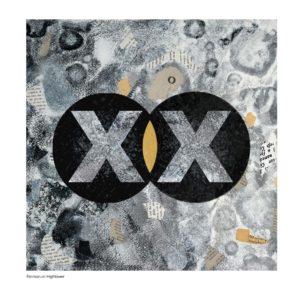
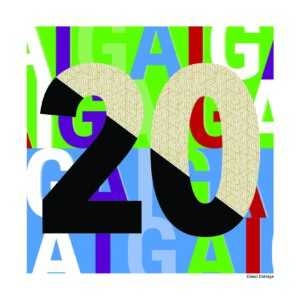
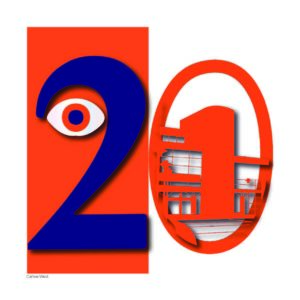
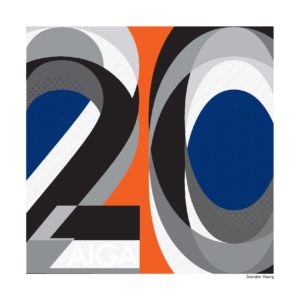
On October 7th, Morgan State alumni and faculty and AIGA members gathered to commemorate 20 years of the founding of the first AIGA chapter at an HBCU (Historically Black College and University). We watched alumni reconnect, exchanging stories with their beloved professor Joseph Ford, esteemed designer and educator, and founder of AIGA MSU.

Joseph Ford graduated with a Bachelor of Fine Arts from the Maryland Institute College of Art in Baltimore, Maryland. He earned a Master of Fine Arts from Cranbrook Academy of Art in Bloomfield Hills, Michigan.

In 1984, Joseph Ford began working at Morgan State University as the Art Director of Public Relations bringing with him years of experience and recognition from the Advertising and Graphic Design Field. He was acknowledged as the first African American Art Director in an Advertising Agency in Baltimore and an active member of the AIGA.

Nowadays, you might run into Joe catching a film at the Senator Theatre.

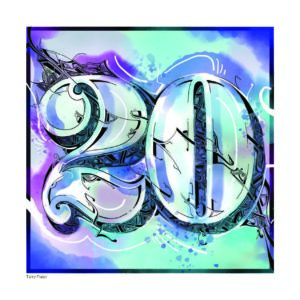
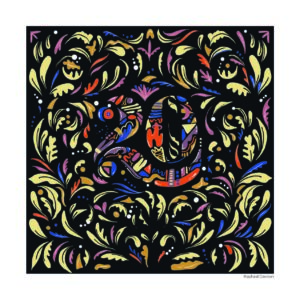
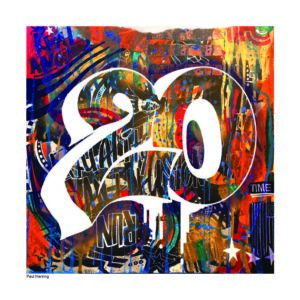
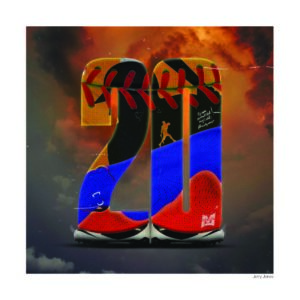
This exhibition is a testament to the graduates’ accomplishments and the rigor of a liberal arts education at Morgan State University. You can see the designs on display throughout October 2022 in the Murphy Fine Arts Center third floor atrium, see the work below, or journey through the virtual exhibit.

A huge thank you to Perry Sweeper for working to organize the exhibition.


Tricia Dukhie is a senior graphic designer at Inglefield Ogilvy and Mather. She has also worked on many projects as a freelance designer in her native Trinidad & Tobago.


Terry Plater is a senior graphic designer at Impact Marketing and Communications. He previously held design positions at Erickson Living and Nielsen Audio.


Raphael Davison is a assistant art director at Carnegie Hall’s Weil Music Institute. She previously worked at Baltimore Center Stage and the Washington, D.C. Shakespeare Theatre.


Paul Herring is a graphic & web designer for 1199SEIU. He has worked with art collective Artwork Mbilashaka on marketing projects and live mural paintings for Adidas, Heineken, Scion (Toyota) and Red Bull.


Jerry Jones is manager, social and digital content design for the National Basketball Association. He previously worked as a graphic designer for Major League Baseball.


Emmanuel Hightower began his career as a graphic designer at Kahala Brands. He also did design work for Reebok, Phi Beta Sigma and National Football League players.


Eileen Eldridge is a web content specialist at the University of Maryland, Baltimore. She has a diverse graphic & web background.


Carlee West is a freelance graphic designer currently pursuing her Master of Fine Arts at Full Sail University. She graduated with a Bachelor of Arts from MSU.


Brandon Young is a freelance graphic designer who has previously worked for Southern Maryland News. For more than a decade he has focused on publication design.


Erika Johnson is a freelance graphic designer, founder and CEO of PrettyGirl Academy, Inc. She received a certi cate in Digital Publishing from New York University after graduating from MSU.

5 DMV Experts Weigh In: How to Start Your Creative Career

On Saturday April 23rd, 2022, AIGA Baltimore held a virtual panel discussion for Ink & Pixels, “From Portfolio to Offer: The Art of Getting Hired”. The discussion featured a fantastic group of established professionals while talking about how to rethink and refine your approach to getting hired in the creative industry. There was lots of insight on the dos and don’ts of resumes, portfolios, and interviews as well as the other things to keep in mind that Google doesn’t tell you.

The panel included Nate Brubaker, Owner & Executive Producer at Rock Shore MediaJordan Watts, Director of Design at Fearless; Amy Quarles, Creative Director at Visit Baltimore; and Hilliary Turnipseed, Director of Recruitment & DEI at Subject Matter and Founder of Hill Street Strategies, and was moderated by Nhu Nguyen, Vice President at AIGA Baltimore and AVP, Creative Director at Fenton.

Career Values

What do you value? If you don’t know, start thinking about it. What do you value in your career? Some of our panelists noted that experience, respect, and a mission you can stand behind, is very important when looking for a career. Don’t forget to think about values in your personal life—especially a good work life balance. Workplace culture shouldn’t be stagnant. Just like the field of design is always changing, your workplace should be full of people who are also willing to change.

HR Advice

When applying for a job, be prepared and know where you are applying. We suggest having a document of when and where you applied and know about all of them. If you aren’t excited for the job application or if it doesn’t interest you, don’t apply! The interviewer will know if you don’t care or aren’t familiar with the company. Don’t hit apply if you wouldn’t be excited to get a call back.

When you graduate from college, you might not have the career experience you are looking for, but you should have some job experience. 

Think about it:

  • Have you had a job anywhere? Starbucks or anything at all?
  • Have you done any passion projects? These make you stand out from the crowd. 
  • Have you completed an internship?
  • Have you had a career shift? HR calls these nontraditional backgrounds with transferable skills. Talk about what underlying skills you have that will make you effective in this new role. 

Make sure you are being seen, heard, and valued. If an offer comes in and it seems insulting—it is insulting. Negotiate and believe in your worth.

What happens if you miss the job application deadline? If the job is still posted online (such as Indeed or LinkedIn), just apply and go for it. Be sure to look for contact information and email the person hiring to let them know you have applied to the job. 

Embrace the Change: Seize the Opportunities. 

Hillary embraced that you don’t have to explain your career gap in a global pandemic! If the employer asks about your gap, that may be a potential red flag. If you do want to explain—it’s ok to be your authentic self. Nhu noted, “feel free to be authentic. If you need to take time off for family, or for yourself, you can say this.”

Sometimes it’s okay to fake it until you make it. If you are learning something new like photography, just keep welcoming new opportunities (school project, client project, etc.). This is how you can bring your ideas to the table.

Networking

There are lots of ways to network and create connections—make connections in real life at events or online via LinkedIn, Twitter, etc.! Always be in conversation, always be there to support people. Create GENUINE connections. There might not be an immediate benefit, but it can come back around. Connect with them because you share a commonality.

Cover Letters & Resumes

When you are creating your cover letter, make it personal so you can stand out. Make sure to show yourself in your cover letter with your passions, personality, and values. Go deeper into what you have learned and how it applies to the specific company. Go through each of your resume bullet points and see how it can apply to the job. Don’t forget  to address the cover letter correctly, including the right person and the correct company. 

Each of these pieces (cover letter, resume, portfolio) are just one piece of the puzzle. Some employers will look holistically at the candidate, look at the outcomes, and look beyond their title. As Jordan explained, “The cover letter is a great place to explain your “why” and have a personal letter to your hiring manager.” 

When designing your resume, don’t overthink it or overdesign it—assigning a percentage to a certain skill or software is often not recommended (for example, 56% in Adobe Photoshop is confusing). Instead, keep it simple and add your skills/software in bullet points. We also recommend having a PDF copy as well as a simple Microsoft Word copy—sometimes the PDF won’t work on certain applications when you have to apply online. Make sure your resume can be printed, no tie dye backgrounds or lots of color in the background, keep it simple!

Portfolios

A few things to consider when deciding your portfolio platform: What is the cost? How easy will it be to update over time? For you, this might be a PowerPoint presentation, or it might be a website. 

There are lots of ways to present your work (printed portfolio, website, Behance, slide deck/PDF) but you want to showcase your work in a simple and organized way. Make sure you present in a way that is efficient, effective, and clean. When presenting, have something that is ready to go and doesn’t require WiFi. If you’re an animator, don’t have a print portfolio. If you are creating a portfolio with Google Slides/Keynote/PowerPoint, make sure to save and send as a PDF for a more professional look.

If your portfolio is on a website, make sure it’s mobile friendly (you never know what device the employer is using!). The moment a recruiter or hiring manager is faced with a difficulty (such as a website not loading or doesn’t have the PowerPoint software to open your .ppt presentation), they will more than likely move on to the next candidate. 

If it’s a team project, make sure to specify what you were responsible for. Keep in mind that most people assessing your projects are likely not to spend more than 5 minutes looking at a specific project—be sure to be prepared to talk about each project. 

You can find more information about the number of projects, and what to include (don’t forget process and sketches!), in this blog: Best Practices for Creating a Design Portfolio & Preparing for Interviews in 2022.

Interview Tips

When you are being interviewed, it’s not just the employer interviewing you—you’re also interviewing them. You want to make sure that they are a good fit for you. Always ask questions—especially questions about the company’s culture. Don’t forget to do some research on the company! Always be prepared.

What happens if you need special accommodations for your interview? For example, if you are deaf, you might prefer to meet in-person or on a video call. You can ask for accommodations in the comment section of the application or when they email you back. If you can’t find an email or if there is no place to add comments, try looking the company up on LinkedIn and see if you can message anyone. Again, it is totally reasonable to ask for the accommodations you need in order to have a productive interview—whether that is a permanent or temporary condition.

Our panelists shared their top advice for job applicants:

  • Be genuine and authentic: Don’t be afraid to show your personality. Employers want to make sure you will be a good cultural fit. 
  • Know about the company: Show that you’ve done your research on the company you’re interviewing for and show a genuine interest in what their goals are and how you can contribute to their success.
  • Your portfolio isn’t everything: Don’t just “let the work speak for itself.” Your portfolio is only half the battle. Make sure you are articulating your skills outside of your portfolio as well. How well do you work in a team? What leadership skills do you have? Are you good at managing multiple project deadlines?

5 Key Takeaways from Our Panelists

Nate Brubaker
Seize opportunities! When hiring, we’re not just looking for a degree. Looking for the person who took advantage of all the opportunities available. 

Jordan Watts
Look for whether a company is willing to change and embraces change. Recognize imposter syndrome. From his colleague Kelsey Johnston—“if you think you’re 80% qualified, you are 100% qualified.” That remaining 20% is the room for growth, and learning on-the-job is expected.

Amy Quarles
For your portfolio: Think about what you learned from each job/project. Even if the design output wasn’t completely newsworthy, your hiring manager will be looking at it in the context.

Hillary Turnipseed
Only apply for as many jobs/interviews as you can show up for 100%. The interviewer will know if you don’t care or aren’t familiar with the company. Don’t hit apply if you wouldn’t be excited to get a call back. Rejection is Redirection.

Nhu Nguyen
Fight through the fear. Don’t let imposter’s syndrome hold you back. The best opportunities come from taking risks!


Meet the Panelists 

Nate Brubaker

Owner & Executive Producer @ Rock Shore Media
Nate developed a passion for entrepreneurship and the creative industry at a young age. According to Nate, the most rewarding part of creating Rock Shore so far has been the ability to grow his team and see them prosper.

Jordan Watts

Director of Design @ Fearless
Jordan has spent his career working to rebuild trust in government and public institutions. As the Director of Design at Fearless he leads a multidisciplinary design practice to help people deliver and get better government services.

Amy Quarles

Creative Director @ Visit Baltimore
Amy began her career as an in-house graphic designer at a labor union in Washington, D.C., and moved to the leisure and tourism marketing space in 2007 where she has been ever since. She works with one full-time, in-house graphic designer and marketing managers in a small group of freelance creatives—photographers, illustrators, stylists, and videographers.

Hilliary Turnipseed

Director of Recruitment & DEI @ Subject Matter
Founder @ Hill Street Strategies
Hilliary is a DMV area-based talent acquisition executive, with a rich background in early-stage technology startups, media and social impact organizations. She seamlessly integrates diversity, equity, and inclusion strategies into her work, with an emphasis on advocating for underrepresented/underestimated candidates and creating two-way interviewing experiences.

About the Moderator:

Nhu Nguyen

Vice President @ AIGA Baltimore
AVP, Creative Director @ Fenton
Nhu brings over 12 years of comprehensive experience within the multimedia, interactive, and traditional design space and creative industry to develop effective and impactful campaigns. She leads the creative team at Fenton, integrating strategy, effective design, and compelling storytelling to create memorable solutions that help grow brands and leave lasting impressions. Nhu has worked in a variety of different industries and is passionate about amplifying voices that are underrepresented.

Thank you to Kristin Kosmides, Nhu Nguyen, and Frances Miller for your help on this blog.

Meet the Designers Behind the Ink & Pixels Branding 2022

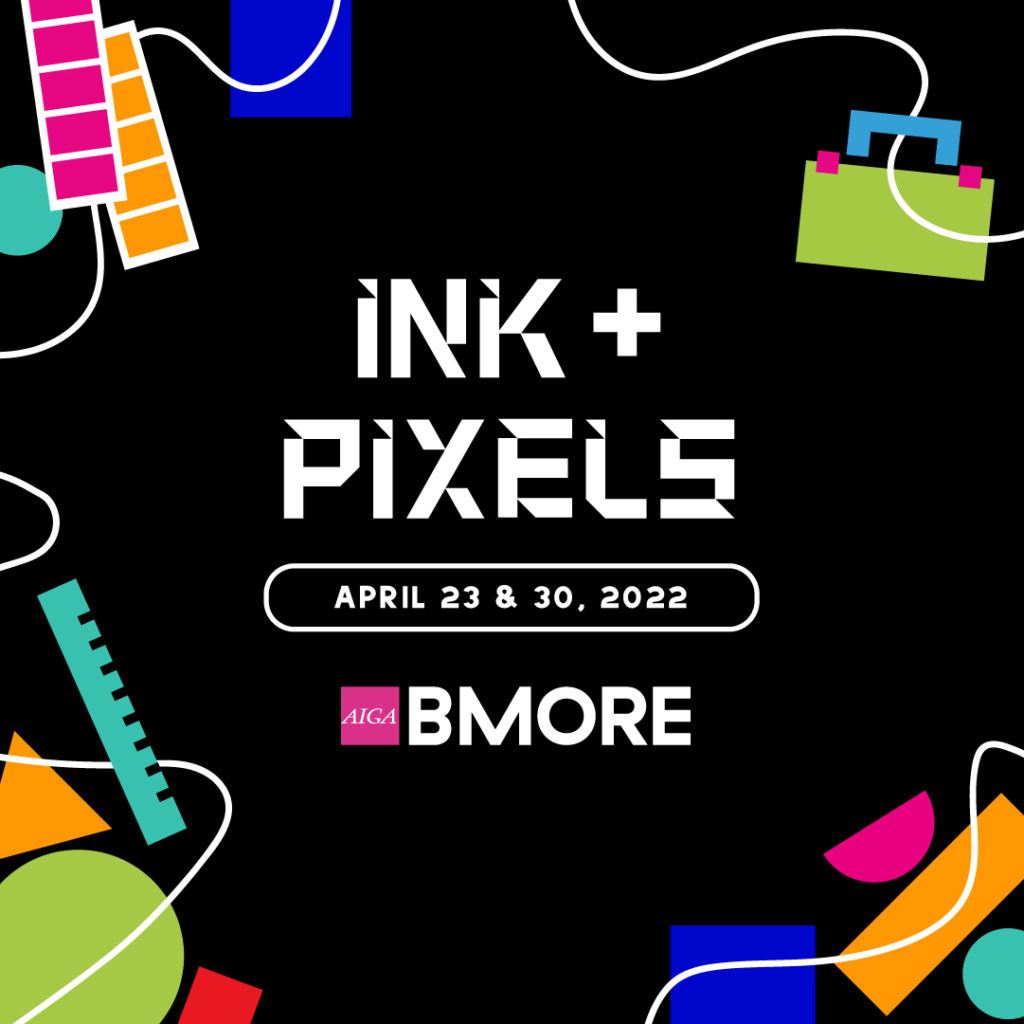
Ink & Pixels is coming up at the end of April! Save the dates for the virtual panel, “From Portfolio to Offer: The Art of Getting Hired” on April 23rd and the in-person portfolio reviews on April 30th. This year, the branding for Ink & Pixels was designed by Jamie Wheeler of Jelly Creative Co. (@jellycreativeco) and Jess Langley of White Coffee Creative (@whitecoffeecreativeco).

Can you tell us about yourself? What’s your story?

Jamie — My go-to line is, “I’ve been getting paid to design for almost 15 years.” It started with a high school internship, a design degree from York College of PA, various design jobs, a few years teaching, and now I own Jelly Creative Co. A branding and design studio for the creatively ambitious. I also like lava lamps, Nutella, my dog Nova, reading fiction, and playing board games with my husband. When I’m working towards a deadline you’ll find 90’s hits or EDM blasting on my Spotify.

Jess — My story has been full of lessons and ups and downs. In college, I landed my first design-related job as a Store Artist at Whole Foods. I learned lettering, how to work with others, and built up my confidence. That led to my first internship turned design job after graduating with a BFA in Graphic Design from Towson University. After being laid off from there in June 2017, I decided I was done with the typical 9-5 culture and went out on my own. I started White Coffee Creative and haven’t looked back since! My services, style, branding, and who I like to work with have changed drastically since then but I’m so grateful for the journey. I started coaching creatives in 2020 and now am learning to balance the two businesses with ease. When I’m not working, you can find me sipping coffee (obviously, with extra cream and sugar), bingeing Netflix shows, hiking with my 2 pups and partner, or dreaming about having a cabin in the woods.

How did you meet and start working together?

Jess had been running her business for two years when I DM’d her on Instagram asking if we could meet for coffee and talk shop. We met up at Spoons for breakfast and just clicked! She was my first local design/business owner friend and a huge supporter as I went full-time with my company in 2019. Community is really important to us both so when I brought the idea of a group for local designers to Jess she was on board to help start the Facebook group, Baltimore Graphic Designers, which now has 300 members! We have worked on local branding projects together, drank lots of local coffee, sent countless voice messages, and continue to cheer each other on. After Ink & Pixels, we’re excited to see what design mischief we can get into next!

How did you approach this branding project and what was your design process?

We were inspired by the juxtaposition of ink (organic) and pixels (geometric). We started with basic shapes within the AIGA color palette, then using only these shapes we started creating icons that can be used in various ways. The final touch is the wavy lines that intersect with the shapes and icons to create movement and bring everything together.

Having a stark black background allows the colorful elements to be brought to life and grab your attention while scrolling on Instagram or walking by on campus.

The fonts are designed by our friend Alex of The Routine Creative, a Texas-based designer. The jackknife font just felt too perfect not to highlight!

Can you describe your inspiration and any challenges you came across them while designing the branding?

If we had been working solo, there may have been more challenges, but we were able to pass the files back and forth when one of us was feeling stuck creatively. We have worked on branding projects together so we hopped right back into a nice groove. When we say it was a fun project, we really mean it!

What’s your favorite part about designing branding?

Jamie — Like any large design project there are the peaks and valleys, I think the moments right after the valleys are my favorite. I think all designers have the thoughts of “this is never going to work, what am I doing” but it’s the “oh yeah, this is it!” that I’m always chasing.

Jess — I love pulling visual inspiration and using strategy and color psychology to tie in meaning. It’s always a fun challenge to create branding that visually captures the essence of a business while maintaining simplicity. So that beginning exciting energy and the finale of when it’s all done and ready to show the world are my favorite parts.

Was there an aha moment when you knew you wanted to be a designer?

Jamie — Why yes, yes there was. It was when I photoshopped Ashton Kutcher into my homecoming photo and posted it to my Myspace. Technically, that’s when I opened the world to design, but the moment I learned it was an actual career and a college major I knew that was the path I was taking.

Jess — Yes! In college, I dabbled in a few different majors—journalism, photography, general fine arts, and design. I vividly remember one of my college professors (shoutout to Carolyn Norton!) in an Intro to Design class telling me I was already a designer. Getting that recognition and encouragement made me feel ready to step into this direction as a designer full-heartedly, and I got accepted into the GD program at Towson that following semester!

In the long term, what do you hope to eventually accomplish as a designer? What is your biggest goal/dream as a creative?

Jamie — This question is making me realize how much I have accomplished as a designer already, which is really cool. My dream client at the moment would be to work with a performing arts company. Lately, I’ve been searching for ways to bring all my talents and interests together while also helping other designers and keepin’ it real. A huge dream of mine was to host a retreat for designers, which is happening this spring, so I’m too sure what’s next!

Jess — I’m really enjoying running my own studio. I love being a multi-faceted creative offering design, murals, AND coaching. I hope to continue to navigate balancing a variety of tasks, projects, and clients while continuing to reinvent myself and where I want to go next. My big dreamy goal right now is to speak on stage at a creative conference one day about intentionally finding that balance as a business owner while having the freedom to explore a variety of creative outlets.

Thank you to Jamie and Jess for sharing their stories! We cannot thank you both enough for creating the branding for this year’s Ink & Pixels. Make sure to follow them on their various social channels!

White Coffee Creative
Designer + Muralist
whitecoffeecreative.com | @whitecoffeecreativeco

The Colorful Jess
Mindset + Pricing Coach
thecolorfuljess.com | @thecolorfuljess

Jamie Wheeler
Owner + Creative Director
jellycreativeco.com | Instagram | Facebook

Best Practices for Creating a Design Portfolio & Preparing for Interviews in 2022

AIGA Baltimore is here to help you succeed in your design portfolio reviews and interviews! Here is a guide for creating a design portfolio and some tips on how to prepare for an interview.

1. Quality over quantity. Showcase your best work.

We recommend starting and ending with an awesome piece. Don’t be afraid to include self-initiated work to stand out from the crowd. ONLY show your best work in your portfolio. If you aren’t 100% happy with a particular piece, don’t include it. It’s better to have 5-7 amazing projects than 10-15 projects that aren’t so great.

2. Think about how you will present your design portfolio—whether it is a PDF or an online portfolio. 

Traditional portfolios are printed in a flipbook style. If you have mostly print pieces, the traditional route may be the way to go. A bonus of having a printed portfolio is the opportunity to showcase printed pieces and to give reviewers a takeaway. Or if you have mostly web pieces, think about creating a portfolio website.

If you create a traditional printed portfolio or just a PDF, we suggest using Adobe InDesign to create the best design layout! Use 1-2 pages for each project and make sure you have a good hierarchy in terms of typography and images. A good size is 12×18 inches. 

Don’t forget to make your projects pop by placing them in mockups. We recommend keeping your mockup files organized to avoid re-downloading huge files. Some good mockup sites are mockupworld.co, creativemarket.com, graphicburger.com, and unblast.com. If you can’t find a free mockup, sometimes it’s easier to just create your own. 

If you need more design resources, check out this *FREE* Design Resource Guide from YouTuber & Graphic Designer, Kel Lauren.

3. Create a graphic design online portfolio.

It is a good idea to have a graphic design online portfolio so you can easily share it on LinkedIn, via email. Think about using Behance (free to use), Adobe Portfolio (you need a Creative Cloud account), Dribbble (you need to be invited), or a custom website such as Squarespace, Wix, or WordPress. Keep an out on the Creative Market freebies as they sometimes offer free website templates. 

4. Seek design opportunities outside of school.

There are lots of ways to get involved in design outside of school. Join the Baltimore Graphic Designers group on Facebook. It’s a group for Baltimore area-based graphic designers to create community, ask questions, get advice, share jobs, and plan meet-ups.

One way is to get involved with AIGA Baltimore! AIGA Baltimore is gearing up for another year of learning, connecting, and growing, and we need your help! Join board leaders on 1/26 at 12PM to hear about open roles and volunteer needs and find out where you can make a difference.

5. Keep your career goals in mind.

What do you want a career in? Think about all of these categories:

  • Brand Identity Design
  • Marketing & Advertising Design
  • Packaging Design
  • Motion & Video Design
  • Web & User Interface Design
  • Print & Publication Design
  • Lettering & Type Design
  • Graphic illustration
  • Data Visualization & Infographic Design

Learn more about these specific career types on dribbble: https://dribbble.com/resources/types-of-graphic-design

6. Practice how you will present your work. 

Be ready to discuss the goal of the project and how you reached the solution. Consider bringing any process sketches with you as well since reviewers are interested in your overall process.

Make sure that the pieces you include are the ones you are proud of. Make sure you can talk confidently in your meeting, interview, or review. Practice with a professional if you can.

7. Seek expert feedback. Attend Ink & Pixels 2022!

Take the next step towards your design career! Whether you want to make a good impression in interviews, need a new perspective on your portfolio, or want fresh eyes on a current project, we’re here to help. Ink & Pixels is one of AIGA Baltimore’s largest events focused on helping designers prepare for a career or career shift. 

This year, Ink & Pixels will be a 2-part event. The first event will be a virtual panel, From Portfolio to Offer: The Art of Getting Hired on Saturday, April 23rd. The Ink & Pixels portfolio reviews returns on Saturday, April 30th at Towson University. Mark your calendars and clean up those portfolios!

Recap and Recordings | AIGA Baltimore Design Month 2021

This past October, AIGA Baltimore had a month-long celebration of design and designers in Baltimore and beyond! The theme for this year’s design month was Inside Out. We want to say a big thank you to everyone for attending events throughout the month and thank our branding sponsor, BCG Agency.

About the theme: Inside Out

It’s no secret that the pandemic has taken a toll on every single one of us. Many of us have experienced grief, loneliness, and isolation as well as freedom, triumph, and new beginnings.

As the world slowly evolves and “returns” to a new state of operation, we all find ourselves coping in different ways. A lot of us have grown accustomed to our routines at home while others are eager to go back out into the world again.

Whether you are in your healing journey, it feels like things are literally, and figuratively, turning inside out. That’s why we chose to use this as our theme.

We as a creative community acknowledge and understand you. We’ve seen how you’ve turned to art and creativity to express your feelings during a time of sudden change, and while the world continues to change again, we are here to celebrate your creativity, wherever you may be. Inside or outside. We are in this together.

Event Highlights

Through a series of online and in-person presentations, workshops, and social events, we aimed to inspire, strengthen, and showcase the Baltimore creative community. We held our mural hunt week, studio tours with Alpha Graphics, Duckpin, Fearless, & Indigo Ink, happy hour at Union Craft Brewery, the Baltober art challenge with MWCA, an artist panel with Lori Rubeling, and our first big event of the year, Spooky BBQ & Paint Night: Celebrating Creativity.

Paper, Pints, & Pizza at Union Craft Brewing

Check out the video below by our social media volunteer Caroyln Sangi for a recap of this amazing event! Special thanks to Jill Boorse and Rolland Papers for treating our guests, and Well Crafted Kitchen and Union Craft Brewing for supporting the event as a part of their Community Day program. The tasty and creative treats were made by Baker’s Best.


View this post on Instagram


A post shared by AIGA Baltimore (@aigabaltimore)


AIGA x MWCA Baltober

The drawing prompts for this year included festivals, sports, neighborhoods, attractions, parks, music, transportation, and food. Thank you to all of those that participated! Here are some of the illustrations that were submitted! Featuring some illustrations and drawings from Beth Harper.


Likely Stories: Chaos and Cosmos Recording

Lori Rubeling’s “Likely Stories: chaos and cosmos” Stevenson University exhibition provides an example for how we might tell 9/11, COVID-19, and Climate Change “origin” stories.

This webinar was a panelist conversation. UX designer Ebony Kenney, artist and community activist Rikiesha Metzger, and artist, designer, and SoDA planning committee member Richard Stanley joined Lori Rubeling in discussing the themes presented in the “Likely Stories: chaos and cosmos” exhibition.


Studio Tours

This year, we brought back our popular Studio Tour event in a virtual format. Special thanks to our guests: Kim Loper, Senior Designer at Alpha Graphics (who also served as the event planner and made this series possible); Jordan Watts, Director of Design at Fearless; Chad Birenbaum, Creative Director & Managing Partner at Duckpin; and Matt and Liz Richardson, Owners of Indigo Ink Digital Printing.

Watch the recordings:
Fearless Studio Tour and Q&A with Jordan Watts
Duckpin Studio Tour and Q&A with Chad Birenbaum
Indigo Ink Digital Printing Shop Tour


Spooky BBQ & Paint Night: Celebrating Creativity

Thank you to all of the attendees that came out to one of the first in-person events in the past few years! Everyone had a great time painting ceramics, taking pics in the photobooth, eating BBQ, and socializing with the community. Check out our Facebook page to see the photos from the evening taken by photography volunteer Christian Escano.

Frances Miller, Krystal Cotriss, and Nhu Nguyen created this collaborative spooky playlist on Spotify, give it a listen!

Also big thank you to our event partners: Indigo Ink Digital Printing, Phim HerBlue Pit BBQ & RestaurantBrand Nhu Creative, and Baker’s Best Desserts!

Big thanks to BCG for designing this year’s Design Month branding!

AAPI Creative Spotlights 2021

This Asian Pacific American Heritage Month, AIGA Baltimore is spotlighting several Baltimore-based creatives of Asian, Pacific Islander, and Desi American heritage. We are excited to have the opportunity to bring awareness to their work and hear what they have to say about the Stop Asian Hate movement. Look forward to seeing these creatives on your feed over the next few weeks! Make sure to follow us on Instagram at @aigabaltimore to see all of these amazing creatives and some of their featured work.

Andrea Chen McKinnon

@thecodexclub

Andrea Chen McKinnon is a new mom, designer, actress, and owner of the codex club – which featured not just her own original illustrations- but over 50 other local artists here in Baltimore. In five years she grew the company from an Etsy into two retail stores. 

I hope that this pandemic teaches us all how important supporting one another is- especially when it’s tough- we need community and empathy. Being Asian is not a virus- hate is. It’s always been important to me to feature minority and LGBT employees and makers in our stores, and it has shocked and saddened me to hear stories of people avoiding Asian American businesses and harassing Asian children and older people in public because of a virus that has affected all of us. It’s unacceptable and needs to stop. My parents came to this country to build a better life for us, and have suffered so much this year- they still haven’t been able to meet their first granddaughter yet, my baby who was born during quarantine, but hopefully will be able to soon. 

AIGA plugged me into my first network of friends when I moved to Baltimore from New York- I loved being communications chair, and one of the girls from those early days ended up being my bridesmaid. I’m grateful to you guys for doing this spotlight and can’t recommend the organization enough for other designers and those interested in creative resources here in the city.

Dilpreet Dayal

@mybrownaesthetic

Dilpreet is a graphic designer and illustrator based in Maryland and a first-generation American born to South Asian parents. She graduated from Towson University with a BFA in Graphic Design and a minor in Women’s and Gender Studies. She has been working as both an in-house and freelance designer for the past eight years. Dilpreet is interested in how art and design explore the intersections between racial, queer, and cultural identities. On a normal day, she can be found drinking bubble tea, collecting children’s books, and re-posting TikToks to her Instagram story. 

Growing up in a Sikh Punjabi household in America, there was a difference between who I was supposed to be at home versus the outside world. I grew up compartmentalizing my identities to feel included, but also to feel safe. However, I realized that the only way to embody all of my identities is to create a safe space, not just for myself, but for others as well. Safe spaces come from uplifting the voices of other communities and from anti-racist movements like #StopAsianHate. These movements give us the language and tools to educate ourselves and take transformative action in order to create safer and more inclusive spaces for all minority groups.

.

Hayelin Choi

@hayelinchoi

Hayelin’s work is guided by a strong belief in making information more accessible for all. She is the author and/or illustrator of five children’s books published in South Korea, China, and the US. She is currently working as a freelance designer and illustrator focusing on educational and non-profit organizations. She teaches at the Maryland Institute College of Art and the George Washington University—Corcoran School of Art. Some of her collaborators include Amnesty International, UNICEF, Pentagram, The Johns Hopkins University, The Maryland Institute College of Art (MICA), Readers to Eaters, Highlights for Children, City Parks Foundation, and Radish Lab.

I’m scared and sad about what’s happening to Asians and Asian Americans living in the US. However, I’m thankful that I’m surrounded by caring friends and family in Baltimore. They remind me that the world can be a better place even though we have a long way to go. We can work together to stop Asian hate as a community.

Mina Cheon

@minacheonstudio

Mina Cheon is a Korean new media artist working in Baltimore and a professor at the Maryland Institute College of Art (MICA).

The global art activist Mina Cheon draws inspiration from the partition of the Korean peninsula, exemplified by her parallel body of work created under her North Korean alter ego, Kim Il Soon, in which she enlists a range of mediums including painting, sculpture, video, installation, and performance to deconstruct and reconcile the precarious history and ongoing coexistence between North and South Korea. Her solo exhibition at The Korea Society, presented during the height of #stopasianhate movement and continuing tensions on the Korean peninsula, showcases her most recent painting series of Unification Flags.” (Solo Show @ The Korea Society)

The recent podcast Glitter & Doom “Ep. 24: My Oh My, Chocopie (feat. Mina Cheon)” hosted by MacKenzie Fegan sheds light on the challenges of racism and violence against Asians, and how Mina Cheon’s work, in particular, staged at the Asia Society Triennial helped with the “refusal to be invisible” as “Asian art is living and diverse.”

I’m deeply saddened by the visible rise of hate crimes against Asians, Asian Americans, Pacific Islanders. I always felt racism (along with sexism and xenophobia) during my years living in the United States (and differently in Korea), but I’m not sure whether or not I’m supposed to feel comforted now that people believe me when I speak up about it. It is also disturbing that acknowledgment of racism gets highlighted during peak times of violence. Dreaming for unity and protesting for peace is something that is much needed everywhere at all times.

.

Nguyên Khôi Nguyễn

@thegulfcomic

Nguyên Khôi Nguyễn is a multi-disciplinary artist and educator. He is the author of Bittersweet: A Pandemic Sketchbook and the multimedia graphic novel, The Gulf.  With the website, Mom’s Viet Kitchen, Nguyên shares multimedia recipes that reveal intimate family stories. He is also the vocalist, pianist, composer, and bandleader of the jazz trio: Superior Cling. 

Nguyên is currently a digital media lecturer at Loyola University Maryland. He previously served as the senior video producer/editor at Science Magazine. He is a multiple American Graphic Design Awardee and an Ignatz Award nominee. Nguyên lives in Baltimore, Maryland with his wife and terrier.

As a Vietnamese-American, I am heartsick by the rise of anti-Asian harassment and violence. I have turned to the Asian-American community in Baltimore, which has welcomed me and helped me process this tragic time. Supporting my AAPI students at Loyola University Maryland, listening to and sharing our stories, protesting, and bearing witness through art are ways I’ve tried to cope. We cannot be silent. Stop Asian Hate. Stand up for AAPI lives.

Image 1:  Screaming through our masks.
A drawing from my graphic novel: Bittersweet: A Pandemic Sketchbook. A moment from the vigil hosted by Baltimore Asian Resistance In Solidarity, @thechinatowncollective, Baltimore Harm Reduction Coalition.

Image 2: Incense on the quad.
A drawing from my graphic novel: Bittersweet: A Pandemic Sketchbook. My wife and I light incense to honor the victims of the Atlanta mass shooting. Students and faculty came together for this vigil hosted by Loyola University Maryland’s Asian Culture Alliance and Campus Ministry.

Image 3: Bittersweet: Page Spread 19, 2020, Digital Book (PDF), 5.5”X8.5”
A page spread from my graphic novel: Bittersweet: A Pandemic Sketchbook. This spread documents the protests against racism and police brutality that erupted in the pandemic summer of 2020. In Bittersweet, I use a diary structure to document my experiences during the pandemic.

Image 4: Che Chart. 2020. 16”X12”
A diagram of Vietnamese desserts.

.

Mandy & Ali

@suandlou

We are Mandy and Ali! We are two sisters that started an online shop, Su & Lou. We sell printed apparel –– our core is our Bmore Kind line! We started our @suandlou Instagram account as a creative outlet in 2018. We love interiors and started out documenting the process of decorating our new apartment. On top of that, we would post about our favorite coffee shops, activities, and restaurants around Baltimore. In the summer of 2020, we designed two t-shirts to sell to raise money for the Lung Cancer Research Foundation and the Loveland Foundation. We ended up selling nearly 1,000 shirts with the help of our friends, family, and the power of social media. Fast forward a few months, and suandlou.com is up and running with a variety of items (with more around the corner)!

We are devastated, heartbroken, exhausted, and scared. No words will be able to describe how we feel as Asian Americans. It is our duty to educate ourselves and speak out against these hate crimes, discrimination, and racism. Hopefully, one day, our world will choose love over hate.

.

Nhu Nguyen

@brandnhucreative

Nhu Nguyen (she/her), an art director at JPA Health and creative strategist at Brand Nhu Creative, spends her time focusing on creative advocacy and giving back. She pulls much of her inspiration from her personal experiences as a first-generation AAPI immigrant with disabilities. What was once something she tried to hide, she now embraces the things that make her stand out and adapts the mentality of welcoming imperfection in the creation of her work. Her work is often emotionally and organically driven, emphasized by her frequent use of bolder colors.

Being a Vietnamese-American, Nhu has experienced the effects of the Anti-Asian hate crimes. While there is some fear, she is encouraged to see many stand up against the crimes with the #StopAsianHate movement. She notes, “Many AAPI people are traditionally brought up to not speak out or ‘complain.’ In a lot of Asian cultures, it’s frowned upon to put attention on our struggles because it’s considered shameful, and pride/honor is a big thing for us. However, when there is a clear show of support, it helps us feel more valid in our discomfort and fear.”

.

Chanda Kumar

@charmingchanda

Chanda (she/her) is a Graphic Designer and Marketing Coordinator at LMD Agency. She graduated from Towson University in 2016 with a Bachelor of Fine Arts in Graphic Design and a Bachelor of Science in Journalism. Chanda is passionate about the cultural and social impact of design and how it can create inclusive experiences for people from all walks of life. She has always been interested in learning about different cultures and has found it enriching to understand the experiences of everyone she meets. In her free time, you might find her illustrating on her iPad, listening to a true-crime podcast, or watching a Bollywood movie.

After seeing all of the tragic attacks and violence against Asian Americans, I am angered and disappointed. In the last year and even before then, hate against BIPOC has been ongoing. One of my favorite quotes from a classic Bollywood movie is “Life is too short for hatred.” Everyone should live by this philosophy. Everyone should feel respected, regardless of where they come from, what they look like, or how they identify. I hope that the Stop Asian Hate movement, the Black Lives Matter movement, and so many others get the actionable acknowledgment they deserve. These movements should not only be worth an Instagram story and then promptly forgotten. I dream of a day where violence against others does not exist. We should all come together, listen and learn from each other, and grow as a unified community.