Baltimore Creative Community Events: February

There are a plethora of amazing events in our area for creatives and creative professionals, so we’re shining a light on these events by groups like the Society of Design Arts (SoDA), LinkedIn Local Baltimore, Baltimore Museum of Industry, Baltimore Print Studios, and more. Do you know of an event that belongs on this list? We’d love to hear about it! Email us at promotions@baltimore.aiga.org with your event information.

February Events

2/4

Book Bash: What Designers Read
Join the Society of Design Arts at Greedy Reads Bookshop for a preview of some new books and review a few old favorites selected by our members. We will talk about our own personal design collections and pass them around for all to see. Bring your favorite design book!
Hosted by: SoDA (formerly the Society for History and Graphics)

Check it out

2/8

Image may contain: possible text that says 'BMI Baltimore Museum Industry AFRICAN WITH FABRIC AKOS "SUNDAY" WORKSHOP REGAL 員 வம்ம்ட் ரட் SATURDAY FEBRUARY 08| 11:00PM $5/STUDENT $10/PERSON $15/FAMILY'

African Fabric Workshop
Celebrate Black History Month with an intergenerational workshop on the meaning behind African printed fabrics led by Baltimore-based designer Akos “Sunday” Regal (Regal Clothes). Akos was featured in our Design Week Fashion Show! Registration fee includes museum admission for the day (open 10:00 AM-4:00 PM), a 90-minute workshop, and a fabric swatch to take home!
Hosted by: Baltimore Museum of Industry

Register Today!

Valentines on the Riso
Attendees can make their own, 100% custom and one-of-a-kind, 2-color valentines. All art-making and printing supplies are provided, just bring your creativity. Cards will be printed on our high-speed Risograph machine, and every attendee will leave with 30 cards of their own design.
Hosted by: Baltimore Print Studios

Sign Up!

2/12

Valentine’s Printmaking Workshop
As part of this class, you will receive a take-home linoleum block for you to create your own ‘mini printing presses’, use of all materials to create these blocks, and 10 quality cards and ink to print your beautiful Valentine’s! Aprons and gloves will be available. It’s a good idea to wear clothes that you may not mind getting ink on. Join us for this special event to tap into your creative side and release your inner artist.
Hosted by: Night Owl Gallery

RSVP on Eventbrite

2/16

Botanical Art at Rawlings Conservatory
Escape the winter chill and spend the morning in a tropical oasis at the Howard Peter Rawlings Conservatory in Baltimore, Maryland. Built-in 1888, the Conservatory offers a wide variety of plantings from throughout the world. Join Emily Carter Mitchell in learning how to develop an artistic eye with flowers and greenery as your subject.
Hosted by:
Emily Carter Mitchell Photography

RSVP

Black Arts District Brand Launch Party
The Pennsylvania Avenue Black Arts and Entertainment District is officially launching its brand! In observance of Black History Month, we are celebrating the accomplishments the arts district has made and what is yet on the horizon. Come meet Tia Newton, the creative director behind the new brand, and the arts district team! There will be Dollar Skating and Bowling, DJs Spinning, Brand Inspired Giveaways, and more.
Hosted by: Black Arts District

No photo description available.

2/19

LinkedIn Local Baltimore
Join us on Wednesday, February 19th at The Alexander Brown Restaurant for our next #LinkedInLocalBmore Event! Learn how to beat the burnout and be your best self with Rachel Druckenmiller, Founder & CEO of Unmuted. Together we will explore ways to start 2020 more intentionally and become fulfilled and energized at work and at home.
Hosted by: LinkedIn Local Baltimore and Strategic Factory

Register Here

2/22

Intro to Screenprinting
This one-day, hands-on workshop covers all the basics of screenprinting. Attendees will learn first hand how to properly coat, expose, print from, and clean a silkscreen. Differences in inks, printing substrates, screen mesh, and filmwork will all be discussed, and various multi-color registration techniques will be covered. This class will provide you the skills to return and rent time to print your own work during our regular studio hours.
Hosted by: Baltimore Print Studios

Register Today!

2/27

Power Lunch Webinar with AIGA Baltimore and The Creative Group (TCG)
Briana Quetel is an Account Manager at The Creative Group (TCG), a Robert Half company, who has several years of experience recruiting and hiring for creative roles, and this month she is sharing some of her knowledge. She’ll sit down with a fellow recruiter from her office and give some insights into what they are looking for when recruiting for creative roles, portfolio do’s and don’ts, and how to set yourself apart during the hiring process. Registration link coming soon!

MICA Mixed Media Lecture Series: Palesa & Siphiwe Ngwenya
Representing the multi-award winning participatory tourism social enterprise, Maboneng Township Arts Experience, the South African creative place-making duo, Palesa & Siphiwe Ngwenya will be sharing their experiences regarding inclusive social design, emancipation mapping, and developing destinations in an African context. The public panel discussion with Baltimore industry peers and the attending public will strive to fuel a curiosity about the kind of creative place making that induces economic emancipation for neighborhoods while achieving social cohesion through new and innovative models.
Hosted by: Maryland Institute College of Art and MICA Center for Social Design

Get your free ticket!

2/29

Write Notepads & Co. Headquarters – Open House
The Write Notepads & Co Factory is celebrating its 7th year in Baltimore with an open house on February 29th, from 4–10pm. Stop by to see where and how their products are made, packaged, and sent. You will also have the opportunity to get the first crack at the new Limited Edition they will be revealing at the event. There will be tours of the manufacturing facility, as well as food, beer, and fun for all that show.
Hosted by: Write Notepads & Co.

Register Today!

3/5

Wonder Land: 2020 American Advertising Awards
American Advertising Awards
Gone are the days of the three-martini lunch. Or are they? Get ready for a truly special experience as Baltimore’s advertising community reunites to celebrate 100 years of the AAFB. Don’t miss this year’s extraordinary celebration, hosted at Port Discovery—a veritable Wonderland in its own right. On March 5, we invite you to tumble down the rabbit hole and join us in commemorating 100 years of the American Advertising Federation of Baltimore (AAFB).
Hosted by: AAF of Baltimore

Get your Early-Bird Ticket!


Got an event you think belongs on this list?

We’d love to hear about it! Email us at promotions@baltimore.aiga.org with your event information.
Top 3 Skills UX and UI Designers Need to Know in 2020

Thanks to Kelly Strine, owner of Left-brained Creative, LLC for writing this blog post!


The AIGA Baltimore community had the pleasure of sitting down with Fearless, a full-stack digital services firm, this January to discuss current trends and skills user experience (UX) and user interface (UI) designers need to know. And it’s not as scary as you might think.

Meet the Players

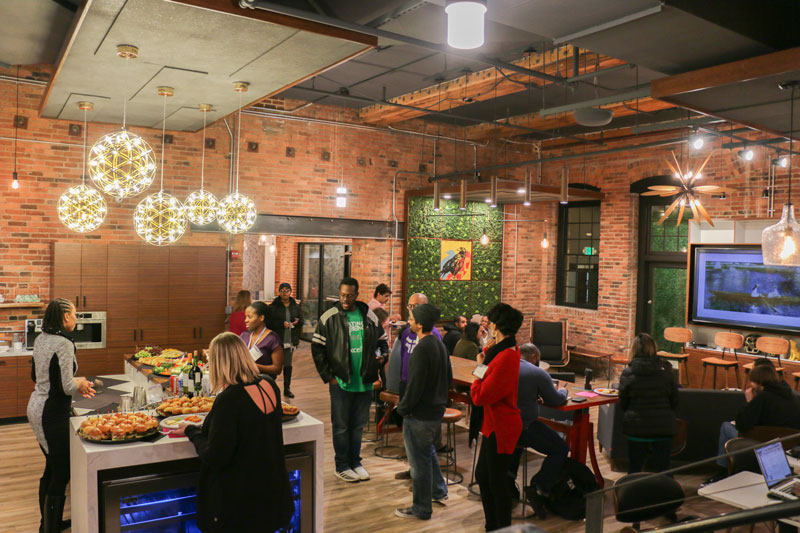
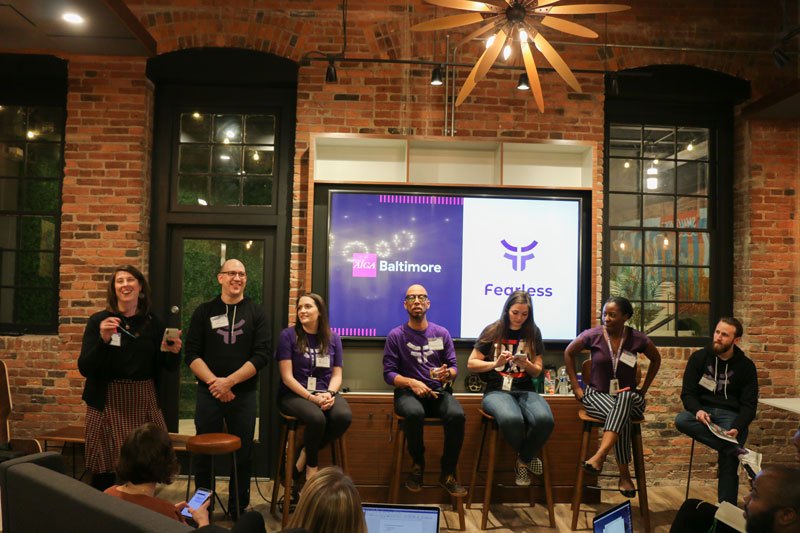
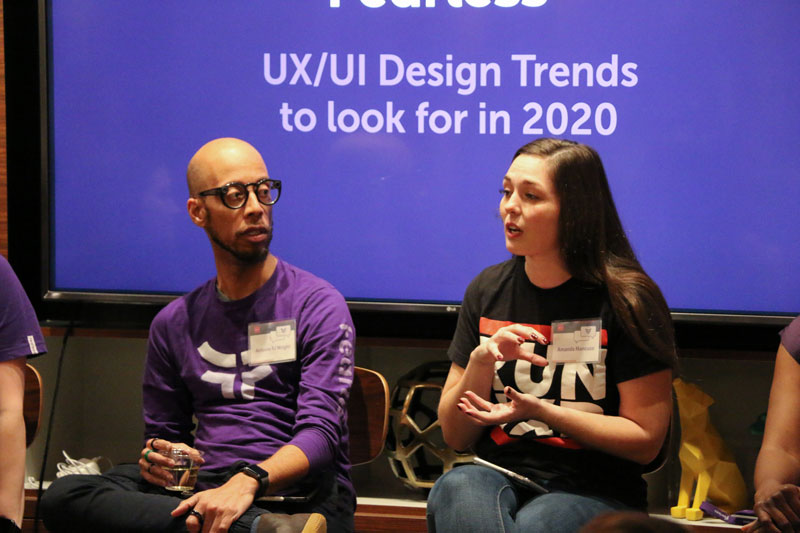
Held at Fearless headquarters inside of Spark Coworking Spaces in downtown Baltimore, the event was a panel-style Q&A. Panelists included:

Jordan Watts, Lead UX Designer, UX Coach
Antoine RJ Wright, Lead UX Designer, @ARJWright
Amanda Mancuso, UX Designer
Tyler Bolchoz, Product Designer
Rachel Petrucci, Product Designer
Daedriana Harvey, UX Designer

fearless tech baltimore designers seated for panel discussion
Photography Credits: Krystal Carpintieri

The Landscape

The UX/UI space is constantly changing as technology advances at lightning speed. Designing for non-traditional interfaces (smartwatch, eyewear, ring, etc.), voice user interface (VUI), and augmented reality (AR) and virtual reality (VR) will be the shiny new skills UX and UI designers will be homing in on. However, as technology changes, it’s often challenging for designers to gain experience in the latest and greatest and break into the UX/UI field.

What we learned from speaking with Fearless is that yes, UX and UI designers should have experience in design, code, content, research, and strategy (at varying levels of each, and that’s okay!); but that it’s equally important for UX and UI designers to possess super-sleuth soft skills and a fierce desire to learn. That’s far less daunting.

Photography Credits: Krystal Carpintieri

Skill 1: Collaborate Well with Others

In the past, there’s been clear segregation between designers and programmers. Designers would figure out what the “thing” (website, landing page, app, etc.) would look like, then hand it over to the programmers to code and be done with it. And as you can imagine, there’s bound to be some friction with this process.

“It’s not really a design hand-off, it’s a design implementation.”
Rachel Petrucci, Product Designer

These days, the concept of a “hand-off” has vanished. At Fearless, as with many other agencies, designers and programmers work together in a very integrative process. Designers and programmers come together for scrum reviews and standup meetings, and developers are invited to design reviews and product testing. As Rachel put it, “it’s not really a design hand-off, it’s a design implementation.”

That means whether you’re a designer or a programmer or a magical unicorn who does both, you must possess strong communication skills and a willingness to collaborate. Designing in a technologically advanced space means you’ll need to rely on others to create a successful product. Designing at this scale does not happen in a vacuum. As Tyler said, “you’re doing the product a disservice if you just hand it over, but if you’re collaborating everyone is engaged.”

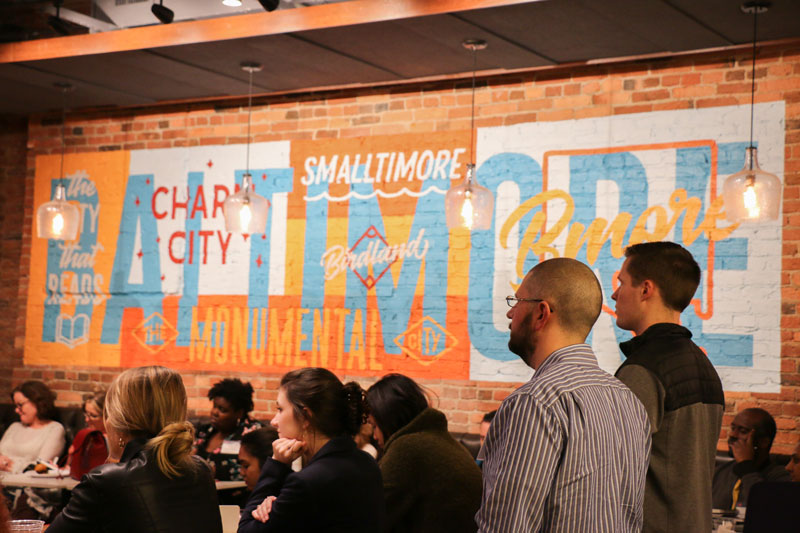
audience listening to panel discussion on UX design
Photography Credits: Krystal Carpintieri

Skill 2: Learn How to Build Empathy

We asked our Fearless panel what steps they take when asked to build a website from scratch. Across the board, step one was research. Before design is even a consideration, learn everything you can about the needs of your client. Do they need a website, or would they be better served by an app? The research phase also includes market research, identifying pain points and opportunities, and sitting with the users—it can take weeks.

“Your perspective is not the default”
—Jordan Watts, Lead UX Designer, UX Coach

But the critical part of researching is gaining the ability to build empathy for your users. Putting yourself in the shoes of the user is the most effective way to create successful UX and UI design. As we discussed inclusive design, Antoine suggested starting a design with the least-sited person in mind, then build up. Can this person use the product on a watch, how about on a mobile phone, tablet, non-touch computer, touch computer, etc.

Jordan summed it up best by saying, “your perspective is not the default.” Having empathy for users and being able to tap into how others will use the product (via user testing, research, etc.) will help you reach every user and create a better product.

AIGA baltimore attendees at spark coworking spaces
Photography Credits: Krystal Carpintieri

Skill 3: Be Hungry to Learn

As technology continues to evolve the only way designers and programmers can stay relevant is to stay hungry…to learn. Without a constant desire to learn, the skillsets of those in the tech industry will inevitably turn stale.

When we asked panelists what the top characteristic trait was that they look for in a new hire, Rachel and Amanda said they would hire someone who is curious and actively seeks out opportunities to learn and develop new skills. Antoine and Jordan discussed the merits of cross-functionality—and yes, there is value in knowing how to design and code—but it is equally important to understand your area of expertise.

So, if you’re looking to impress your current managers or are looking to break into the UX and UI space, take the initiative to develop your skillset. Attend hands-on boot camps and workshops (rather than lectures) to develop your skills, portfolio projects, and gain experience. As Amanda put it, in an interview she would rather hear about what you learned from failed experiences, rather than hear a candidate prattle on about what they think she wants to hear.

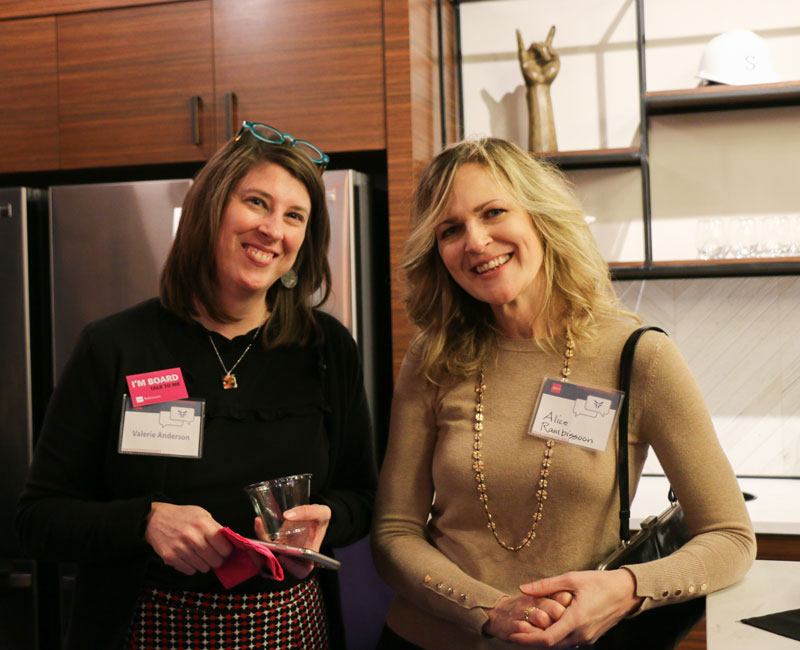
valerie anderson and alice rambissoon smiling for photo
AIGA Baltimore President, Valerie Anderson with the Interior Designer of the Spark Co-Working Space, Alice Rambissoon. Photography Credits: Krystal Carpintieri

What Did We Learn?

It’s no big surprise that the UX and UI fields are growing, and the demand to create beautiful, interactive products for numerous interfaces will continue to grow as well. Being on the cutting-edge of these technologies means possessing the technical skills, yes, but equally as important is being able to demonstrate how UX and UI can add value. That means learning how to be a strong communicator (and listener!), being empathetic toward clients and teammates, and being a dedicated, lifelong learner.

If you’re interested in learning more about Fearless, head over to fearless.tech; and if you want to join the Fearless team, check out fearless.tech/careers

Follow Fearless on Twitter, Instagram, LinkedIn, and Facebook at @fearlessbmore. And follow AIGA Baltimore—@aigabaltimore—on all your favorite channels so you never miss great events like this one!

 Share your thoughts below on what skills should be on the minds of UX and UI designers as we move into 2020!

Putting “Community” into Design

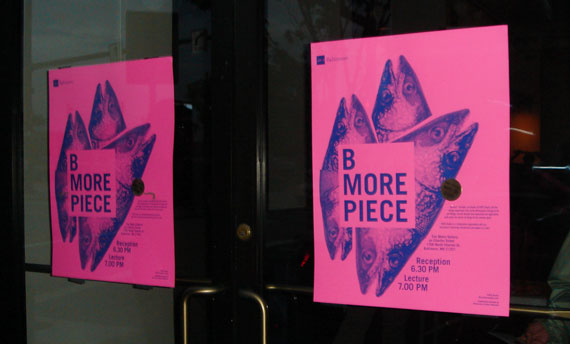
Did you miss AIGA Baltimore’s Bernard Canniffe Lecture the last week? If so, you missed quite an inspiring night. Here are some notable quotes from the very man himself:

“Design for the community will be one of the most important things in the future.”

“We can’t save the world with typography…but design can make a difference.”


Piece Studio is “putting community back into the equation.”


Piece Studio uses “design as intervention.”


“Ask and we will welcome.”

So if you want to do more with your design besides make cool logos, websites and t-shirts, contact Piece Studio and tell them you want to design for the community!

News Flash: Referencing Master of Kung Fu in a Career Fair Is No Longer Useful

grabbed from Wikipedia page on Master of Kung Fu (http://en.wikipedia.org/wiki/Kung_Fu_(TV_series))

Recently I attended a resumé workshop for an AIGA Student Chapter. A number of professionals sat through the rudiments of resumé writing—all good stuff, of course and in the end, there was a question and answer period. During that time, I ended up answering a number of questions—maybe because I was most willing to be loquacious than anything else, but I was asked a question that in answering seemed to confound the students.

A student asked me what skills does one need to be a “successful solo designer”. Strike successful and this is something I can answer. I kid. I referenced the television show Master of Kung Fu which aired during the late seventies. The show followed the adventures of Caine who walked the earth, having adventures every week in search of enlightenment presumably. (I included the Wikipedia link). Also, note that Quentin Tarantino was a fan of the series, using David Carradine, the series’ star as Bill in the movies Kill Bill 1 and 2.

Well, the series always started with a flashback to the student’s training, always showing the young student mastering some skill and the flashback would always end with the saying “once you take the pebble from my hand, it’ll be time to leave.” So, the pebble-hand thing is like a final and the lessons is like the work. My point—long-winded as it was—is to say that those lessons become the life’s blood of a young designer’s understanding of business. Those lessons, wide and varied, each become part of the skill set that the young designer must use to stay ahead or at very least keep up with the changing nature of business. For that reason, I suggested that a designer who is planning to be solo should at some point be in the opposite situation—work for a time in a corporation or a design firm, to help them understand themselves.

Anyway, that was main point—which with great difficulty—I explained. The students are about half my age, so the show was lost on them and almost the analogy. I told this story to a colleague and she said: Why didn’t you use Batman Begins?

AIGA Baltimore Presents Steven Heller, May 6th

The Design Entrepreneur

“What’s next?” is the perennial question without a satisfactory answer. Rather than address the concept of print being dead or graphic design no longer being graphic, Steven Heller, author of over 130 books on design and popular culture, whose forthcoming book is “POP: How Graphic Design Shapes Popular Culture,” will discuss his nominee for “what’s next” and “what’s now,” Design Entrepreneurism. As co-founder and co-chair (with Lita Talarico) of the School of Visual Arts MFA Designer as Author, he believes creating unique and valuable content is where graphic design – indeed all kinds of design – is heading. The alternative to D.I.Y. (Design It Yourself) is conceive it, make it, produce it and sell it yourself.

Steven Heller is co-chair of the MFA Designer as Author and co-founder of the MFA Interaction, MFA in Design Criticism, MPS in Branding and MFA Social Documentary Film programs at the School of Visual Arts. He is the “Visuals” columnist for the New York Times Book Review and writes the “Graphic Content” column for the New York Times T-Style blog. He is the editor of the VOICE: The AIGA Journal of Design online, and writes The Daily Heller online for Print Magazine.

AIGA Baltimore Talks With Design Army

Jake, Pum: First, thanks for taking time to answer some questions for the design audience, AIGA Baltimore and for your fans… What’s funny about the Baltimore/DC divide is that the commute seems to transport us through a time-space continuum where it’s sometimes difficult to keep up with our brethren down in the DC area. Thanks for your graciousness in this interview and your subsequent trip to Baltimore, hopefully we can get caught up.


Let’s do a round-up: Design Army is billed as DC’s top creative firm with their recent inclusion into the 30th Type Directors Club (TDC) Annual. The featured project, the “Politics of the Possible” annual report for the Human Rights Campaign, showcases the studio’s use of clean typography to create a message with lasting impact. Showcasing 225 of the year’s best examples of typography, the TDC Annual is considered the world’s most prestigious typography competition.

JAKE: We actually have 3 pieces in the newTDC. The HRC Annual, CATALOG 25 for Karla Colletto, and the Design Army “to/from” Wrapping paper. We also have 2 editorial campaigns in the SPD Awards this year – My Fair Lady and Game Day (GD will receive a medal!) not an easy thing to do given all the magazine work in NYC. =)

Going from designing around their kitchen table in 2003, to a ten-person firm in custom-designed suites currently, Design Army has embraced success currently. Don’t take my word for it. Their list of accolades—available on their website—is too long to mention ranging from nods from Communication Arts to additional regional and national recognitions for their work.

Jake: What dynamic in a word (or sentence) takes the company from the kitchen table with two people to a long list of clients and a ten-person firm currently?

JAKE: That’s a tough one as there are many variables in being successful—but in a single word it would have to be “PASSION”—without it you will not make it far.


When we started Design Army we knew we had to make a mark on our design industry — and we also knew that we would be doing it on our own. Luckily Pum and I had been working together (and married) for many years so there was no disagreement on what we wanted to Design Army to be.

Both: Speaking of the CA article, your presentation which will be here in Baltimore April 8th (image to be included) is called “Strip” and promises to discuss the good and bad of the business. What experiences come to mind that might wet our whistle or phrased differently: what might you have done differently in the last seven years?

PUM: A lot had happened in last 7 years but I wouldn’t do anything differently. We were lucky a lot of times but we also made mistakes. I don’t view mistake as a negative things. It’s what make us stronger designers. Learning by doing is what make us comes this far. We are never afraid to try to do new things or new projects. If you want to hear the specifics then come to listen to our lecture.

JAKE: Yes, we had learned a lot of lessons along the way – some pretty costly—but regardless of the good or bad outcomes you have to be willing to take risks. Not all clients are willing to take risks, and so then you have to ask yourself is this the right client for me? It’s ok to say NO to a project if you think it will not be rewarding for you.

Pum: I read a bit about your collective working style in the CA article. Does the difference in background factor into the company’s interaction at all?

PUM: I’m a city girl who grew up in the heart of Bangkok. I see things differently than Jake. We both are very different and have a strong point of view. But coming from another country (and we visit/travel a lot) it’s easy to spot good design—good design will translate (visually) to any audience in the world.

Both: Reading about the experience at Supon Design Group kinda gave me the chills… (a firm that’s perhaps too big to manage, etc.) I’ve read your desire to keep the firm at about its current size. Does the largesse of design firms lead to a loss of focus, sensibility?

PUM: In general, size doesn’t matter. There are many good firms out there that are quite big and quite good. We just know that small works for us. We had a privilege to lead 30+ designers before at our previous job and we know it’s hard to keep quality control.


JAKE: Pum is right, size is not that important. The work is. True, it’s a lot of work to manage more people and that is one reason we prefer to stay smaller. We can be more selective on our clients and focus on the work we LIKE to do, rather than just doing work. I know we get a lot of slack for being so selective all the time, but what we really look for is a client that is willing to change – no matter of they are non-profit, huge corporate or a start-up. There are many of them out there if you look hard.

Your time spent at Supon… How did that experience frame the business otherwise?

Pum: The best part about sticking around at SDG was learning the business side (after SDG was bought by a bigger agency we learn a lot about how to operate a studio).


JAKE: Wow. I think if we had not went through the entire process of the merge/purge we would never know what we know now.

Creatively, working at SDG was great and I would say we operate very similar to that work model today at Design Army. I just wish we had better computers back in the day so we did not work to midnight every day of the week.

Business wise, the lessons I learned at SDG were painful to digest. We went through many merges/purges and I was put in to some difficult business situations – situations I did not want to be involved in. But… I learned very quickly that design is a business so you have to learn to balance the creative and business to be successful.

Pum: I was really psyched to know that your approach is to really work at sketching ideas before developing them. In fact a favorite book of mine: “It’s Not How Good You Are, It’s How Good You Want To Be” by the late Paul Arden, says “rough ideas sell the idea better than polished ones.” Can you talk about the company’s perspective on sketching and prototyping ideas before getting them onto the computer. Why is that important to you?

PUM: When I say sketches, I mean the old-school of picking up a pencil and get it down on the piece of paper. Our work is about what you are trying to say, not what is it look like at the end. Design should please the eyes and activate the mind. Putting ideas on paper is the best thing. It goes from you brain directly to your hand. I believe there are two types of designers, “the brain” and “the hand”. To work at Design Army you have to have both. Some people can be very good at concept but if they can’t execute it, then you are not a designer. Some people can be very good at typography, layout, color but if they can’t think conceptually, then you are not a good thinker. Our teams have HEAD (idea), HAND (execute), HEART (passion)! Our team probably spends more time thinking than designing.

You’ve nearly got me convinced to cut the computer off right now. Why should I sketch more?

PUM: I believe if you can’t sketch, you can’t see in your head. Sketches give you the big picture of what your design should look like. Sketches give you the opportunity to make a few mistakes. Sketches are efficient and save a lot of creative time. You can work anywhere when you sketch (during commute, watching TV, or even freak out awake at night). And a sketch-book is a lot lighter to carry around than a laptop – no power or wifi needed!

Both: I’m also energized by the division of your projects—which you seem to be focused on knowing what you want to be working on. Is that the chicken or the egg? Do you seek an appropriate divide of projects or has that come to you by happenstance?

PUM: It’s important to only take a project that we are interested in. Being a smaller studio gives us an opportunity to say yes or no to the projects. I think you are into the project more if you understand the subject and the business. I love fashion and we go after those clients.


JAKE: I think I try to maintain a balance of work mainly so our staff does not get bored. We will do some conference work each year – but not a lot as they often too long of a project. We also do a lot of annual reports – some fun and others not so fun – but they are great for two reasons. 1) they have a deadline. 2) they have bigger budgets. As Pum said – fashion is a lot of fun and it’s twice a year (spring/fall); same for the arts/theatre work – as once season is wrapping up in the fall we are starting the new season for the spring.

But in truth around 90% of our work is from referral. We have a very lean/mean operation at Design Army and are very fortunate to have a talented team of designer. This really makes new business development easy for me.

Jake: What themes have the company encountered with the recession and the new economy and what do designers need to be doing to mind the gap of the new economy?

PUM: I have a few rules I like to preach: 1) Designers need to keep doing and continue to evolve with technology. Your work will be extinct if you don’t adapt and be aware what is around you. 2) LOVE WHAT YOU DO. If you don’t you will never become a great designer, you just have a job!! 3) Nothing good is ever easy. The most important thing is to have passion. You got to want your design to be better all the time. The best project that you ever work on should always be the one that you are currently working on now.

JAKE: One of the big themes you will see in our lecture is how we dealt some of the recession related problems. One of the biggest issues we faced was that our clients want the same level of creative with less cash. We had to work extra hard to find creative solutions using less—or at least give the impression of in some cases.

Other thing I have seen is the growth of interactive really picking up. We do a decent amount of interactive and some social media for our clients which have pushed our staff’s skill sets further—and I think overall that makes them even better designers. Luckily, DC did not get hit too hard (well the smaller firms didn’t) with the recession and we had maybe one slow month; and then we focused on our own self-promotions or pro-bono projects.

Recent Profile of Baltimore Design Work …

(c) Greg Bennett, Work to Date

http://www.underconsideration.com/fpo/archives/2010/03/aiga-pulp-ink-and-hops-poster.php

(more images there…)

FPO (For Print Only) recently profiled the 2009 AIGA Baltimore Pulp Ink & Hops poster designed by Greg Bennett. The article reads: “Paper and beer. Together. Whoever came up with this idea is a genius. For the past 12 years, the AIGABaltimore chapter has been hosting “Pulp, Ink & Hops,” an event that brings together two of designers’ main pleasures in the form of dozens of paper vendors and free hops from a local brewery. Again, genius.”

Genius… Tell us something we didn’t know. Greg’s work accomplished the goal of taking design out of the pedestrian and launching it into the spectacular. …And we thank him for that. …And you can join in too: look up his work on the behance website, the online portfolio engine for AIGA members, and give him a pat on the back conveniently located as an appreciation. Like so: http://www.behance.net/Gallery/AIGA-Pulp-Ink-and-Hops-Poster/454239

Shout out for the good work!!!

Thanks again to Greg Bennett and Work to Date.

Spunk Design Machine – Review

Spunk Design Machine in action

It makes so much sense when a couple of guys from a design firm with the name “spunk” in it are enthusiastic, even in the heart of winter. Even through the crappy weather and flight cancellations, Jeff Johnson of Spunk Design Machine fired off emails with exclamation marks as he completed stages of his suddenly canceled trip.

Well, the Spunk Design Machine team made it to Baltimore and for the thirty who braved the weather, they were so much better for it. think about it: they weren’t canceling. Heck, they’re from Minnesota!!! So, they came to rock the house and their presentation

“We believe that all design is an invitation.
We believe in distinction over distraction.
We believe every design has a voice.”

—Spunk Design Machine presentation

The custom poster they put together for the event…

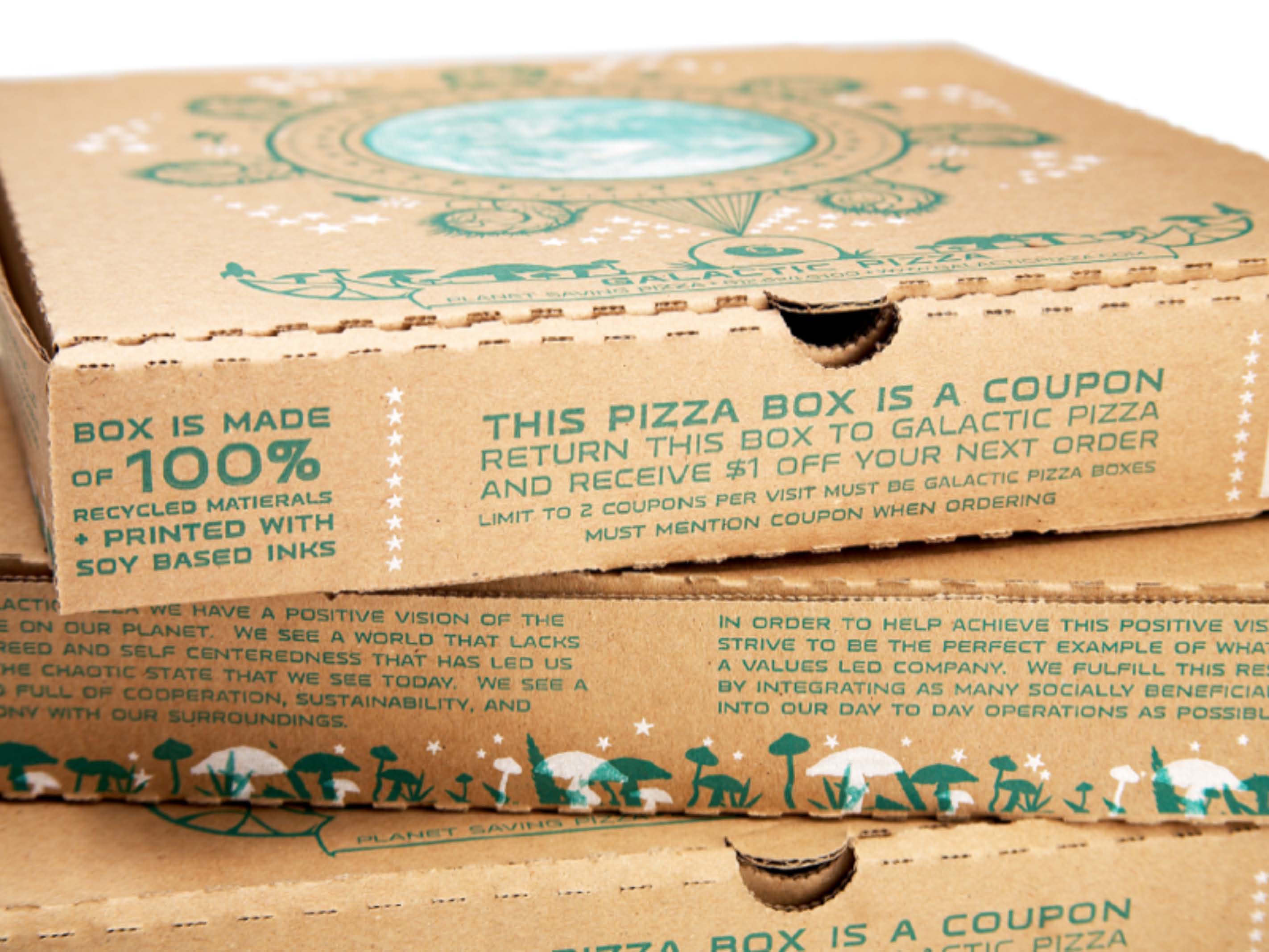
The self-proclaimed research nuts aggressively investigate design problems creating mood boards and through sketches to illustrate their direction as they showed and proclaimed in their presentation. The audience was treated to a number of their approaches—some of which will be profiled in an upcoming book on sketches by Steven Heller—including a collection of images and compositions from the Davis Co-op project. That energy resonated in the diverse body of work and their approaches which went from the “simple” pizza box or the complex.

(C) Spunk Design Machine – An image from the Davis Co-op branding project
(C) Spunk Design Machine – Galactic Pizza Box (a fully sustainable pizza box)

And I had a great time meeting Spunk Design Machine’s Jeff Johnson and Ben Pagel, personally. After the presentation, their four-letter word of choice was “B-E-E-R” and so it was off to Brewer’s Art.

Spunk Design Machine Coming to Baltimore Thursday, Feb 25!!!

Join AIGA Baltimore as we welcome Spunk Design Machine. Spunk Design Machine is hitting the road in 2010 to talk about design. Designing for culture, designing for invention and the diverse aspects of designing within the world’s ever-changing state of affairs.

They believe there is jot to be found in distinction and little to be found in distraction. 2009 was good to them, being feaatured in Steven Heller’s book: The Design Entrepreneur. They are also going to be featured in his upcoming book about designers’ sketchbooks.

The thirteen year-old firm recently opened their satellite office in New York City and produced the fourth installment of the Poster Offensive, their poster show for peace and democracy. And getting a peek at what they’ll be presenting us, I can tell you that this is presentation you don’t want to miss.

Registration $5 members, $10 nonmembers

Registration website: http://baltimore.aiga.org/events/2010/02/40892534

Spunk Design Machine coming to Baltimore February 25th

Join AIGA Baltimore as we welcome Spunk Design Machine. Spunk Design Machine is hitting the road in 2010 to talk about design. Designing for culture, designing for invention and the diverse aspects of designing within the world’s ever-changing state of affairs.

They believe there is jot to be found in distinction and little to be found in distraction. 2009 was good to them, being feaatured in Steven Heller’s book: The Design Entrepreneur. They are also going to be featured in his upcoming book about designers’ sketchbooks.

The thirteen year-old firm recently opened their satellite office in New York City and produced the fourth installment of the Poster Offensive, their poster show for peace and democracy. And getting a peek at what they’ll be presenting us, I can tell you that this is presentation you don’t want to miss.

Registration specials through Friday of this week… (because of the snow—blame it all on the snow)

Registration website: http://baltimore.aiga.org/events/2010/02/40892534