Can You Teach Yourself How To Be A Graphic Designer?

Looking to learn graphic design? You’re in the right place.

What a time to be alive! The internet is an amazing resource, the likes of which has never before existed in human history. This entire catalog of knowledge, gathered over thousands of years, can now be accessed in a matter of seconds from anywhere in the world.

Information used to be a huge barrier to entry in most professions, design included, but those walls have largely come down. Skillsets which previously could only be gained through an apprenticeship –– or years of study at certain prestigious schools –– are now available to everyone who knows where to look.

Information is cheap. In fact, it’s often free. It’s so freely available that it brings a whole new set of challenges. Just because it’s all out there, doesn’t mean it’s easy to sift through the noise and properly absorb the most important parts. You will still face a steep road ahead to reach your creative and professional goals, but it’s very doable.

Knowledge and information is a huge piece of the puzzle, but it’s not everything. Applying what you have learned consistently, practicing and failing, is the second piece that transforms information into real skills. Many people will fail here. They’ll watch hours upon hours of YouTube videos, get super excited about their newfound passion, but never enter the next phase of applying what they’ve learned.

‘Learning’ can quickly fall into the realm of ‘entertainment’, if you are not taking an active role in getting involved with the material. This isn’t necessarily a bad thing. Considering all the media content that we consume these days, there are certainly less enriching and educational things we can waste our time on. But if your goal is to hone your craft and move closer to your professional goals, it’s important to be honest with yourself and admit when you’re just being a passive spectator.


4 Tips for Self-Taught Designers, From a Self-Taught Designer

teaching yourself graphic design

1. Embrace your unique journey

Unlike a fully structured college syllabus, the road ahead is going to be completely up to you. The good news is that you can cut through a lot of the fluff and focus on the topics and skills that you can apply immediately. The bad news is that nobody will be holding your hand and guiding you. It’s very easy to get lost in the weeds of information overload, distraction, and “shiny object syndrome.”

First, be crystal clear with your short, medium and long-term goals. Actually spend the time to sit down and think about this and write it out. Yes, that means you. No, you can’t skip this step. If you set the right targets, you can catapult yourself up the learning curve and get ‘pretty good’ at a particular skill in a matter of weeks or months. If you have unclear goals about what you want to do in graphic design, you could wander aimlessly for years before giving up… thinking you somehow lacked the innate talent to be a success.

What is your next logical step? Should you be building a portfolio? Are you missing a skill needed at your dream job? Can you learn something new and use it to help someone in your life, for free, to build up your confidence and network of references? These are some examples of excellent targets you can aim your learning journey towards.
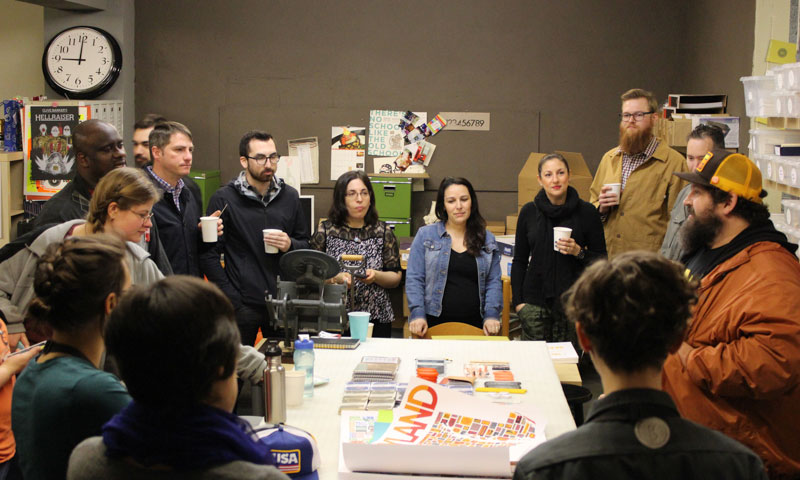
learn from other designers

2. Model yourself after the designers and artists that inspire you most.

Figure out who’s doing the work you wish you could do and try to recreate it yourself. No, I’m not saying to plagiarize someone else’s work and pass it off as your own to others… but purely as a learning tool, it’s perfectly ok.

Try to ‘reverse engineer’ every element of their work and understand why they made the creative decisions they did. If you want to showcase this piece in your portfolio, then you will need to put your own spin on it and not blindly copy. However, don’t worry if your work is ‘derivative’ at this stage of the game. Finding your unique creative style is something that comes later, after you’ve learned the fundamentals.

There’s a reason behind Picasso’s classic quote, “Good artists copy, great artists steal.” Don’t take it too literally, but there is a lot of truth in it. Model yourself after those who are successful to help ‘catch up’ in your skill level, before taking it to the next level on your own.

Dedicate a lot of time each week looking at design from experts. Yes, this might make you feel a little bad about your relatively amateurish creations, but it’s something you need to do. This helps you develop ‘good taste’ which is the driving force that will help you close the gap between where you’re currently at and those at the top of their game.

Depending on your specialty, there are several good sites for this. Dribbble is a good example, across the board. For motion design, Vimeo is the industry standard and as a bonus allows you to go through pieces frame-by-frame. Pinterest is another classic source of inspiration for many designers.
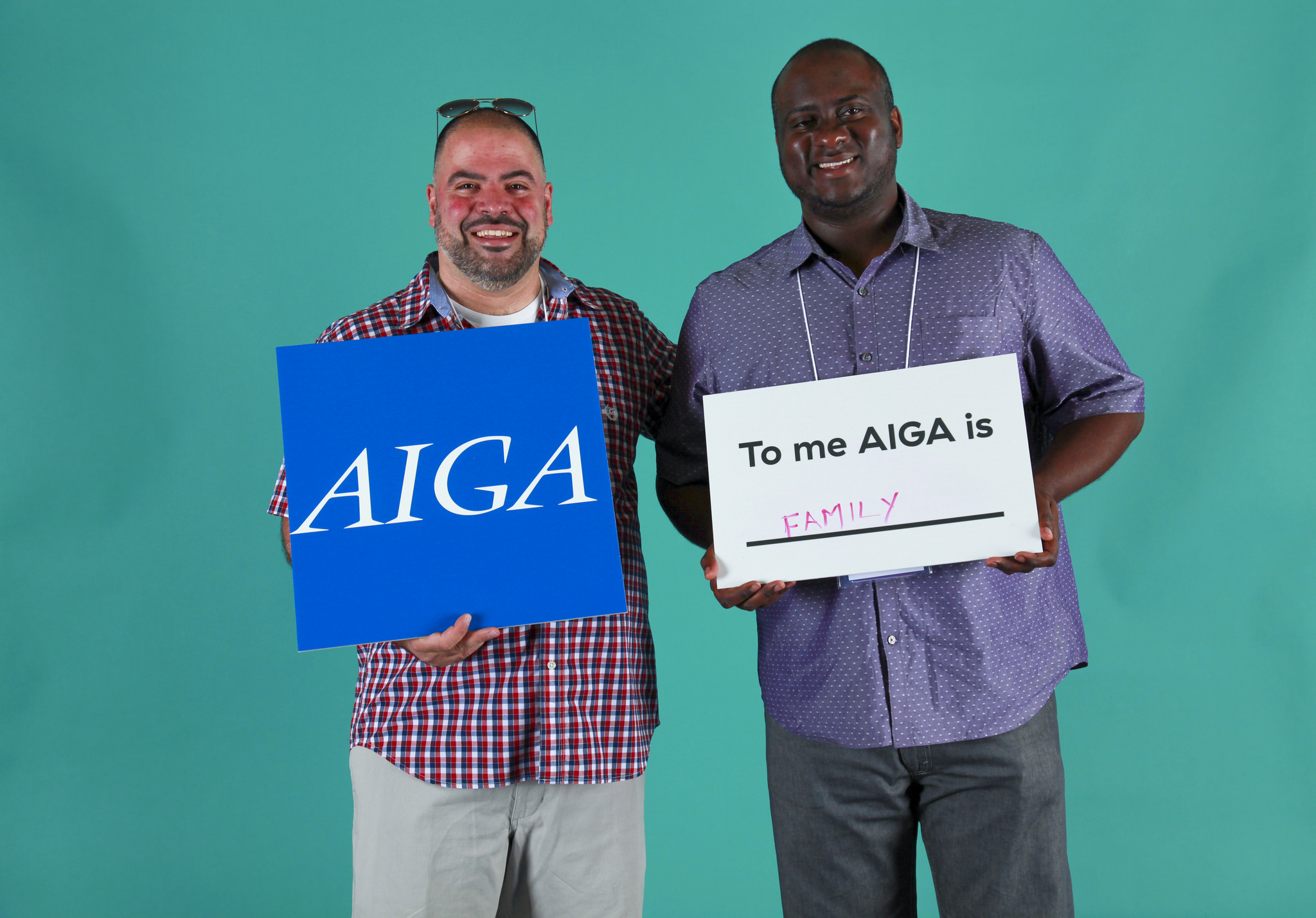
aiga design community

3. Join a community. Online is great, in-person is even better.

One hurdle you will run into on this path are ‘gatekeepers’. People who will say you cannot do it, or who make things seem overly difficult to discourage you from even getting started. Often, these people are insecure about their own position, fearing that more competition could cost them their livelihood.

Also, they are afraid that the spread of free information will undermine their own education and experience, rather than seeing the opportunities to enrich their own careers by using these resources to continue their own education.

Don’t be discouraged if you run into a few naysayers. The internet can bring out the worst in people. Keep this in mind, try to develop a thick skin, and keep on moving.

You will also find supportive communities that are welcoming to newcomers and more than willing to help in any way they can. AIGA is one such example. Make sure that you are willing to give back and add value to others, even if all you have to contribute is a positive attitude. Be respectful of others’ time, be humble and willing to learn, and people will point you in the right direction.

Find Your Community With AIGA Baltimore ask for feedback

4. Ask for others to critique your work.

This is a tough one. None of us want our egos bruised, especially when we already feel like imposters and amateurs. But constructive criticism is the best way to refocus your efforts and move up the ladder quickly.


Websites for learning graphic design

youtube

This is obviously everyone’s first go-to when looking for short video tutorials. Surprisingly, there is a lot of high-quality content here… it’s just a matter of sorting through all the junk to find it. Unfortunately, YouTube is full of distractions, misinformation, and worst of all… people trying to sell you something under the guise of free help.

Overall it’s an excellent resource to look up any specific knowledge when you need it. If you’re just starting out however, you may do better with a more structured and well-curated source.

Find Design Tutorials on YouTube skillshare
Skillshare has over 18,000 online classes and continues to grow every year. The classes are project-based, and there is a vibrant community of fellow students to help provide feedback and critique.

The projects are fun, highly relevant to the latest design trends, and taught by some big names that we all know and admire.

Baltimore’s own Ellen Lupton has several classes on the platform. Her typography classes are a great foundation for anyone serious about learning graphic design.

Overall, the course format is a little more bite-sized, than the more intensive format of courses on LinkedIn Learning and others. This is great to hit the ground running on a project after only a few hours of tutorial, but may lack the broad foundation needed by a total newcomer.

AIGA members can receive a free two-month trial.

Learn Design Skills on Skillshare lynda

Lynda has a smaller catalog of courses than Skillshare, but they are far more intensive. Where a Skillshare course can be 3-5 hours of learning material, Lynda might be 20-40 hours. The potential downside is the time commitment, and the possibility to lose focus and enthusiasm, especially if a large portion of the course is reviewing the basics.

However, Lynda’s deep dives can get you up and running on the latest technology and trends in your industry even if you’re coming in as a blank slate. If you dive in and treat these with the same commitment as you would a college course, you will be rewarded with a solid foundation of knowledge.

This is also a monthly paid subscription, with a free trial that allows you full access to all of the courses.

Expand Your Skillset With LinkedIn Learning adobe

If you’re serious about Graphic Design, there’s a good chance that you are already using Adobe’s suite of products. With yearly updates, the software is constantly changing. Luckily, Adobe provides a large library of free tutorials that will help you find your way around the basics in all of these programs.

These tutorials are generally pretty short, so if you want to learn about every facet and feature of the latest Photoshop, for example, the above-mentioned Lynda might be a better choice.

Explore Design Tutorials With Creative Cloud pluralsight

Like Skillshare, with a smaller library of short-format courses. I’d probably check out the others first, then consider a free trial here to see if there’s some particular topic or teacher that interest you and isn’t on the other sites.

Check it out on Pluralsight udemy
Here you will find a similar deep-dive format as Lynda, but instead of an unlimited access monthly subscription, you pay by the course. This might make sense if there is only one particular course that interests you, or if it will take you several months to complete since there is no time limit once you’ve bought the course. Unlike some of the other sites, you won’t automatically be billed monthly regardless of your progress.

Learn More on Udemy

Online Design Programs & Courses

If you feel like you’ve gotten everything you can out of all of these sources, and you want to further hone your craft with an advanced level of online education, there is another tier (price-wise) of courses that exist.

For motion design, the two most prominent examples are School of Motion and Mograph Mentor. SoM’s courses start at around $1k, and MM at about $2k. There are other similar companies for other specializations.  These big-ticket courses are a long way from the ‘free’ information on YouTube.

Are they worth it? Maybe… To be honest, most of the information itself that is presented in these courses is probably available elsewhere, but they offer a higher level of personalized attention. These are 6-10 week ‘bootcamp’ intensity courses, usually focused on one large project that can be used as a showcase portfolio piece.

If you’re already 90% of the way there, the personalized feedback and coaching through every phase on the project could take your skill level from advanced to elite. If you’re still a hopeless newbie, you’re probably not going to get that much out of it. You will not be magically transformed from someone with no knowledge to an expert just because you shelled out a lot of money for a course.

Feedback and mentorship can be had for free elsewhere if you ask nicely and respect peoples’ time. And the amount you can actually learn and absorb in 6 weeks is limited. If you have the money to spend, and you feel like putting serious cash down will motivate you to work harder, go for it.

Education is a lifelong road, not a finish line that you cross once.

Education is a lifelong road, not a finish line that you cross once. Those who stop learning risk falling behind and stalling out in their careers. This is especially relevant now as technology advances as an accelerating pace. If you’re not learning something new every year, you’re probably already behind where the industry is headed. 

The good news is that where there were once walls, there are now an endless number of ladders. You don’t have to feel stuck doing something that doesn’t excite you. Life’s too short, and you’re never too old to change directions or decide you want to try something new. You can make a lot of progress in learning something new, in a relatively short amount of time, if you know how to sort through the information overload and focus clearly on your desired destination.

Can you teach yourself to be a graphic designer? Absolutely.


About the author:
Vaibhav Sharma headshot

Vaibhav Sharma

Vaibhav is an NJ native, who has called Baltimore home since 2013. He loves motion design, cooking, cats… and most of all, being a dad. Vaibhav is an introvert but loves to make new friends. Feel free to say ‘Hi!’ on Facebook, Dribbble, or in a comment below this article.



What I Learned About Being A Creative

What I learned about being a creative, after breaking through 30 years of stifled creativity

“I suck at art.”

I can’t remember the exact age when that thought crystallized in my head, probably around first or second grade. It was a toxic seed that I unwittingly planted in myself. As I grew, so did that seed. Until it completely cut me off from the creative instinct inside of me. Luckily, that drive to create always bubbled right beneath the surface, and after several decades of my life I have been able to reconnect with something that I thought I lost long ago.

Nobody is born a talented artist; every child produces some level of messy scribble when they first try to draw or paint or create anything from their imagination. But I felt like my scrawl was especially bad. Maybe I just lacked the fine motor skills. I couldn’t keep my coloring inside the lines, and I certainly couldn’t recreate any person, animal or object. I was hopeless.

I have this one distinct memory where I had a full spectrum of crayons in front of me, but for some reason chose to use my pencil to color a picture of a duck. “Why did you do that?” I remember the teacher asking… wondering why I had chosen pencil-gray instead of yellow or some other sensible duck color. I didn’t have a good answer for her. Maybe I preferred the sharp precision of the pencil. Maybe it was just what was closest to my reach. Whatever it was, I came away that day feeling like I had made the “wrong” choice creatively.

I came away that day feeling like I had made the “wrong” choice creatively.

There were many similar instances where I tried to express myself artistically and was left with disappointing results. Before long, other kids’ work began to outshine my own, and instead of striving to improve I just decided art was not for me.

Creative answers aren’t right or wrong

It took me many years to realize that it was my own belief system that caused me to give up on my artistic ability so early. The truth is that I couldn’t deal with the threat of criticism or ridicule. I couldn’t deal with making mistakes.

By comparison, it’s a lot easier to focus on learning something where the answers are concrete and unambiguous. There’s only one correct solution to a math problem, and I could learn how to repeat the same steps to arrive at that same answer every time.

But art, or any other creative pursuit, is not like that. The ‘solutions’ to any particular project can be infinite, which creates uncertainty that used to drive me crazy.

Before long, I had cut myself off from my inner creativity so much that I forgot that part of me ever existed. “I just don’t have any good ideas”, I’d tell myself. I admired others who were able to create inspired pieces of art, music, storytelling, but thought they had some magical source of inspiration that I somehow lacked.

Creativity, in the purest sense, cannot be taught or learned. However, it already exists naturally in every human being. What differs between us is the degree to which we self-criticize and suppress the ideas that are constantly being born within our minds. After a while, this suppression becomes second nature and we don’t even notice we’re doing it. All we’re left with is a blank slate when we try to access our mind for an original idea. This creative blockage comes from years of saying ‘no’ to all of the tangential and creative thinking that our brains naturally produce. When we set the bar too high for what constitutes a good idea, we close ourselves off to the source of all ideas.

This kind of flawed perfectionist thinking comes from childhood experiences. It’s not our fault, but it is our responsibility to correct if we want to reach our full potential. Many of us did not have the proper nourishment or encouragement to launch us into our best lives. Some of us were told directly that we did not have what it took, or that art was a dead-end path. For others, it might have been more subtle than that. Maybe we just weren’t in an environment where we felt like it was ok to make mistakes, and where we learned the important lesson that failure was the path to growth.

It took me until near middle-age to realize that the ‘safe’ path in my life was not safe at all. It was absolutely soul-crushing to work in a field I had no interest or passion in, just because I thought it was the most logical career path and the path that was expected of me by society, family, etc.

‘Staying inside the lines’ career-wise was a defense mechanism that I thought would keep me safe from criticism… it didn’t. Even within the confined, predefined spaces of corporate life you will still make mistakes and have to stand behind them constantly. But at the core of it, I didn’t believe in any of that work in the first place. I felt completely incongruent and therefore lacked any power or conviction to be proud of what I did.

Here’s the good news…

I wasn’t that special. I can’t believe how liberating those words are. It seems so obvious now, but it took me over 30 years to realize that. I’d rather take the risk of being a creative with “no talent” than being stuck in a career focused on conformity and rigidity.

Perhaps I wasn’t destined to be an illustrator or fine artist, but there are so many other mediums through which I can express myself to the world. And expressing myself authentically is non-negotiable. I cannot happily live my life without the opportunity to do so.

Creativity is in all of us.

It’s a combination of our life experience and a multitude of other intangible factors. It’s just a matter of the extent which we nurture that natural creative instinct. Creation is more of a process of getting out of your own way than trying to force ‘good ideas’.

My new path has been a series of these revelations. It has been a process of unburdening. Questioning my limiting beliefs about why I couldn’t succeed. Asking myself if I really do lack some fundamental ability that other, ‘real’ artists possess.

Ultimately, success as a creative professional comes from cultivating certainty.

When a client hires you to make creative decisions, you must back them up with certainty. You alone are the expert in whatever you do. If you were brought into a project in any role, you must believe that the client chose you because you are the best at what you do.

This kind of confidence and self-certainty doesn’t happen overnight, it takes time to build, but it can only come from within. You need to be comfortable making difficult creative decisions and being courageous enough to put your work out there even when you feel most vulnerable.

The biggest piece to all of this is just giving yourself permission.

If you don’t value the work you do, nobody else will.

It comes down to an inner choice, although ‘flipping the switch’ in your head to believe that you and your work are enough is much easier said than done.

It’s a lifelong journey, that never ends until you give up or decide to move onto to something else. There’s always room for improvement in terms of honing your craft and sharpening your skills. But in my experience, the biggest piece to all of this is just giving yourself permission. Believe that you are enough, right now. You are not an imposter, there is real value to what you do. If you can feel your heart calling you to do this work, then nobody can ever take that away from you.

Stay strong.

Never give up.


About the author:

Vaibhav Sharma headshot

Vaibhav Sharma

Vaibhav is an NJ native, who has called Baltimore home since 2013. He loves motion design, cooking, cats… and most of all, being a dad. Vaibhav is an introvert but loves to make new friends. Feel free to say ‘Hi!’ on Facebook, Dribbble, or in a comment below this article.


How I Landed My Dream Design Job Right Out Of College

An Ink & Pixels Testimonial

Hi all! My name is Sammy Smith. A recent graduate of Stevenson University (Spring 2018), I majored in Visual Communication Design. I am currently a Junior Designer at Design B&B, a design and branding agency with locations in Baltimore & Chicago. I was fortunate enough to be offered an internship the summer before my senior year, and was ecstatic when it turned into a full-time job offer after graduation.

But how did I land this amazing internship and job? Well, I have Ink & Pixels to thank for that.

Ink & Pixels is an amazing event to get your portfolio reviewed by working design professionals, work on interview skills, and network. Being very active and even President of Stevenson’s AIGA student group, I made it a point to attend this event every year. (Even though I’m a slight introvert, and would rather stay home and watch Netflix.) I knew the value of this event, that there was no debate about whether to attend or not. It was a definite “okkk, fiiinne.” pauses Netflix & gets off couch

*pauses Netflix & gets off couch*

Ink & Pixels 2017

During Ink & Pixels my junior year, I had the pleasure of sitting and meeting with Shelly Boggs, a Principal of Design B&B. We had a fantastic conversation and review, which ultimately led to an internship offer. She told me that they don’t usually hire junior year college students as interns, but made an exception for me because she was so impressed with my portfolio. Woww, flattered! I interned at Design B&B that summer and they even kept me on throughout my senior year.

Two months before graduation, when all seniors are frantically looking for jobs, Shelly offered me a full-time position. I was so humbled and grateful for this opportunity to continue with such an amazing company and TO HAVE A JOB OUT OF COLLEGE! Whoooo!

Ink & Pixels 2018

So, take my advice.

Pause Netflix.

Get yourself and your work out there. NOW! You won’t regret it. Now, obviously, it is not a guarantee that if you attend Ink & Pixels, you will be offered an internship or a job. I was just lucky, I guess. But who knows; you won’t find out unless you try.

Sign Up For Ink & Pixels Today!

Meet the Speaker: Zombie Yeti

Born and raised in the cornfields of northern Indiana, Zombie Yeti had no choice but to escape the maize via a steady diet of comic books, cartoons, movies, music and video games. It describes its work by defining a new term; a self-proclaimed movement called ‘Esoteric Americana’. On the surface, its style reflects its love of comic books and cartoons – with a dash of humor and an emphasis on story, character, silhouette and line. While beneath, its aesthetic results resemble a twisted take on representations of traditional art.

Zombie Yeti has had the pleasure to work with top tier companies such as Under Armour, Nike, Adidas, Reebok, Hasbro, and many more. It has also produced works with many greats in the music world such as Foo Fighters, DeadMau5, Deftones, Kid Rock, Incubus, Paul McCartney, Primus, Faith No More, Melvins, and many more. Most recently, it created the art packages for the Ghostbusters Pinball Machines. It also likes Circus Peanuts…

Where do you draw inspiration from?
Everything and anything. Or anything and everything, depending on your preference. I’m pretty sure I’m the result of everything I love (nature, film, music, video games, etc) somehow digested, moderately catalogued in my brain (ie, thrown on the floor), and perversely skewed with bile through my personal preferred perspective.

I don’t think that’s unique, but I think the perspective can be.

I try to look for the things other people aren’t focusing on. Part of that is growing up in the punk, anti-conformist realm of the 80’s and 90’s, and the other part of it is that I don’t see any other way to attempt to stand out if you’re doing the same thing as the other folks. There’s no challenge in trying to be someone else.

If you want to grow, you need to challenge and fail. I’m really good at failing! It’s probably my biggest strength.

What advice would you give to your 20-something self?
Relax. I’m you/me from the future!!! Quickly, I beg of you to take out every possible student loan you can. Take that money and invest it all in a new company called Google. …Also, in the future you will be sent back to the past to give yourself advice. Often. It’s VERY costly, but for some reason, interviewers will pony up!

On Failure…

I can assure you failure is indeed a viable option. The only caveat is you have to use your failures to learn what works and throw away what doesn’t.

So don’t huddle in a corner afraid to try something. Instead, take that time of inaction and use it to see how quickly you can fail and learn.

On Business relationships…

Be yourself and trust your gut. Look for people you like to work with and respect, and avoid the greedy people who want to use you for their benefit. If you present yourself in a shiny, marketable, safe, package, you’ll always have to play that game.

Instead, do what you are passionate about and if someone recognizes it and offers you an opportunity, they WILL trust your vision. Make real relationships in your business life.

On Life…

Make more time for your kids. Time moves too quickly with your head down. Look up and pay attention to your surroundings more.

When did you first realize you wanted a career in design?
I actually never wanted to. I thought Graphic Design was making flyers and brochures for local businesses. I avoided it like the plague. I had always loved drawing and creating since before I could speak, but I genuinely didn’t ever expect to make a career out of it. I don’t regret taking the long way though. I learned a lot of things that led me to have the time to focus on what I’m doing now.

In 2008, I was Creative Director for a design company. A designer by the name of Joshua Smith (aka Hydro74) reached out to me one day out of the blue. He used to try to look over my shoulder and steal my sketchbooks in middle school. I didn’t realize it at the time, but it was because he looked up to me.

Anyway, he wrote me and told me of his life journey and how he was inspired to pursue a career in design, and he thanked me for inspiring him. Serendipitously, his message was the spark that re-inspired me to pick up a pencil for the first time in 10 years. From then on, I haven’t put down a pencil/stylus.

Favorite Quote/Philosophy:

“The Princess is in another castle” – Toad

As a kid I didn’t imbue any higher meaning to this statement. But as time drives on, I foolishly look for substance in the mundane.

If I had to find meaning in this now, my take-away is that when you reach your goal, you’re a fool to stop.

Don’t mistake a goal as the ultimate victory. Continue to challenge yourself to do more and never stop learning on your own terms. It’s about the journey, not the end.

Baltimore’s 5th Annual Design Week is back! Register now for Raising the Game: Creativity Through Collaboration at Under Armour.

Behind Design Week 2018’s Branding; A Discussion With idfive

AIGA Baltimore was thrilled when local Baltimore design studio idfive agreed to be our Branding Sponsor for Design Week 2018.

Since 2013, we have reached out to a local design agency to partner with us and bring Design Week alive visually. Past partners have included Fastspot, Orange Element, Gilah Press + Design, Eye Byte Solutions, and Exit10.

This year, we want to bring you behind the scenes with our Branding Sponsor, idfive, to learn more about their inspiration for this year’s branding for Design Week, their work outside of AIGA Baltimore, and what their company is all about!
design week baltimore

What was the inspiration for idfive’s Design Week Branding?

I wanted to take this creative opportunity to address what I think is the central issue in Baltimore – the “two Baltimores” – by attempting to build a visual system that would unify, represent, and complete the “feel” of Baltimore. I thought about the disparate ways our City has been represented visually – a sort of mishmash of the old (cobblestones and gas lamps), the new (modernist/brutalist architecture), and the forgotten (formstone, Waters-esque camp, The Wire).

I kept getting hung up on was the source of many of our current divisions – the 1937 Federal Home Owners’ Loan Corporation (HOLC) “redlining” map. So I suggested to our designer Heather that we re-use, re-purpose, and “break” shapes and forms from that tragically unjust document as a way to acknowledge our City’s past and represent its current divisions, while still looking with hope toward a more unified future.

The tagline was a natural extension of this visual theme, tied back to design.

What were the steps involved in creating the branding?

We divided a volunteer squad of six creative team members in to three teams of two (a copywriter and a designer), hashed out rough concepts separately, and came together under the guidance of Courtney Glancy to critique and tweak.

I can’t speak to the other teams’ processes, but for me and Heather, beers, dinner, and doodles on some cocktail napkins in Hampden were all it really took to come together on concepting. Heather and I have complementary strengths and work together well. I’m very analytically minded and always try to zoom out to process everything on the level of overarching themes and concepts, and she lives in the nitty-gritty of the execution phase where she’s amazing at expanding and exploring concepts within a consistent visual language.

aiga baltimore design week branding idfive

What was the inspiration for being a part of Design Week 2018?

Courtney asked us, “wanna do it?” And we said “hell yes!”

What was the goal of the Design Week branding?

Try to answer the questions:
“What is Baltimore design?”
“What should Baltimore design be?”
“How can we represent Baltimore in a way that feels like Baltimore?”

AIGA Baltimore Design Week 2018 logo by idfive

Could you explain an exciting idfive project completely unrelated to AIGA?

We’re currently redesigning the website for Maryland Food Bank, which distributes 37 million meals every year to people in Maryland. You can’t ask for a more inspiring client than that. As a copywriter, any time you find yourself shedding tears while you’re writing, you know you’re on the right track. Whoever’s reading this should donate.

What are your typical process steps? Do they differ from the work you did for AIGA?

Usually I start with a task list item, then go back and research the brand or the industry until I find an angle of entry, then organize my thoughts into buckets, and execute. I typically think slow and work fast. The process for AIGA was similar, but since the task wasn’t laid out with really any specificity, I also got to jumpstart my usual process with my own questions – “What do I want this task to be?” “What don’t I want this task to be?”

Your firm recently made a big move to the MICA campus. What’s your favorite part about the new location?

Anytime I need a boost or a break, I can walk through a gallery space and see something interesting, or pop into the library and flip through art books.

baltimore design agency idfive brands baltimore design week

How do you typically find your clients?

I let the new biz team handle that, and my focus is on doing high-quality work that makes their job easy.

What’s an ideal day at the office like?

A nice varied mix of tasks, some deep workflow where time has no meaning, some lightning round problem solving whack-a-mole, some positive client feedback when you check your email, some solid belly laughs with other team members, and that feeling at the end – when you fill out your timesheet – of “I just knocked this one out of the park.” And also idfive bought us pizza.

What is idfive’s mission? How did it come about?

Our whole thing is helping mission-driven brands do good better. So we do things like no-commission media campaigns, and website redesigns that are built to drive action AND help build more efficient governance structures. The whole setup is pure Andres, who is without a doubt the best boss I’ve ever had.

aiga baltimore design week

If you could describe your team and work philosophy in 5 words, what would they be?

How can I help? Oooohdonuts!

What’s your vision for Baltimore? For Maryland?

I’d like to see Baltimore, Maryland, and America transcend its entrenched divisions, build sustainably and fairly, and keep on being weird and wonderful.

idfive baltimore design agency logo png

Q&A With Charlotte James: Comms Specialist, Creative Entrepreneur, Baltimore Badass

Charlotte James is a digital communications strategist and entrepreneur originally from Philadelphia. She came to Baltimore to study at Johns Hopkins University and decided to stay! And we’re so glad she’s here.

She currently serves as the Director of Outreach and Communications for Common Curriculum, a local ed-tech startup. She is a former Baltimore Corps Fellow and current Baltimore Creatives Acceleration Network Founder Fellow with her nail art business, Power Decals.

Charlotte James Baltimore

Where do you draw inspiration from?
My business partner – she’s an incredible designer and helps me hone my aesthetic.

Favorite creative hobby, outside of design?
A friend recently got me back into sculpey clay so probably going to keep playing around with that.

What advice would you give to your 20-something self?
I’m still in my 20’s so if anyone has any advice, hook a sister up! Just kidding but for real, I always tell anyone younger than me that it’s totally cool to not know exactly what you want to do or who you want to be, as long as you’re always hustling towards something.


it’s totally cool to not know exactly what you want to do or who you want to be, as long as you’re always hustling towards something.


Charlotte James is the Co-Owner of Power Decals

Power Decals is a line of vibrant, statement-making nail decals that celebrate culture and powerful women. The Baltimore business is shaking up your handshake, as seen in Baltimore Magazine. But founders Charlotte and her partner Valentina Fiamma Ziino Colanino want more than amazing nail art. They create their decal designs based culturally diverse patterns and even feature inspiring women throughout history.


Meet Charlotte at AIGA Baltimore’s Ink & Pixels 2018

Join us at Ink & Pixels on September 29th to get to know her in person! Charlotte will be moderating the panel and town hall discussions on issues relevant to the emerging designer.

Register for Ink & Pixels – 9/29/2018

Save The Date: AIGA Baltimore Design Week 2018

Celebrate & examine design beyond the margins

What boundaries does design face in Baltimore? What boundaries have we overcome? How could we do better?

This year’s AIGA Baltimore Design Week is an exploration of these and other topics related to the boundaries – real and artificial – that constrain, separate, protect, and define us. As designers, as Baltimoreans, and as people.

Join us, along with luminaries from Baltimore’s academic and design communities, for a series of events and discussions as we look back at developments that shaped Baltimore design over the last year, and look ahead to what’s next.

Stay tuned for full event details, and join the discussion on social media with #BMOREDW18

Event Lineup Preview

An Evening of Design Thinking and Radical Collaboration with AIGA Baltimore

Written By: Joseph Carter-Brown and Valerie Anderson | Photo Credit: Frances Miller and Leo Brady

AIGA Baltimore’s Community Meeting started in late 2016 with the intention to provide a platform for members within our creative community to share ideas, concerns, and hopes for the betterment of Baltimore. In meetings past, we’ve heard from representatives from AIGA National on the work the organization is doing as a whole, as well as how the work that goes on in headquarters aligns to the work each chapter is doing locally. Other meetings focused on presentations from a variety of community-based initiatives spearheaded by our board within AIGA Baltimore or other organizations. While we enjoyed opportunities to share the things we love most about the local design community, we found we weren’t spending enough time talking to you about what you wanted.

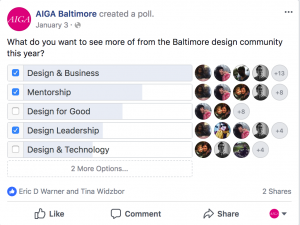
So, at our most recent community meeting on January 16th, graciously hosted by our friends at SlimTech, in an effort to talk less and do more, we made your interests the focus of the meeting. We started with a Facebook poll to gauge where the discussion interests lie. To those of you who participated, thank you for helping to guide the conversation. After choosing the top four topics from the poll, we used design thinking tools to begin to brainstorm ways in which we could impact designers’ pain points in each area of focus.

Facebook Poll Results

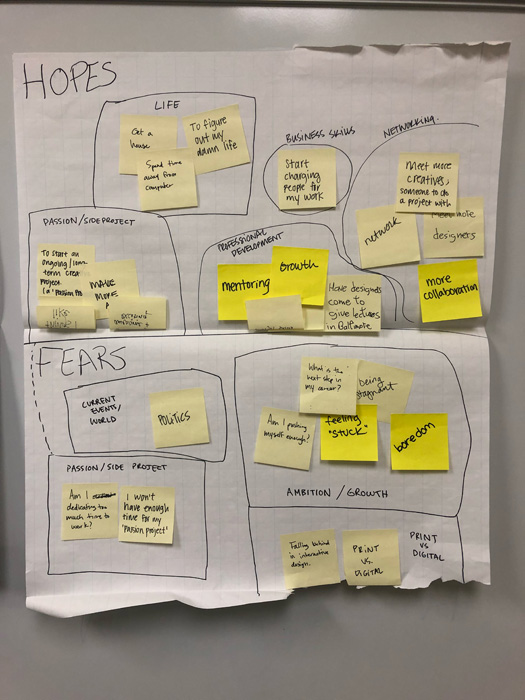
Following a brief kickoff, we asked attendees to jump into action, connecting with their fellow designer and discussing their personal and design-focused hopes and fears for the new year.

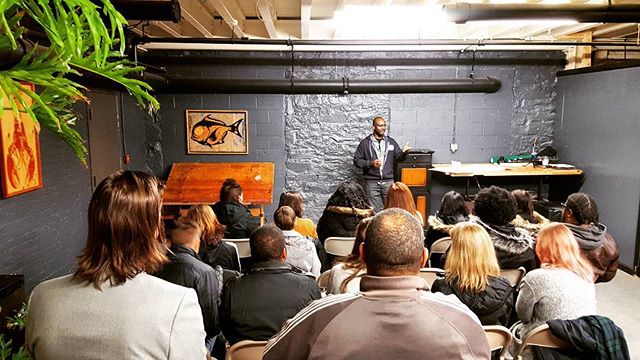
AIGA Baltimore President, Joseph Carter-Brown, addresses and prep attendees for the evening's proceedings
AIGA Baltimore President, Joseph Carter-Brown, addresses and preps attendees for the evening’s proceedings.

In this exercise, we discovered some of the common themes on designers’ minds—from hopes for professional growth and making connections within the community to fears regarding world events and maintaining healthy lifestyles. While these hopes and fears were not the intention of the discussion, this broad range of concerns helps us put a finger on the pulse of of our community. Discussing our hopes and fears is also a great way to find allies in the room; because what starts as individuals writing their personal hopes and fears, turns into a group of collaborators, realizing that they’re not alone in their goals or concerns.

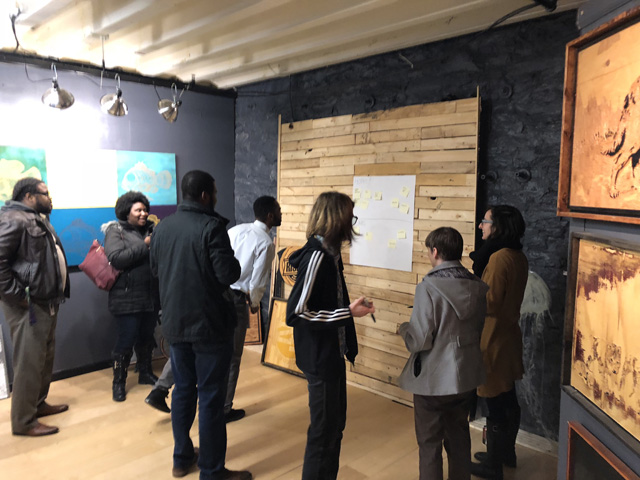
Attendees share their hopes and fears for the new year
Attendees found shared themes among their individual hopes and fears for the new year.

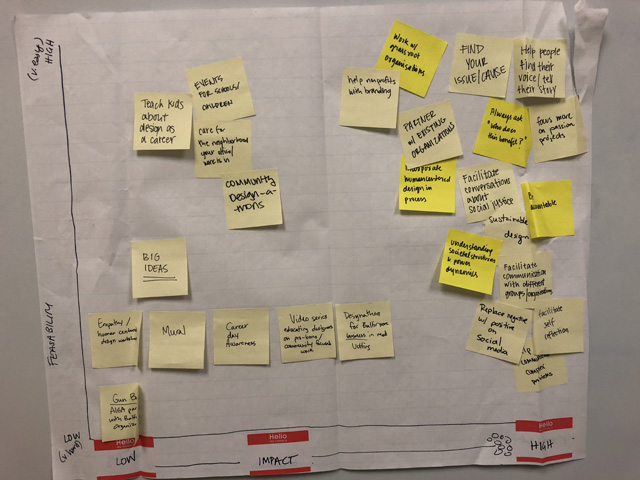
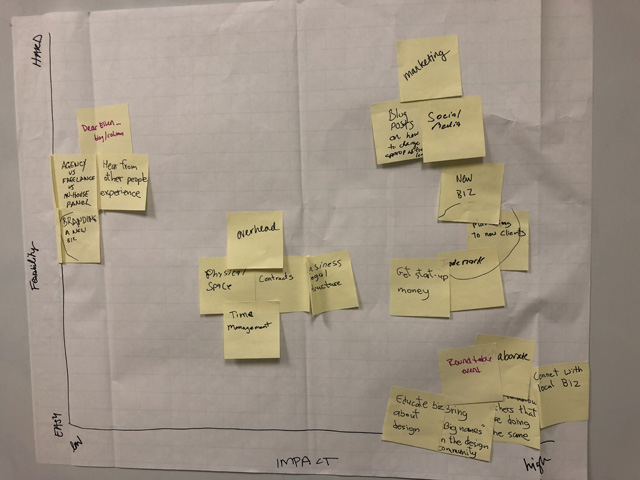
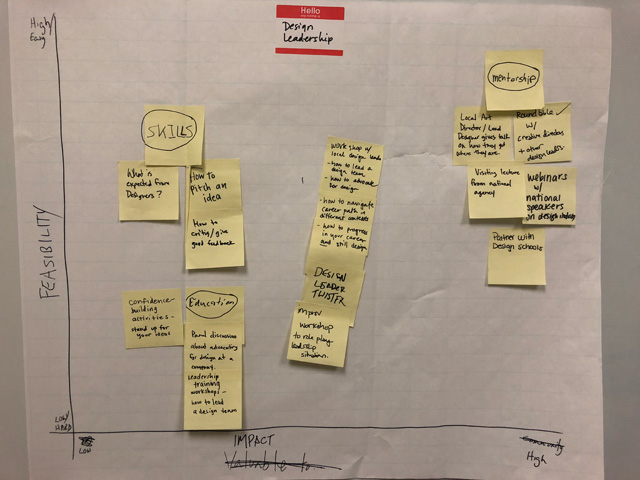
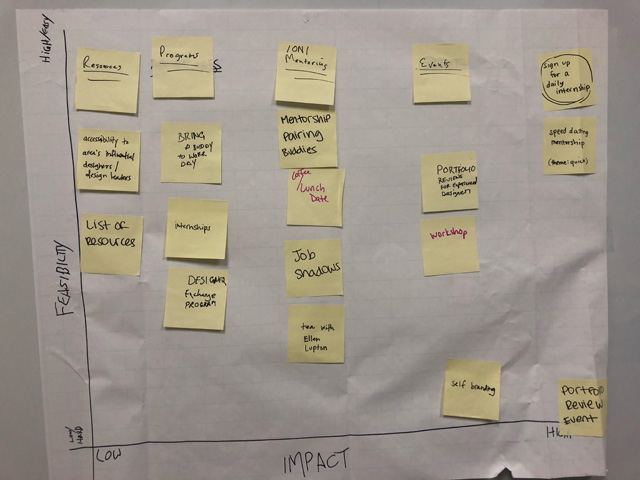
Once the attendees completed the hopes and fears activity, we broke into four distinct groups. Each group focused on a different discussion prompt as dictated by our Facebook poll. This is when we began to get a true collaborative feeling for how designers in our community could benefit from involvement with AIGA. We did this by building a prioritization grid to identify some ideas that would be impactful, while also being mindful of the feasibility of any given idea. After lots of collaboration, silent ideation, and group sharing, we settled on a handful of big ideas in our four key discussion areas, with a goal to create more user-driven outcomes for all of our community members.

Collaborating on Big Ideas
Attendees collaborate on some big, impactful ideas.

Below is a list of the big ideas, along with pictures of the final prioritization grids:

Design for Good Big Ideas

  • Empathy/Human-Centered Design Workshops
  • Murals for Community Beautification
  • Career Day Awareness
  • Design for Good Video Series:
    Videos educating designers on pro-bono/community-focused work
  • Designathon for Baltimore Businesses in Need (with appropriate vetting)
After brainstorming Design For Good ideas, attendees grouped common themes, and came up with big impactful ideas

Design + Business Big Ideas

  • “Dear Ellen”(name tbd) Blog/Column (like Dear Abby):
    Q&A advice column (topics could include differences between working in-house vs agency vs freelance, branding a new business, other peoples’ design business experiences)
  • Creative Round Table:
    Event for bringing business leaders and creatives together to discuss topics related to running and working in/for a design business (educate businesses on how to work with designers, collaboration opportunities, workshop on getting start-up funding, bring big names to design community, connections with local businesses, comparing notes with similar businesses/getting advice on processes)

    Design & Business Ideas
    Big Ideas for Design & Business Content

Design + Leadership Big Ideas

  • Workshop with Local Design Leaders:
    How to lead a design team, advocating for design, how to navigate career path in different contexts, how to progress in your career and still design
  • Improv Workshop to Role-Play Design Leadership Situations
    Design Leadership Big Ideas
    Design Leadership Big Ideas

Mentorship Big Ideas:

  • Daily Internships/Adopt a Designer
  • Coffee/Lunch Date or “Speed Dating” to Find a Mentor
  • Designer Exchange Program
  • Portfolio Reviews Targeted at Designers with More Than 5 Years Experience
    Mentorship Big Ideas
    Mentorship Big Ideas

Sharing our creative ideas in a community setting is the first step to taking action, but we want to take that a step further. We want to see your ideas come to life, however AIGA Baltimore is a board of only a few people, and all volunteers at that; so we’re asking the community to work with us. While we want to do everything on this list, we simply cannot do it alone. What we can do is support and empower you, our design community! Let’s work together and make it happen. Shall we? If you see an idea that you can’t wait to help bring to life or want to explore more (or if you know someone who may be able to help push the needle forward), we want to hear from you.

Email info@baltimore.aiga.org and let’s talk about how we can all take ownership in our design community.

Behind Design Week 2017’s Branding; A Discussion With Fastspot

AIGA Baltimore was thrilled when Fastspot agreed to be our Branding Sponsor for Design Week 2017. Their commitment to Baltimore was evident from the beginning, and with this Design Week being a resounding success, we couldn’t have of done it without them.

A critical aspect of communicating Design Week to our membership is a strong brand identity. Since 2013, we have reached out to a local design agency to partner with us and bring Design Week alive visually. Past partners have included Orange Element, Gilah Press + Design, Eye Byte Solutions, and Exit10.

Here we go behind the scenes with our Branding Sponsor, Fastspot, to learn more about their inspiration for this year’s branding for Design Week, their work outside of AIGA Baltimore, and what their company is all about!

What was the inspiration for Fastspot’s Design Week Branding?

A branding project like this one is all about using design and aesthetic choices to bring the spirit of an organization to the surface. The Baltimore design community, which we’re honored to be a part of, is full of creative people exploring, innovating, and pushing in new directions. We wanted to reflect that in a way that was exciting and authentic, and would align well with AIGA’s existing materials. Our designers drew inspiration from the city itself, in abstracted shapes of iconic Baltimore buildings and variations on found letterforms. In the end, the Design Week brand captures the quirk and vibrancy that will be very familiar to AIGA’s audiences.

What were the steps involved in creating the branding?

We begin every project with a kick-off meeting that allows us to better understand the mindset and vision for the project. Time is spent together questioning, brainstorming, and setting a vision for the project, both from a creative and a scoping standpoint. From there, it’s a lot of iteration and collaboration. The “big reveal” moment might be dramatic, but it isn’t necessarily productive. We prioritize working closely with clients to discuss, challenge, and refine the work, so that we’re all in consensus around the finished product.

What was the inspiration for being a part of Design Week 2017?

Fastspot is Baltimore through and through—many of our team members are from Baltimore or have proudly adopted the city. So we jumped at the chance to give back to this community. It’s not unusual for us to work with clients to adapt an existing branding or design system for use in a new medium or for a specific initiative. It was a lot of fun doing so for AIGA.

What was the goal of the Design Week branding?

We wanted to create a design system that breaks down barriers (real and perceived).


Could you explain an exciting Fastspot project completely unrelated to AIGA?

The Ford’s Theatre website redesign was an exciting project and a great challenge.

Ford’s Theatre is a place where the past and present collide—they teach Lincoln’s legacy while preserving the historic theatre that shows new, contemporary performances. We loved immersing ourselves in the history and cultural impact of Ford’s Theatre. During the process we learned it was controversial for Lincoln enjoy theater! It was very uncommon at the time, and he was seen as a rebel for his attendance.

One of the interesting logistical goals of the project was to make online ticketing easier. We worked with the software applications TNEW and Tessitura to make them as user-friendly as possible, something we’re continuing to partner with Ford’s Theatre to refine. A website redesign doesn’t end at site launch, and some of our most successful clients are the ones who become partners that we continue to work with for many years.

What are your typical process steps? Do they differ from AIGA work?

Our process always start with research. We ask hard questions and we do a lot of listening as we seek to uncover the real motivations and challenges that each project contains. We want to understand the potential impact on the institution or organization, and the ways in which we can help create meaningful change. From there, we create foundational strategy before we move into design and (where needed) development. Throughout our process, we’re focused on innovation and collaboration. Great ideas can come from anywhere, at any time, and we’re always ready to pursue them. All of this was reflected in our work with AIGA.

How do you typically find your clients?

Fastspot finds most of our new clients through referrals. Great work and happy clients help bring in more happy clients!

BDW-logo


What’s an ideal day at the office like?

An ideal day at Fastspot is when our team members feel accomplished, whether it’s because of a design breakthrough, a successful presentation, progress on a hard problem, a well-received deliverable, helping a co-worker, etc. 

What is Fastspot’s mission? How did it come about?

“To build a successful company, with great people, who do awesome, creative work, together.” 

Fastspot’s mission partly comes out of our co-founder, Tracey Halvorsen’s background as a painter. She recognizes how important your physical space and who you surround yourself with is to doing your best work. She wanted to bring that sentiment into into the business world, where collaboration and creativity should also be encouraged and acknowledged.

If you could describe your team and work philosophy in 5 words, what would they be?

Challenging, supportive, smart, honest, and brave.

What’s your vision for Baltimore? For Maryland?

Our vision is to create more of a draw to this area, whether it’s Baltimore or Maryland as a whole. We want Maryland to be a place where creative, innovative people want to live and work. 

We like that Baltimore isn’t New York or Silicon Valley, there’s opportunity to have a really great life in Maryland. The lifestyle here emphasizes a work-life that balance, which makes it a place where people can truly thrive. 

We’d like to see more local initiatives to help kids get into creative and technology fields, and support for businesses that want to grow here. We hope the city and state can have the kind of leaders who look forward to new ways of leading and governing. We’re in a new time, and need progressive leadership.

Passing the Torch

It feels like only yesterday that I had moved up to Baltimore and was just another fresh face at one of our chapter’s round-table events. Fast forward four years, and I’m closing out my two-year term as President. Our chapter has intentionally short terms, and mandates that presidents roll off the board after two years, because we believe that the chapter belongs to you, our members. We are a board of 100% volunteers, driven by a passion for design and innovation, and a desire to serve our community.

Two years ago, my goals were for our chapter were to expand on our solid foundation by growing our community involvement: 1) with the national AIGA organization and our other chapters, 2) with the broad Baltimore community, and 3) with the Baltimore creative community. I’m proud that our amazing team went above and beyond, and achieved some significant outcomes:

Expanded programming types and times
After redesigning our recurring events and offering Saturday morning events, we saw a spike in new event attendees. Last year our chapter put on 22 events, drawing more than 700 attendees across the greater Baltimore area. Design Week alone drew more than 400 people to nine events over the course of the week, 23% more than in 2015.

Getting involved in Baltimore neighborhoods
We also got involved in the Druid Heights neighborhood, leading a rebranding project for the Druid Heights Community Development Corporation. Check out their new branding on their website here: druidheights.com

Funding for two grant projects
In 2016, we were awarded two Innovate grants from AIGA to develop national resources for design entrepreneurship and design policy. We were able to develop these platforms due to the generosity and partnership of our amazing friends at Orange Element and Foxtrot Media: PolicyDesigned.com and YouLaunchIt.org.

Collaborating with other creatives
AIGA Baltimore co-founded the Creative Minds Crew, a team of leaders from six other creative organizations in the city: B’more Creatives, AAF Baltimore, AMA Baltimore, the Production Club of Baltimore, Girl Develop It, and the Society for History and Graphics. Together, we planned and co-hosted the inaugural Creative Mixtape networking event, bringing more than 250 professionals together.

Leading at the national level
I’m also delighted to share that AIGA Baltimore will host the national AIGA leadership retreat in 2018 – an honor that will bring leaders from AIGA’s 72 chapters across the country to convene here in Baltimore, to inspire and learn from each other, and chart the course for our field and our organization.

I’m thrilled to leave the board’s leadership in Joseph Carter Brown’s capable hands. Joe has been a rock for our chapter in his roles as programming director and vice president. He is also one of the most dedicated, visionary people I know, and he genuinely and deeply cares about this organization and the people in it. I know that under his leadership, the board will listen to the needs of the design community and the Baltimore community, to drive initiatives with impact.

Thank you to all the board members and volunteers who make this work possible. Thank you to the organizations who have partnered with us, the attendees who have learned with us, and the members who support our advocacy for design as a strategic business initiative and vital cultural force.

I am so exceptionally proud of everything the board has collectively achieved over the past two years, and I am honored to have had the opportunity to serve you as president. I am also so excited to see what AIGA Baltimore does next.